← BACK TO ARCHIVES
Heritage-Black
Heritage Synthesis: Terracotta fragment of a skyphos (deep drinking cup)
Curated on Aug 21, 2026 // Node: LDN-01
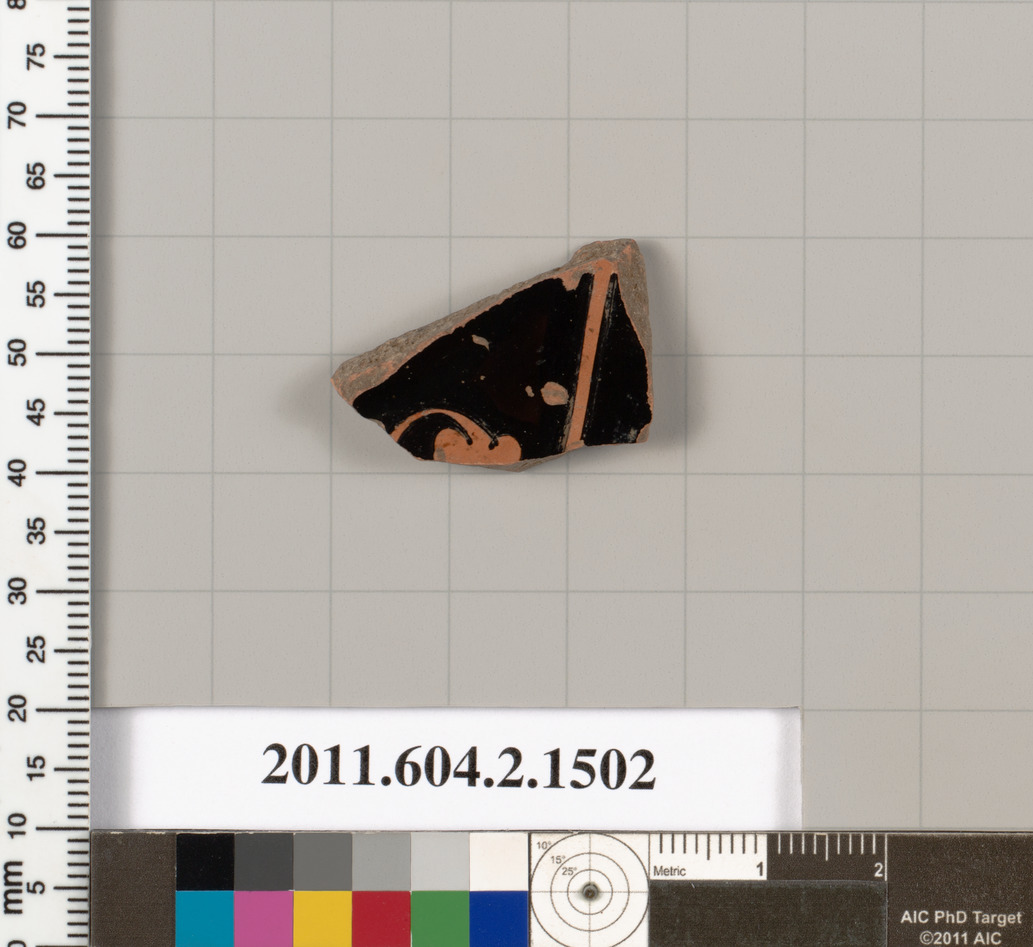
The Terracotta Echo: Archaic Greek Form and the 2026 Old Money Silhouette
The internal genetic code of Lauren Fashion—a dialogue between the tactile depth of Ming dynasty lacquerware and the dramatic visuality of Caravaggio—finds an unexpected, yet profoundly apt, third interlocutor in the terracotta fragment of an Attic skyphos. This humble shard of a deep drinking cup, bearing the fingerprints of a Greek potter from the 5th century BCE, is not merely an archaeological relic. It is a foundational text on the philosophy of form, volume, and the social ritual of leisure. For the 2026 Old Money silhouette, this fragment offers a crucial corrective to the prevailing narrative of softness and draped luxury. It whispers of a more ancient, more structural elegance—one rooted in the architecture of the body and the quiet authority of geometric proportion. This analysis will argue that the skyphos fragment informs the upcoming season’s design language through three distinct principles: the primacy of the *vessel silhouette*, the discipline of *negative space*, and the subversive power of *material honesty*.
I. The Vessel Silhouette: Sculpting the Torso as a Container of Legacy
The Attic skyphos, in its complete form, is defined by a deep, capacious bowl, a low, stable foot, and two horizontal handles that project outward with a sense of deliberate balance. Its beauty lies not in ornamental excess but in the confident, unadorned curve of its body—a curve that speaks of containment, of holding something precious within. For the 2026 Old Money woman, this translates into a radical departure from the fluid, unstructured dressing that has dominated recent seasons. The new silhouette is not about the body as a canvas for fabric to drape upon, but about the body as a vessel—a container of heritage, lineage, and understated power.
This manifests in tailored outerwear and knitwear that adopt the skyphos’s architectural principles. Consider a double-faced cashmere coat, cut with a pronounced, almost cylindrical body that skims the torso without clinging, falling from a defined shoulder to a hem that suggests the cup’s stable foot. The sleeves, set with a precise, slightly dropped shoulder, echo the skyphos’s horizontal handles—not as functional appendages, but as sculptural extensions that define the garment’s overall mass. The effect is one of quiet monumentality. The wearer is not enveloped by the garment; she inhabits it, much as the wine once inhabited the clay vessel. The silhouette is a statement of self-containment, a visual declaration that one’s worth is internal, not projected. This is the antithesis of the “loud” luxury of logos; it is the luxury of perfect, unadorned form, a direct inheritance from the Greek ideal of *kosmos*—order and adornment as a single, harmonious concept.
II. Negative Space and the Geometry of Restraint
The fragment’s most instructive feature is not what remains, but what is missing. The broken edges, the absent handles, the missing portion of the bowl—these voids define the object’s character as powerfully as its extant clay. This principle of negative space is the second, and perhaps most sophisticated, lesson for the 2026 Old Money aesthetic. In a culture of excess, true distinction is achieved through what is deliberately left out.
In practical terms, this translates to a new grammar of cut and construction. The 2026 silhouette will be defined by strategic openings and deliberate pauses in the fabric’s flow. A wool crepe dress, for instance, might feature a single, sharp cutaway at the neckline, echoing the skyphos’s missing section, creating a visual tension that draws the eye to the collarbone—a point of vulnerability and strength. A tailored trouser might be cropped at a precise, unexpected length, leaving a sliver of ankle exposed, a modern-day echo of the cup’s broken base. This is not about revealing skin for sensuality’s sake, but about using absence to define presence. The gap between the garment and the body becomes a designed space, a moment of quietude that amplifies the garment’s architectural integrity. This discipline of restraint is the ultimate marker of “Old Money” taste: the confidence to leave a design unfinished, to allow the eye to complete the form, and to understand that true power lies in what is withheld, not displayed. The Caravaggio-esque drama of light and shadow is thus internalized, not through chiaroscuro painting, but through the play of void and volume in a perfectly cut garment.
III. Material Honesty: The Unvarnished Truth of Wool and Clay
Finally, the terracotta fragment reasserts the primacy of material honesty. The clay is unglazed, its surface bearing the marks of the potter’s wheel and the impurities of the earth from which it was fired. There is no pretense, no attempt to mimic marble or gold. Its value lies in its authenticity, in the visible trace of its making. This ethos is the cornerstone of the 2026 Old Money fabric story. It is a direct counterpoint to the high-shine, synthetic blends of fast fashion and the ostentatious glitter of metallic threads.
The new luxury is found in the *hand* of the cloth: the dry, toothy surface of a pure wool flannel; the irregular, slubbed texture of a raw silk; the dense, felted weight of a virgin wool melton. These fabrics are chosen for their intrinsic qualities—their drape, their warmth, their ability to age with grace—not for their surface novelty. The color palette, too, draws from the earth: the deep umbers and ochres of fired clay, the chalky whites of unglazed ceramic, the muted blacks of ancient shadows. This is where the “Heritage-Black” category finds its deepest resonance. It is not the flat, synthetic black of modern dyes, but a black that has depth, a black that absorbs light like the interior of the skyphos, a black that suggests the patina of time. Garments in this palette are not merely black; they are *ancient* black, carrying the weight of history in their fibers. This commitment to material truth is a form of ethical luxury, a rejection of the ephemeral in favor of the enduring. It aligns with the Ming lacquer box’s celebration of tactile depth, but replaces its intricate ornamentation with a stark, Grecian simplicity.
Conclusion: A Symphony of Restraint
The terracotta skyphos fragment, in its broken and humble glory, provides the essential architectural counterpoint to the sensuous dialogues of the Ming box and the Caravaggio canvas. It reminds us that the most enduring forms of elegance are often the most elemental. For the 2026 Old Money silhouette, it is not a call to costume, but a call to principle. It demands a return to the vessel—a silhouette that contains rather than reveals, that projects authority through mass and proportion. It insists on the power of negative space, the eloquence of the cutaway, the luxury of the pause. And it grounds the entire aesthetic in the unshakeable integrity of material. The result is a wardrobe that functions less like a collection of clothes and more like a set of personal artifacts—each piece a fragment of a larger, coherent identity, shaped by history, defined by restraint, and resonant with the quiet, confident music of a life well-lived. The skyphos, once a vessel for shared wine and conversation, becomes a vessel for the self, carrying the legacy of taste forward into a new era, not with a flourish, but with the steady, unadorned grace of a perfectly thrown pot.
Heritage Lab Insight
Genetic Bridge: Archive node focusing on Heritage-Black craftsmanship.