← BACK TO ARCHIVES
Heritage-Black
Heritage Synthesis: Terracotta fragment of a kylix (drinking cup)
Curated on Aug 21, 2026 // Node: LDN-01
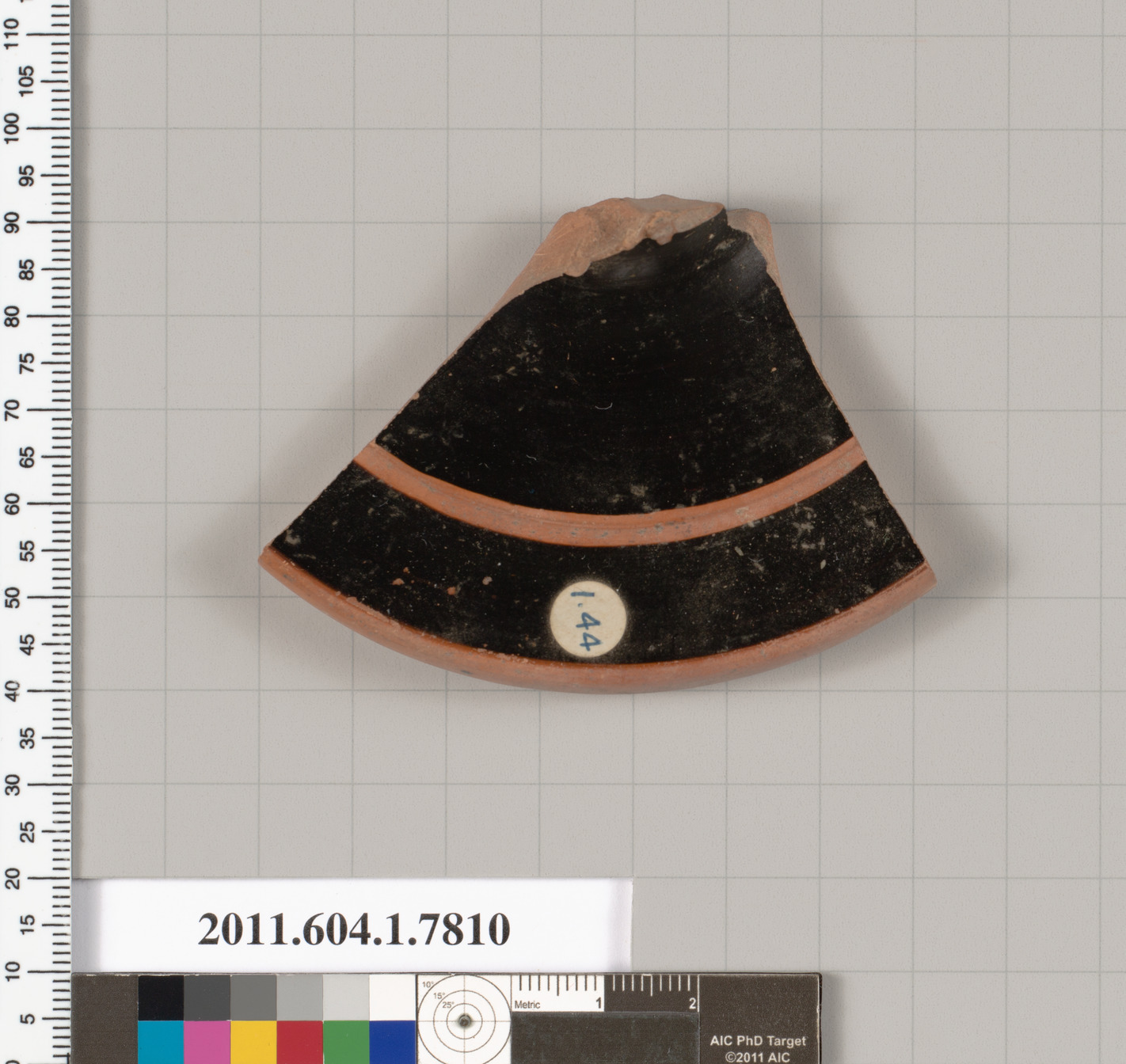
The Terracotta Dialectic: Archaic Greek Fragment as a Blueprint for 2026 Old Money Minimalism
The internal genetic code of Lauren Fashion—that profound dialogue between a Renaissance Florentine portrait and a Yuan-dynasty Guanyin—reveals a house philosophy predicated on the reconciliation of opposites: the carnal and the ethereal, the specific and the universal, the internal gaze and the external transcendence. It is within this dialectical framework that we must approach the seemingly incongruous museum artifact: a terracotta fragment of an Attic kylix. At first glance, a shard of a Greek drinking cup appears distant from the silk-veiled melancholy of a nun or the lotus-borne serenity of a bodhisattva. Yet, upon deeper synthesis, this fragment—with its cracked glaze, its residual black-figure trace, and its utilitarian origin—emerges as a surprisingly potent informant for the 2026 Old Money silhouette. It does not whisper of opulence; it commands a return to architectural restraint, to the honesty of material, and to the quiet power of the incomplete.
I. The Fragment as a Rejection of Perfection
The 2026 Old Money aesthetic, as projected by Lauren Fashion, cannot be mistaken for the ostentatious wealth of a prior decade. It is not about the new, the shiny, or the complete. The terracotta fragment teaches us this with brutal elegance. A kylix, in its original state, was a vessel of communal symposium—a circle of philosophers, poets, and statesmen. Its wholeness signified a completed ritual. Our fragment, however, is a ruin. It is the residue of history, a piece that has survived not despite its damage but because of it. The broken edges, the worn interior, the faded pigment—these are not flaws; they are annotations of time.
For 2026, this translates into a silhouette that deliberately avoids the "finish" of conventional luxury. We are moving away from the crisp, unforgiving construction of a new suit. Instead, the Old Money silhouette will adopt a softened architecture—shoulders that are structured yet slightly unpadded, lapels that roll with a natural, lived-in memory, and hemlines that suggest a history of movement. The fabric, whether a heavy wool or a fluid silk, must possess a "memory" of its own. The goal is not to look as though the garment was just delivered from an atelier, but as though it has been worn, considered, and kept. This is the aesthetic of the *patrimony*—the idea that true wealth is inherited, not purchased. The fragment’s broken rim becomes the garment’s slightly frayed cuff; the kylix’s faded black slip becomes the muted, sun-washed tone of a cashmere overcoat. The 2026 silhouette is, therefore, a study in controlled decay—a deliberate act of removing the newness to reveal the eternal.
II. The Geometry of the Gaze: From Symposium to Street
The Attic kylix is renowned for its tondo—the circular image painted on the interior floor, visible only when the cup was drained. This is a profoundly intimate design. The image is not for public display; it is a private revelation, a secret shared between the drinker and the vessel. This concept of the "interior gaze" aligns perfectly with the internal code’s description of the Renaissance nun—a woman looking not outward, but into the void of her own soul.
In translating this to the 2026 Old Money silhouette, we must consider the geometry of the garment as a series of "tondos." The interior of a jacket lining, the underside of a collar, the hidden placket of a shirt—these become the private spaces where true luxury resides. A Lauren Fashion garment will feature a hand-rolled edge on the inside of a sleeve, a bespoke embroidered monogram on a silk lining, or a unique, hand-finished seam that is never seen but always felt. The exterior silhouette, like the exterior of the kylix, is deliberately restrained—perhaps a monochromatic black or a deep, undyed wool. But the interior, the "tondo" of the garment, is where the narrative unfolds. This is the ultimate expression of Old Money: the confidence to hide one’s most exquisite details from the public eye, reserving them for the wearer alone. The 2026 silhouette is thus a vessel for the self, not a billboard for the crowd.
III. Materiality as Transcendence: The Terracotta and the Guanyin
The internal code’s analysis of the Guanyin emphasizes the Eastern concept of "void" (*śūnyatā*)—that the form is not the essence, but a vehicle for the formless. The terracotta fragment, in its raw materiality, offers a Western, archaic parallel. Terracotta is earth—baked, hardened, but never fully divorced from its origin. It is humble, tactile, and honest. The Greek artisan did not attempt to hide the clay; they celebrated it, allowing the orange-red body to serve as the ground for the black-figure imagery.
This material honesty is the cornerstone of the 2026 Old Money fabric palette. We reject the synthetic sheen of fast fashion and the gaudy glitter of new money. Instead, we embrace the "terracotta" of the textile world: raw silks with their natural slubs, undyed cashmere in its natural cream and grey, and heavy, unpolished wools that feel like ancient felt. These materials do not try to be something they are not. A raw silk blouse, like the terracotta, carries the trace of its making—the irregularity of the thread, the slight variation in weave. This is not a flaw; it is a signature of authenticity. The Guanyin’s flowing robes, depicted with ethereal lines, find their counterpart in the way a heavy wool crepe drapes over the body—not clinging, but falling with a gravity that suggests a connection to the earth. The 2026 silhouette is grounded in this material truth. It is a form of transcendence achieved not by escaping the physical, but by fully inhabiting it with intention and respect.
IV. The Silhouette of the Eternal Return
The kylix was a cup for wine, a symbol of Dionysian abandon, yet it was also a vessel for philosophical discourse. It held both the ecstasy of the moment and the contemplation of the eternal. This duality is the final lesson for the 2026 Old Money silhouette. It must be a garment for the boardroom and the salon, for the city street and the country estate. It must be as appropriate for a moment of quiet reflection as for a public declaration of presence.
The silhouette, therefore, is not a radical departure but a return to archetypes. We see a return to the long, columnar line—reminiscent of both the Greek *chiton* and the Renaissance *cotta*. The waist is defined, but not cinched; the shoulder is present, but not armored. The overall effect is one of verticality, of a line drawn from the heavens to the earth, connecting the wearer to a lineage of human history. The fragment of the kylix, with its broken circle, reminds us that wholeness is an illusion; what matters is the integrity of the arc. The 2026 silhouette is that arc—a continuous, unbroken line of style that moves from the ancient world through the Renaissance and into the future. It is the shape of heritage, cut from the cloth of eternity.
In conclusion, the terracotta fragment is not a decorative motif for Lauren Fashion; it is a philosophical cornerstone. It teaches us that true luxury is found in the integrity of the fragment, the honesty of the material, and the privacy of the gaze. It is the silent, broken shard that informs the most powerful, quiet statement of the 2026 Old Money wardrobe: the confidence of the incomplete, the power of the earth-bound, and the eternal elegance of the interior view.
Heritage Lab Insight
Genetic Bridge: Archive node focusing on Heritage-Black craftsmanship.