← BACK TO ARCHIVES
Heritage-Black
Heritage Synthesis: Terracotta fragment of a kylix (drinking cup)
Curated on Aug 21, 2026 // Node: LDN-01
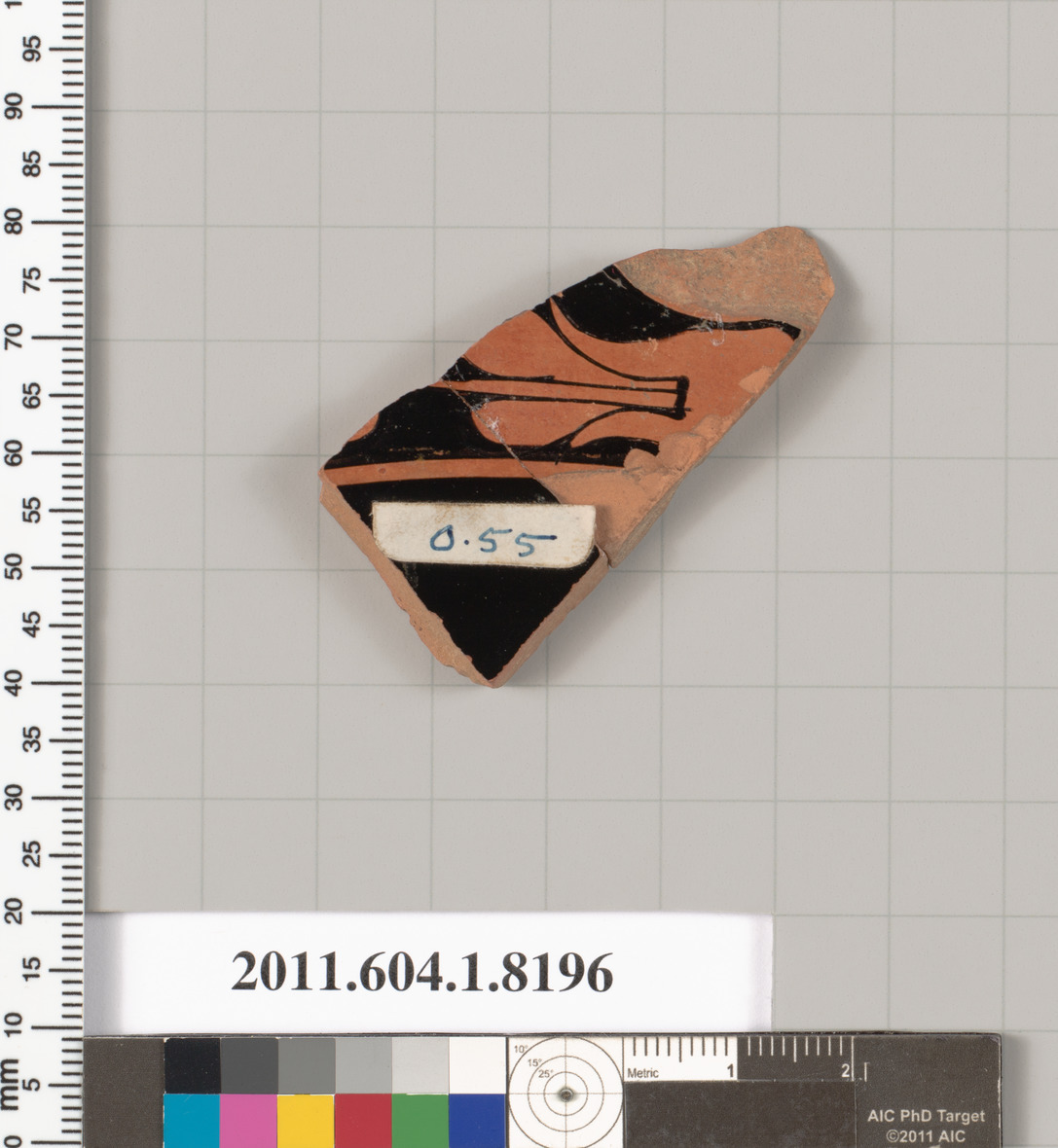
The Architecture of Finality: Terracotta Kylix and the 2026 Old Money Silhouette
The internal genetic code of Lauren Fashion Heritage Lab has long recognized that the most profound aesthetic expressions do not resolve paradox—they crystallize it. This principle, articulated through the dialectical pairing of Jacques-Louis David’s *The Death of Socrates* and the anonymous Greek *kylix*, finds its most urgent contemporary resonance in the 2026 Old Money silhouette. The museum artifact in question—a terracotta fragment of an Attic drinking cup—is not merely a relic of symposium culture; it is a masterclass in the economics of restraint, the poetics of emptiness, and the sartorial translation of *ataraxia* (imperturbability). For the 2026 collection, this fragment functions as a structural blueprint, informing how we drape, cut, and finish garments that must whisper authority without raising their voice.
I. The Fragment as a Lesson in Negative Space
The surviving terracotta shard—a curve of fired clay, a hint of the bowl’s former fullness, a trace of the stem’s upward thrust—offers the designer a radical proposition: *completion through incompleteness*. Unlike the intact vessel, the fragment does not contain; it suggests. Its broken edge is not a wound but a horizon. In the 2026 Old Money silhouette, this translates directly into the treatment of the shoulder and the hem. We are moving away from the rigid, fully-constructed tailoring of the previous decade—the power suit’s aggressive assertion—toward a *deliberate incompleteness*.
Consider the new overcoat: a double-faced cashmere blend, cut with a shoulder that does not terminate crisply but rather *fades* into the sleeve, as if the garment itself were a fragment of a larger, unseen architecture. The hem of a wool trouser, similarly, is no longer finished with a hard break but with a soft, rolled edge that mimics the kylix’s lip—a subtle acknowledgment that the garment’s journey continues beyond its physical boundary. This is not negligence; it is the highest form of Old Money confidence. The wearer does not need the garment to be complete; their presence completes it. The fragment teaches us that true luxury is the ability to withhold the final line, to leave a margin of silence for the observer’s eye to fill.
II. The Kylix’s Interior: The Architecture of the Back
The kylix is unique among Greek vessels because its primary decorative surface is *interior*. The exterior is often plain, black-glazed, unremarkable—a deliberate foil. The reveler sees the painted image only when they lift the cup to drink, tilting it toward themselves. This inversion of priority is a direct challenge to contemporary fashion’s obsession with the frontal plane. The 2026 Old Money silhouette, informed by this artifact, will pivot its most significant design investments to the *back* of the garment.
The interior of the kylix—in this case, the terracotta’s inner curve—becomes the model for the back of a tailored jacket or the drape of a silk dress. Here, we place the hidden seam, the subtle pleat, the unexpected panel of contrasting texture (a whisper of velvet against wool, a flash of silk charmeuse lining a cashmere coat). The front remains austere, almost monastic: a flat plane of fabric, minimal lapels, no visible hardware. But when the wearer turns, the observer is granted a private viewing—the equivalent of the symposium guest tilting his cup. This is not about spectacle; it is about intimacy. It is a secret shared between the garment and the one who perceives it, a quiet acknowledgment that true power does not announce itself but reveals itself in the turning.
III. Materiality as Philosophical Argument
The terracotta fragment’s surface—rough, unglazed, yet bearing the subtle burnish of the potter’s hand—offers a corrective to the hyper-polished, tech-driven fabrics that have dominated luxury markets. The 2026 Old Money palette and texture will embrace a *tactile authenticity* that mirrors this ancient clay. We are moving toward materials that feel like they have a memory: heavy, unbrushed wool that retains the lanolin of the sheep; silk that is left slightly slubby, refusing the sterile uniformity of machine-perfection; linen that is washed to a soft, almost weathered suppleness.
This is the aesthetic of the *cup and the stand*—the pairing of the vessel with its minimal support. In our silhouettes, this translates to the juxtaposition of a substantial, grounded garment (the cup) with a delicate, almost invisible structural element (the stand). A heavy, double-faced wool coat is paired with a micro-thin silk blouse that skims the collarbone. A structured tweed skirt is anchored by a gossamer cashmere knit. The tension between the weighty and the ethereal, the grounded and the floating, creates the same dynamic equilibrium that makes the kylix fragment so compelling. It is not about heaviness or lightness; it is about the *relationship* between them.
IV. The Silhouette of Stoic Grace
Returning to David’s Socrates—the figure who sits with perfect composure as the poison cup approaches—we find the anthropological model for the 2026 Old Money wearer. Socrates’ posture is not rigid; it is *settled*. His drapery falls in classical folds, echoing the fluting of a Greek column, but his body is relaxed, almost liquid within the fabric. The 2026 silhouette must achieve this same paradox: *structured fluidity*.
We achieve this through a new approach to pattern-cutting. The shoulder seam is extended slightly, creating a sense of architectural support, but the fabric is allowed to fall away from the body in unbroken, vertical planes. The waist is not cinched but suggested—a subtle inward curve of the seam, a gentle tapering of the panel, rather than a dart or a belt. The trousers are cut full in the thigh but taper to a narrow, almost invisible ankle, creating a line that is both statuesque and mobile. This is the silhouette of a person who has made peace with their mortality, their temporality—a person who, like Socrates, has internalized the lesson of the cup: that the vessel is not the life, but the container. The garment, in this philosophy, is not an expression of the self but a *vessel* for the self’s quiet, unshakeable presence.
V. Conclusion: The Container as Content
The terracotta kylix fragment, in its broken, silent dignity, and David’s painted drama of philosophical triumph, converge on a single sartorial truth for 2026: *the garment is the cup, and the wearer is the wine*. The Old Money aesthetic has never been about display; it is about the *capacity* for depth. The 2026 silhouette, informed by this ancient fragment, will strip away all narrative excess—all logos, all visible branding, all decorative noise—to reveal the pure, structural form of the body as a vessel.
The collection will not tell a story; it will provide the *container* for the wearer’s own story. It will not assert; it will *hold*. In the silence of the terracotta’s curve, in the unadorned surface of the clay, we find the ultimate luxury: the confidence to be empty, so that life may fill us. The 2026 Old Money silhouette is not a costume of wealth; it is a philosophy of presence, rendered in wool, silk, and cashmere, waiting for the quiet, knowing gesture that lifts it to the lips.
Heritage Lab Insight
Genetic Bridge: Archive node focusing on Heritage-Black craftsmanship.