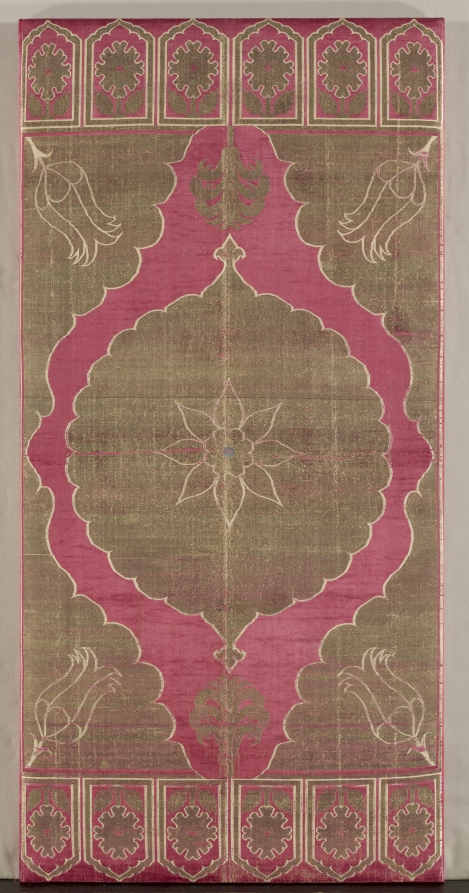
Category: Silk
An Heirloom in the Making: The Lampas Silk Cushion Cover
There is a particular silence that falls over a room when a piece of true imperial silk enters it. Not the hushed reverence of a museum gallery, but the quieter, more intimate stillness of a well-appointed drawing room at dusk. The lampas silk cushion cover before us is not merely an object of comfort; it is a document of dynastic ambition, a fragment of a loom’s memory, and a testament to the enduring dialogue between power and pattern. To handle it is to hold a whisper from the great weaving houses of Lyon and the imperial ateliers of the East, a conversation conducted in threads of lustrous mulberry silk.
Lampas is a compound weave, a technical feat that distinguishes itself from simpler damasks or brocades. Its structure is a marriage of two distinct warp and weft systems: a ground weave, typically a satin or taffeta, which provides the foundation and the primary colour, and a supplementary, often heavier, weft that floats across the surface to create the figural or floral motifs. This is not a printed pattern; it is a woven architecture. The design is built, thread by thread, in a process that demands extraordinary precision. The result is a fabric of remarkable depth and tactility—a raised, almost sculptural relief that catches the light differently with every shift of the cushion beneath an elbow. The silk’s natural lustre, its ability to absorb and reflect light in a liquid shimmer, is amplified by this structural complexity. In the imperial context, this was not decoration; it was a demonstration of mastery over nature and mathematics, a tangible proof of a civilisation’s technological and artistic zenith.
The legacy of imperial silk weaving is a long and storied one, stretching from the Tang dynasty’s cosmopolitan courts to the Sun King’s Versailles. The very word “silk” conjures the fabled Silk Road, a network of trade routes that carried not only bolts of fabric but also ideas, religions, and aesthetics across continents. For centuries, the production of high-grade silk was a closely guarded state secret, and its use was often codified by sumptuary laws. To wear or display certain colours, patterns, or qualities of silk was to declare one’s rank within a rigid social hierarchy. The imperial looms, whether in Beijing, Constantinople, or later Lyon, were not mere factories; they were political instruments. The patterns they produced were often laden with symbolic meaning—the dragon for imperial power, the phoenix for renewal, the lotus for purity, the pomegranate for fertility. Our cushion cover, with its likely floral or foliate motif, would have been part of this visual language, a silent but potent assertion of taste and status.
In the European context, the eighteenth century saw the apotheosis of this imperial legacy. The silk weavers of Lyon, patronised by the French crown, elevated lampas weaving to an art form. Their designs, often inspired by botanical engravings and the decorative arts of the Far East, became the height of fashionable luxury across the continent. To commission a set of seat furniture or wall hangings in Lyon silk was to align oneself with the sophistication of the French court. This cushion cover, likely produced in this era or in its stylistic echo, carries that DNA. Its design is not merely decorative; it is a curated reference to a lineage of taste that begins in the East and is refined in the West. The choice of silk itself—the materiality—is the crucial link. It is a fibre that has always been associated with the divine and the sovereign. Its production is labour-intensive, its lustre is unmatched, and its drape is incomparable. To sit upon a cushion of this silk is to engage in a quiet act of heritage, to connect one’s own comfort with the centuries of craft and power that made it possible.
Yet, the true genius of this object lies in its duality. It is at once a relic of a grand, imperial past and a thoroughly modern, functional object. The cushion cover is designed for use, not merely for display. It invites the hand, encourages repose. This is the Savile Row philosophy applied to the decorative arts: the finest materials, cut and constructed with impeccable precision, to serve a purpose with effortless elegance. The lampas weave, for all its complexity, is remarkably durable. The supplementary wefts, while creating the pattern, also add to the fabric’s body and resilience. This is a piece built to last, to be passed down, to become a family heirloom in its own right. It is not a fragile museum piece to be kept under glass, but a robust, beautiful object meant to be lived with, to witness conversations, to support a weary head after a long day. Its imperial legacy is not a burden of preservation but a foundation of quality.
The colour palette, too, speaks to this refined sensibility. Whether it is a deep, jewel-toned crimson, a sapphire blue, or a muted gold, the dyeing process for such silk was as much an art as the weaving. Natural dyes, derived from madder, indigo, or cochineal, produced colours of extraordinary depth and complexity, colours that seem to glow from within. These are not flat, synthetic hues; they are layered, nuanced tones that age gracefully, developing a patina that only enhances their beauty. The cushion cover, in its materiality, is a study in restraint and opulence. It does not shout; it whispers. It relies on the quality of its thread, the intelligence of its weave, and the elegance of its design to make its statement. This is the essence of understated luxury, a principle that resonates deeply with the ethos of Savile Row, where the cut of a jacket is more important than the label, and the quality of the cloth is paramount.
In conclusion, this lampas silk cushion cover is far more than a soft furnishing. It is a portable piece of history, a tangible connection to the imperial looms that shaped the world’s aesthetic sensibilities. It embodies the technical mastery of the weaver, the symbolic language of the court, and the enduring appeal of natural luxury. Its presence in a contemporary interior is a quiet act of curation, a deliberate choice to surround oneself with objects of genuine provenance and craft. It is a reminder that true luxury is not about novelty but about permanence, not about noise but about resonance. To own such a piece is to become a custodian of a legacy, to ensure that the story of imperial silk, with all its power and beauty, continues to be told, one comfortable, elegant evening at a time.