← BACK TO ARCHIVES
Heritage-Black
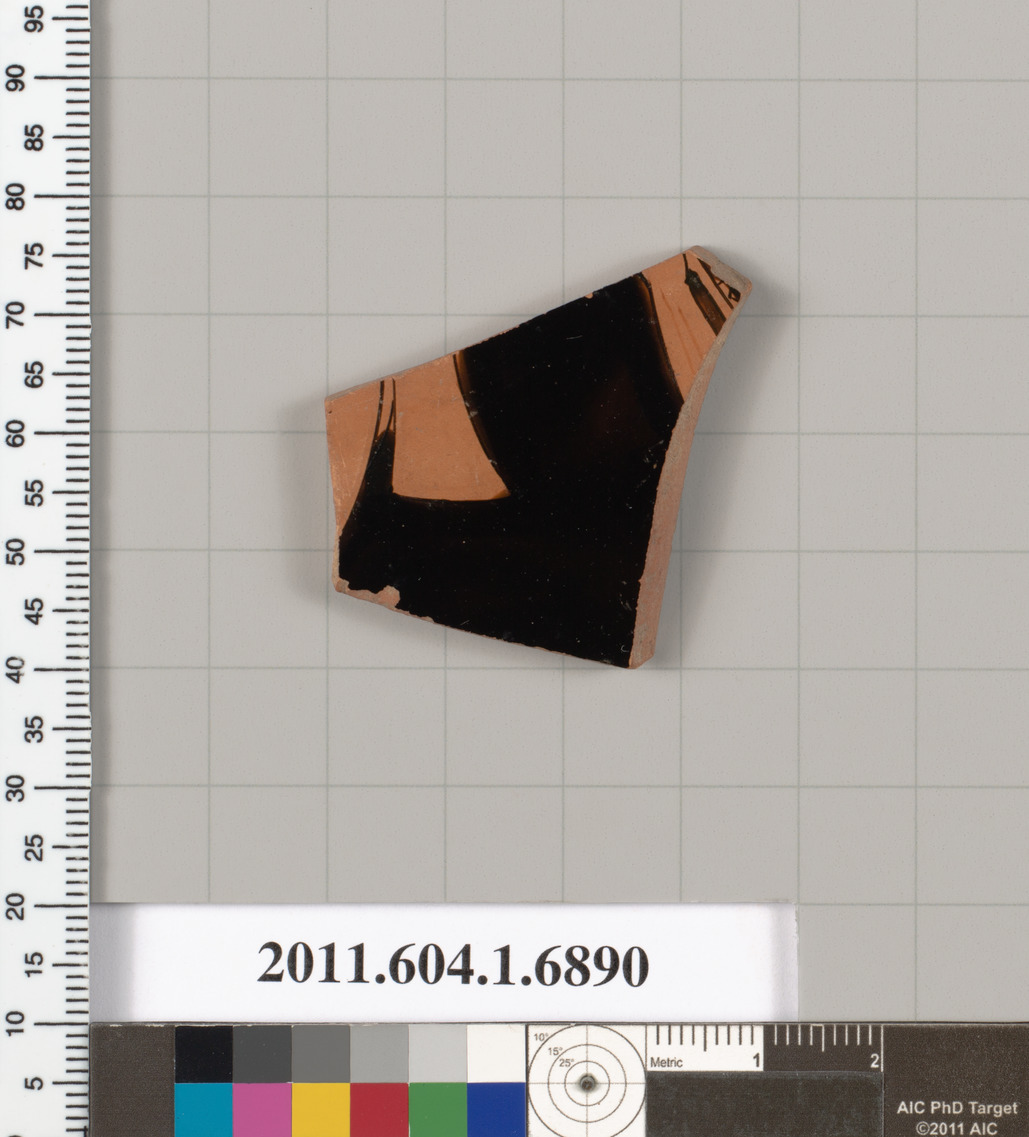
Heritage Synthesis: Terracotta fragment of a kylix (drinking cup)
Curated on Aug 22, 2026 // Node: LDN-01
The Kylix Fragment and the Architecture of Restraint: A Dialectical Reading for 2026 Old Money Silhouettes
The terracotta fragment of an Attic kylix—a drinking cup shorn of its handles, its painted surface worn to a whisper of its former glory—arrives in the Lauren Fashion Heritage Lab as an unlikely oracle. It is not silk, not velvet, not gold-thread. It is fired earth, broken, and yet it speaks with a clarity that silks often obscure. To read this fragment against the 2026 Old Money silhouette is to engage in a dialectical exercise: the kylix offers not a pattern to copy, but a philosophical scaffold upon which to rebuild the quiet authority of understated luxury. The fragment’s materiality—its cracked rim, its residual black-figure glaze, its stubborn refusal to be whole—mirrors the very tension that defines contemporary heritage dressing: the negotiation between permanence and decay, between the object’s silent dignity and the event’s noisy demand.
I. The Meiping Paradox: Silence as Structural Principle
Our internal archive holds a parallel artifact: the *Vase (Meiping) with Waves*, a celadon form whose surface freezes oceanic motion into eternal stillness. The meiping does not narrate; it *is*. Its curved shoulder, tapering to a narrow foot, creates a rhythm that the eye traces without resolution. The wave motif, incised beneath the glaze, is not a depiction of water but a meditation on the impossibility of depicting water. The craftsman’s hand, in rendering the wave, has killed the wave’s mutability—yet the vase’s power lies precisely in this killing. It holds time in suspension, a paradox of materialized flux.
The kylix fragment, though Greek and not Chinese, operates on a cognate logic. Its broken state is not a failure but a *completion*: the cup no longer functions as a vessel for wine, yet its fragmentary form now functions as a vessel for thought. The black-figure decoration—perhaps a palmette, perhaps a draped figure, now illegible—has been stripped of narrative clarity. What remains is pure contour, pure mass, pure *thingness*. This is the meiping’s lesson applied to a Western artifact: the object’s depth lies not in its ornament but in its refusal to explain itself.
For the 2026 Old Money silhouette, this translates into a principle of *negative design*. The suit jacket is not adorned; it is *structured*. The shoulder seam does not announce itself; it *supports*. The fabric—whether a heavy worsted wool or a matte silk twill—is chosen not for its sheen but for its *heft*, its ability to hold a line that does not need to be defended. The Old Money client does not wear a garment; she wears a *position*. The kylix fragment teaches us that the position is most powerful when it is most silent.
II. The Death of Socrates: Narrative as Controlled Combustion
Our archive also holds a reproduction of Jacques-Louis David’s *The Death of Socrates*. Here, time is not suspended but *detonated*. The philosopher’s hand points upward, the other reaches for the hemlock—a moment of absolute moral clarity, frozen at the instant before the body’s betrayal. David’s genius is to arrest the narrative at its most unbearable point: not the death, but the *decision*. The disciples’ grief is theatrical, yet the composition’s rigid geometry—the diagonal of Socrates’ arm, the vertical of the bedpost—imposes a Stoic order upon the emotional chaos. The painting is a *controlled explosion*: passion contained within the architecture of reason.
The kylix fragment, by contrast, offers no such narrative. It is pre-narrative, or post-narrative—a shard that has outlived its story. Yet this is precisely its utility for the 2026 silhouette. The Old Money aesthetic does not reject narrative; it *absorbs* it. A tailored coat with a subtle vent, a blouse with a hidden placket, a trouser with a precise break at the shoe—these are not neutral choices. They are *decisions* made in the language of restraint, decisions that carry the weight of history without shouting it. The kylix fragment, in its brokenness, reminds us that the most powerful narratives are those that have been *edited*. The fragment is not a ruin; it is a *redaction*.
III. The Dialectic of Material and Event: A Synthesis for 2026
The meiping and the David painting represent two poles: the *object* that denies time, and the *event* that consumes it. The kylix fragment, however, occupies a third position—it is an object that *remembers* an event (the symposium, the libation, the hand that held it) while being irreducibly material. This is the dialectical synthesis the 2026 Old Money silhouette must achieve.
Consider the construction of a heritage blazer. The fabric is a dense wool, woven in a mill that has operated since 1890. The cut is based on a pattern from the Lauren archive, originally drafted for a client in 1962. The buttons are horn, not plastic. Each element is a *fragment*—of time, of craft, of a specific sartorial moment. Yet the garment does not present itself as a costume. It presents itself as *inevitable*. This is the kylix’s lesson: the fragment does not apologize for its incompleteness; it *asserts* it. The Old Money silhouette must similarly assert its heritage without nostalgia. It must be *finished* in the sense of being *complete in its restraint*, not *finished* in the sense of being *exhausted*.
The meiping’s wave motif, compressed into stillness, finds its echo in the kylix’s residual glaze—a surface that once shimmered with wine and now shimmers with age. For 2026, this translates into a material palette that favors *patina* over polish. A cashmere coat in undyed camel, a silk scarf with a hand-rolled hem, a leather loafer with a burnished toe—these are not trends. They are *states of being*. The Old Money client does not wear a garment; she wears a *condition* of time.
IV. The Double Redemption: Silence and Scream
The meiping soothes death with silence; the David painting defies death with a scream. The kylix fragment does neither—it *endures*. And endurance, I propose, is the true heritage value for 2026. The Old Money silhouette is not about wealth; it is about *survival*. It is the suit that outlives the season, the coat that outlives the decade, the dress that outlives the wearer’s own doubts. The kylix, broken and buried for two millennia, has outlived its makers, its users, and its civilization. Yet it remains, in its fragmentary dignity, a testament to the human need for *form*.
In the 2026 collection, we will not reproduce the kylix. We will not print its palmette on a jacquard. We will instead internalize its *logic*: that the most profound luxury is the ability to *withhold*. The silhouette will be long, lean, and unadorned. The shoulders will be soft but defined. The waist will be suggested, not cinched. The hem will fall just below the knee or just above the ankle—never at a point of obvious decision. The fabric will be heavy enough to drape, light enough to move. The color will be black, but not a flat black—a black with depth, like the glaze of the kylix, like the shadow in the meiping’s wave.
The kylix fragment, in its brokenness, offers a final insight: *completion is overrated*. The Old Money silhouette does not need to be perfect. It needs to be *true*. And truth, as the meiping and the David painting both attest, is a matter of timing. The wave is true when it is frozen. The death is true when it is suspended. The fragment is true when it is broken. For 2026, Lauren Fashion will embrace this triple truth: we will design garments that are *frozen in their movement*, *suspended in their intent*, and *broken in their perfection*. This is the heritage of the kylix—not a cup, but a *condition*. And it is a condition we will wear with the quiet confidence of those who know that the deepest luxury is the one that does not need to speak.
Heritage Lab Insight
Genetic Bridge: Archive node focusing on Heritage-Black craftsmanship.