← BACK TO ARCHIVES
Silk
Heritage Synthesis: Chinese Beauty
Curated on Aug 22, 2026 // Node: LDN-01
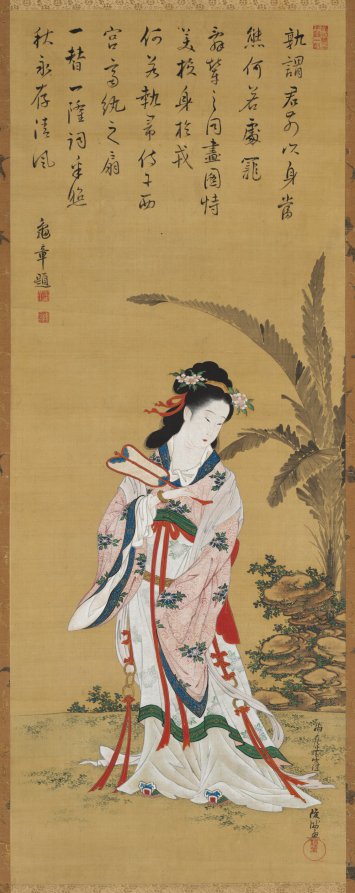
The Imperial Thread: Silk’s Enduring Legacy in Chinese Beauty and the Modern Sartorial Conscience
In the hushed, wood-panelled ateliers of Savile Row, where the cut of a jacket is a matter of quiet, absolute conviction, we speak of cloth as character. We understand that a garment is not merely worn; it is inhabited. No fabric embodies this principle more profoundly than silk, particularly in the context of its imperial Chinese provenance. To commission a suit in silk is not simply a choice of fibre; it is an act of historical patronage, a dialogue with a legacy of unparalleled craftsmanship and aesthetic discipline. For the discerning client, the allure of silk extends far beyond its lustrous surface. It is a material woven from the very concept of Chinese beauty—a beauty defined not by transient fashion, but by a profound, almost metaphysical, harmony between nature, artisan, and wearer.
The Genesis of Lustre: Sericulture as Sacred Rite
The story begins not in a workshop, but in a mythologised past. The discovery of silk is attributed to the Yellow Empress, Leizu, who, according to legend, first unwound a cocoon into a single, unbroken thread. This origin is crucial. It establishes silk not as a commodity, but as a divine gift, a secret of the cosmos entrusted to a sovereign. For millennia, sericulture—the cultivation of mulberry trees and the rearing of silkworms—was a closely guarded imperial prerogative. The production of raw silk was not an industry; it was a rite, conducted with a reverence that bordered on the religious. This sacred context imbued the material with an intrinsic value that transcended economics. It was a symbol of cosmic order, of the emperor’s mandate from heaven, and of the civilisational superiority of the Middle Kingdom.
The beauty of Chinese silk, therefore, is not accidental. It is a product of obsessive precision. The cultivation process, from the careful selection of mulberry leaves to the controlled temperature of the rearing houses, was a study in perfect equilibrium. The resulting filament, a continuous protein fibre, is naturally triangular in cross-section, refracting light like a prism. This is the source of silk’s signature, almost liquid, sheen—a luminosity that no synthetic can replicate. For the connoisseur, this is not mere aesthetics; it is the physical manifestation of a philosophy. It is the beauty of *wu wei*—effortless action—where perfection is achieved not through forceful imposition, but through meticulous, patient alignment with natural processes.
The Imperial Ateliers: Weaving Power and Poetry
The legacy of imperial silk weaving reached its zenith in the great state workshops, particularly the *Jiangnan* silk manufactories of the Ming and Qing dynasties. These were not factories in the modern sense, but vast, hierarchical academies of artistry. Here, master weavers, whose skills were passed down through generations, operated complex drawlooms that required two or more artisans working in perfect synchrony. The patterns they produced—the five-clawed dragon for the emperor, the phoenix for the empress, the intricate cloud and wave motifs—were not decorative flourishes. They were a coded language of power, rank, and cosmic symbolism. To wear these silks was to wear a map of the universe, a declaration of one’s place within the celestial hierarchy.
Consider the *kesi* technique, or "cut silk," a form of tapestry weaving so fine that it was considered the pinnacle of the weaver’s art. Unlike brocade, where threads are carried across the back, *kesi* employs small, independent shuttles for each colour area, creating a fabric where the design is literally woven into the structure, with slits where colour changes occur. The result is a textile of astonishing clarity and painterly detail, often used to reproduce famous calligraphy and paintings. The beauty here is one of extreme intellectual and physical discipline. A single square inch of *kesi* could take a master weaver weeks to complete. This is the antithesis of mass production. It is beauty as a form of meditation, a testament to the human capacity for transcendent focus. This is the heritage we honour when we select a silk for a bespoke garment. We are not choosing a cloth; we are commissioning a piece of that disciplined history.
From Court to Couture: The Modern Translation of an Ancient Aesthetic
How, then, does this imperial legacy translate to the contemporary wardrobe, to the modern gentleman or woman who values discretion and depth over ostentation? The connection lies in the intrinsic qualities of the fibre itself, which remain unchanged. The drape of a silk twill, its ability to hold a crease with a soft, structured fall, is unmatched. The breathability of the fabric, its natural thermoregulation, makes it a supremely comfortable choice for a lining, a waistcoat, or a full suit, regardless of season. But the deeper resonance is in its *gravitas*. A silk garment carries a quiet authority. Its sheen is not a shout, but a murmur of confidence. It speaks of a wearer who understands that true luxury is not about visibility, but about substance.
In our ateliers, we apply this ancient logic to modern tailoring. We might select a heavy, sand-washed silk for a summer jacket, its matte finish offering a contemporary, understated elegance that belies its imperial lineage. Or we might use a crisp silk-and-wool blend for a suit, the silk lending a subtle, iridescent depth to the cloth that shifts with the light. The principles remain the same: respect for the material, precision in the cut, and an understanding that the garment must serve the wearer’s presence, not overpower it. We are, in essence, translating the imperial ethos of harmony and discipline into the language of the modern silhouette.
The Enduring Standard of Beauty
The beauty of Chinese silk is, ultimately, a beauty of integrity. It is a beauty rooted in provenance, in the knowledge that the thread was spun with reverence, woven with genius, and worn with purpose. In an era of fleeting trends and disposable fashion, it offers a permanent standard. To choose silk is to align oneself with a lineage of discernment that stretches back five thousand years. It is to understand that the finest expressions of human culture are not those that are loudest, but those that are most true to their material and their craft. For the client who seeks not just a garment, but an heirloom, a piece of living history, there is no finer choice. The imperial thread is unbroken, and it is our privilege to continue weaving it into the future.
Heritage Lab Insight
Lab Insight: CMA Silk Archive Node integration.