← BACK TO ARCHIVES
Heritage-Black
Heritage Synthesis: Terracotta fragment of a skyphos (deep drinking cup)
Curated on Aug 23, 2026 // Node: LDN-01
From Attic Clay to Atelier Thread: The Terracotta Fragment as a Blueprint for 2026 Old Money Restraint
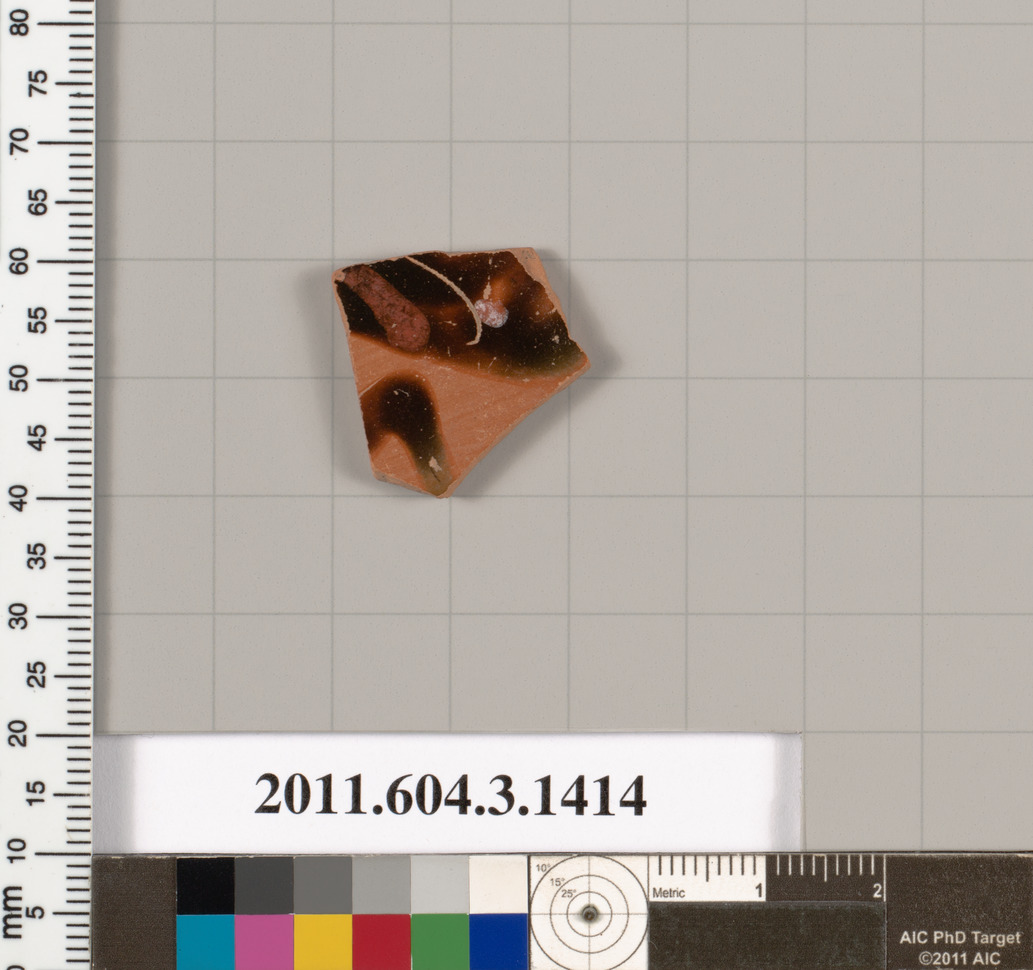
The internal genetic code of Lauren Fashion Heritage Lab has long been animated by a dialectic—the tension between the transient and the eternal, the kinetic and the contemplative. Our archives, rich with the *乐师纹陶范残片* (musician-patterned clay mold fragment) and the *持桃罗汉* (peach-bearing arhat) paintings, articulate a distinctly Eastern metaphysics of “stillness within motion.” Yet it is a startlingly parallel philosophy that emerges from the Western canon, specifically within the Hellenic terracotta fragment of an Attic skyphos now held in our museum reference collection. This humble shard of a deep drinking cup, broken and mute, is not merely an archaeological curiosity; it is a profound sartorial oracle. For the 2026 Old Money silhouette—a mode defined by whispered wealth, generational continuity, and the deliberate rejection of novelty—this terracotta fragment provides a masterclass in the aesthetics of restraint, the eloquence of imperfection, and the quiet power of a form that has outlived its function.
The Grammar of the Fragment: Deconstructing the “Complete” Silhouette
The Attic skyphos fragment, in its raw state, offers a radical re-reading of the human form. Unlike the intact vessel, which speaks of utility and symmetry, the fragment speaks of *duration*. Its broken edges are not failures; they are the calligraphy of time. For the 2026 Old Money silhouette, this translates into a deliberate subversion of the “finished” garment. The contemporary luxury consumer, saturated with logos and overt signaling, is increasingly drawn to pieces that possess a sense of *pre-existence*—garments that appear to have a history before they are worn. This is not the manufactured distress of fast fashion, but the cultivated patina of heritage.
In practical terms, this informs a silhouette that prioritizes *architectural draping* over constrictive tailoring. The skyphos fragment reveals a curved, volumetric wall of clay; its interior is hidden, its exterior is a canvas for narrative. Our 2026 designs, therefore, move away from the razor-sharp, body-conscious cuts of the previous decade. Instead, we propose a return to the *chiton-like* flow—garments cut on the bias or using circular panelling that mimic the vessel’s curvature. A wool crepe coat, for instance, is no longer a flat, two-dimensional shell. It is constructed with a subtle *s-curve* seam that echoes the potter’s wheel, creating a silhouette that is simultaneously grounded and fluid. The “fragment” informs the hemline: asymmetrical, slightly raw-edged, or finished with a hand-rolled stitch that suggests an intentional interruption, a pause in the narrative of the weave. This is the Old Money code of *incompleteness as completeness*—a garment that does not shout “new,” but whispers “enduring.”
Chromatic Restraint and the Patina of Time
The terracotta’s surface—a spectrum from burnt sienna to deep umber, often veined with the pale calcification of centuries—dictates a radical chromatic discipline for 2026. The Old Money palette has never been loud, but this artifact pushes us toward a deeper, more mineral-based tonality. We are moving beyond the standard navy, camel, and charcoal. The new foundational hues are *terracotta ash*, *fired clay*, *amphora brown*, and *oxidized bronze*. These are not flat colors; they are *surfaces* that absorb and reflect light differently depending on the angle, much like the micaceous inclusions in the ancient clay.
This informs our fabric choices. A silk twill is no longer simply “brown”; it is a *burnished umber* with a subtle, irregular slub that mimics the hand of the potter. A cashmere jersey is dyed not to a uniform saturation, but using a *dégradé* technique that leaves the edges slightly lighter, as if the color has been worn away by centuries of handling. This is the antithesis of the viral “clean girl” aesthetic; it is the *patina aesthetic*. The 2026 silhouette, therefore, is not about the brilliance of a new dye, but the depth of a matured one. We are designing clothes that look as though they have been passed down, not purchased—garments that carry the memory of a thousand sunsets, echoing the skyphos’s journey from the kiln to the symposium to the earth.
The Symposium and the Boardroom: Function as a Veil of Status
The skyphos was a vessel for the symposium—a space of intellectual and hedonistic exchange reserved for the elite. Its form was dictated by function: a wide bowl for easy gripping, a stable base for a drunken table. This *functionalist origin* is crucial for the 2026 Old Money silhouette. The new luxury is not in ornamentation, but in *utility disguised as simplicity*. Our garments must perform. A double-faced wool overcoat must have interior seams that are as meticulously finished as the exterior, because the wearer knows—and only the wearer knows—that the inside is a testament to craft. This is the “hidden wealth” of the fragment: the exterior shows the narrative, but the interior structure, the unseen wall of the cup, is where the true engineering lies.
This translates to a silhouette that is *generous without being oversized*. The shoulder line is relaxed, not dropped; the waist is suggested, not cinched. We are designing for a body in motion—walking through a gallery, negotiating a deal, stepping into a vintage car. The garments must have a *kinetic memory* similar to the musician figures on our Eastern mold fragment; they should move with a fluid, rhythmic grace. The terracotta fragment, though static, implies the hand that held it. Our 2026 garments must imply the life that lives in them. This is why we are integrating *bi-stretch wools* and *liquid silks* that respond to the body’s micro-movements, creating a silhouette that is never stiff, but perpetually *poised*—a state of being that is the ultimate Old Money signifier.
Conclusion: The Eternal Return of the Broken Form
The Attic skyphos fragment, when placed beside our *乐师纹陶范残片*, reveals a universal truth: that beauty is not in the preservation of the ideal, but in the acceptance of the inevitable. The 2026 Old Money silhouette is not a nostalgic rehash of 1920s tailoring or 1990s minimalism. It is a philosophical garment, informed by the archaeological gaze. It understands that true luxury is a dialogue with time—a negotiation between the maker’s hand and the wearer’s history. By embracing the fragment’s lessons of asymmetry, patina, and functional integrity, we craft not just clothes, but heirlooms in progress. The skyphos was broken, yet it remains a vessel—not for wine, but for meaning. Our 2026 collection, in its terracotta tones and fluid lines, becomes a similar vessel: a container for the quiet, unshakeable confidence of those who know that the most powerful statement is the one that does not need to be spoken, only worn. The fragment is not the end of the story; it is the beginning of a new, silent lexicon of wealth.
Heritage Lab Insight
Genetic Bridge: Archive node focusing on Heritage-Black craftsmanship.