← BACK TO ARCHIVES
Silk
Heritage Synthesis: Chinese Beauty
Curated on Aug 23, 2026 // Node: LDN-01
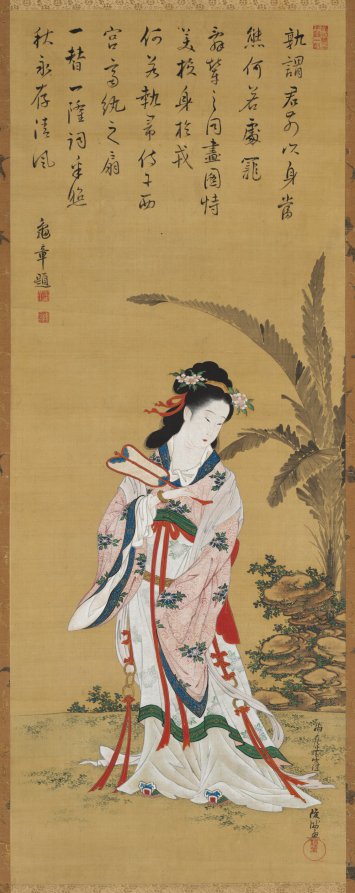
An Heirloom of Empire: The Enduring Legacy of Imperial Silk Weaving
In the hushed, wood-panelled ateliers of Savile Row, where the cut of a sleeve is a matter of quiet, absolute conviction, we understand that true luxury is never loud. It is a whisper of provenance, a weight of history that settles perfectly on the shoulders. It is the knowledge that the cloth you wear was not merely manufactured, but *authored*. This is the very essence we at Lauren Fashion Heritage Lab seek to preserve, and nowhere is this narrative more profound, more exquisitely detailed, than in the legacy of Chinese imperial silk.
To speak of Chinese silk is to speak of a material that predates the concept of China itself. Its origins, shrouded in the mists of the Neolithic period, are as legendary as they are factual. The Empress Leizu, wife of the Yellow Emperor, is credited with discovering the silkworm’s gift some 5,000 years ago, a myth that firmly entwined sericulture with the divine right of rule. From that moment, silk was never merely a textile; it was a political instrument, a spiritual conduit, and the ultimate currency of power. For a garment to be worthy of the imperial court, it had to embody a standard of perfection that we, in our modern age of mass production, can scarcely conceive.
The materiality of this silk is the first testament to its imperial pedigree. The thread itself, drawn from the cocoon of the *Bombyx mori* moth, is a continuous filament, often exceeding a mile in length. This unbroken strand is the foundation of its legendary strength and its unparalleled, liquid luminosity. Unlike cotton or wool, which are spun from short staples, this single, continuous filament allows for the creation of a fabric of extraordinary density and smoothness. When held to the light, imperial silk does not merely reflect; it glows with an internal, pearlescent fire. The finest grades, such as *kesi* (literally "cut silk") or the incredibly fine *gongjian* (tribute silk), were woven so tightly that they were said to be water-resistant and would rustle with a sound like falling snow—a sound known as "the voice of the dragon."
The legacy of imperial silk weaving is, however, far more than a triumph of agricultural and mechanical process. It is a chronicle of artistic and philosophical ambition. The imperial workshops, particularly those of the Ming (1368–1644) and Qing (1644–1912) dynasties, were not factories; they were academies of genius. Master weavers, often working in teams of two—one at the loom, one above, coordinating the intricate pattern—spent months, sometimes years, on a single garment. The looms themselves, complex drawlooms operated by a "draw boy" who pulled specific heddles according to a coded pattern, were marvels of pre-industrial engineering. This was a collaborative art form, a silent ballet of human precision and mechanical ingenuity.
The designs woven into these imperial silks were not mere decoration; they were a codified language of statecraft. The five-clawed dragon, reserved exclusively for the Emperor, was not simply a fearsome beast but a symbol of cosmic power, of the sovereign’s mandate to rule the four seas. The phoenix, representing the Empress, signified virtue and grace. Auspicious motifs—the endless knot for longevity, the bat for fortune, the peony for wealth and honour—were not chosen for aesthetic whim. They were meticulously selected to project an image of a harmonious, prosperous, and divinely ordained realm. The colours, too, were strictly regulated. Imperial yellow, derived from the safflower, was the sole prerogative of the Emperor. The very act of wearing such a garment was a participation in the celestial order, a physical manifestation of one’s place within the grand hierarchy of the universe.
The technical mastery required to achieve this is staggering. Consider the *kesi* technique, often described as "slit tapestry." Here, the weft threads are not carried across the entire width of the fabric. Instead, each colour is woven back and forth in its own specific area, creating a design that is identical on both sides. The result is a tapestry of such clarity and detail that it resembles a painting, yet it is a fabric of immense durability. In the finest examples, weavers would even incorporate threads of pure gold, wrapped around a silk core, to add a shimmering, three-dimensional quality to the dragons and clouds. This was not a craft; it was a high art, on par with the most celebrated painting or calligraphy of the era.
For the contemporary connoisseur, the legacy of this imperial weaving is not a relic to be viewed from behind glass. It is a standard. It is the benchmark against which all true luxury must be measured. The principles that governed the imperial looms—an uncompromising commitment to material integrity, a reverence for artisanal skill, and a deep understanding of symbolism—are the very principles that should guide modern design. When we feel the substantial yet fluid drape of a high-quality silk twill, or admire the crisp, precise definition of a jacquard pattern, we are, whether we know it or not, paying homage to the weavers of Suzhou and Nanjing.
The legacy of imperial silk is a reminder that true heritage is not static. It is a living dialogue between the past and the present. The techniques may have evolved, the looms may now be electronic, but the pursuit of perfection remains a constant. To wear a garment of exceptional silk is to wear a piece of that imperial ambition. It is to understand that the value of a thing lies not in its price tag, but in the depth of its story, the skill of its creation, and the enduring power of its material. It is, in the truest sense of the word, an heirloom of empire, cut for a modern world that still recognises the quiet, unassailable authority of perfection.
Heritage Lab Insight
Lab Insight: CMA Silk Archive Node integration.