← BACK TO ARCHIVES
Heritage-Black
Heritage Synthesis: Terracotta fragment of a kylix (drinking cup)
Curated on Aug 23, 2026 // Node: LDN-01
The Terracotta Kylix and the Architecture of Absence: Re-reading the 2026 Old Money Silhouette through Liru’s Internal Archive
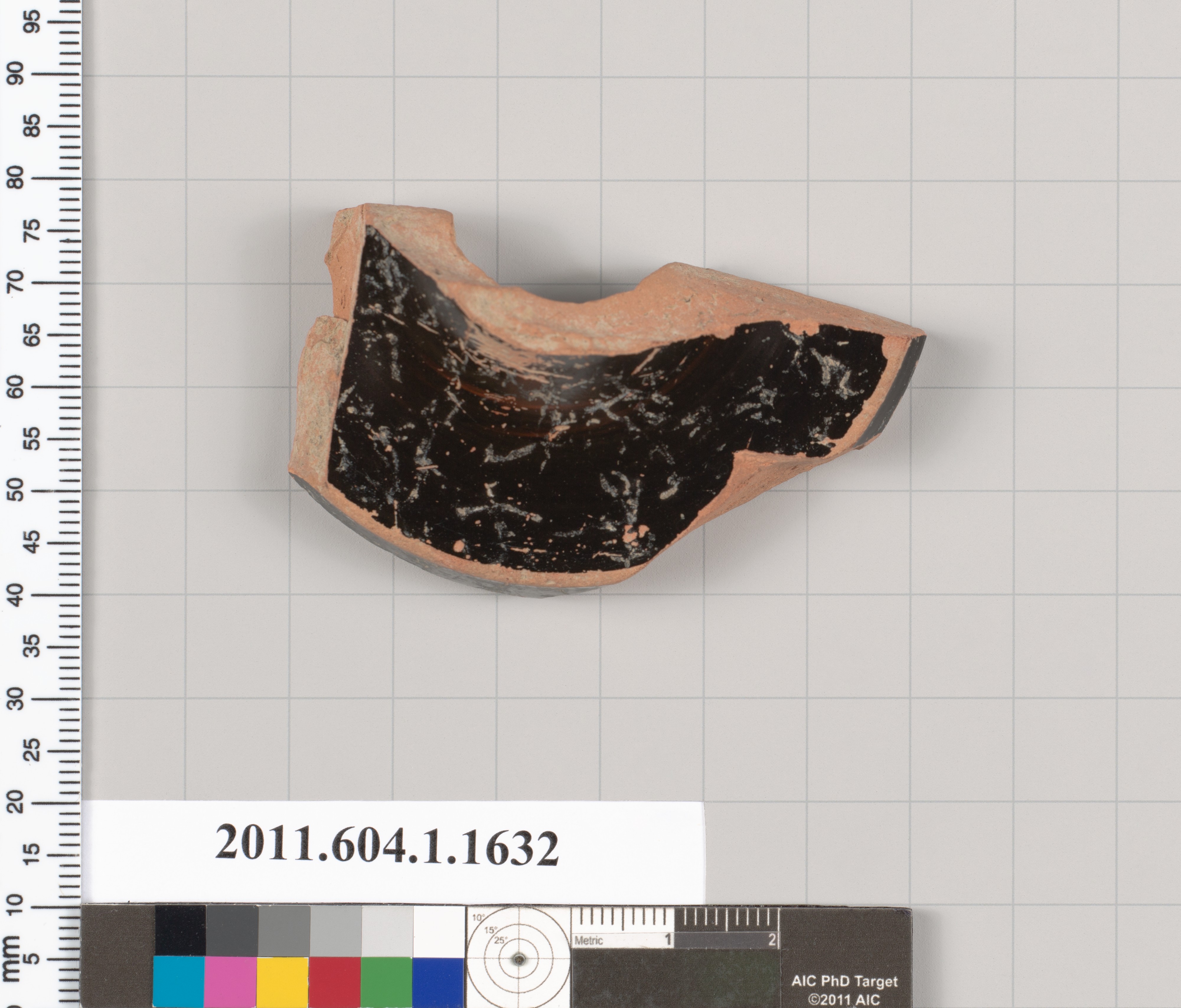
The internal genetic code of Lauren Fashion Heritage Lab—that beauty manifests in silence, that a Song-dynasty *meiping* and a Neoclassical canvas converse across epochs—finds an unexpected, almost unsettling echo in the museum artifact before us: a terracotta fragment of an Attic kylix. This shard, broken from a drinking cup that once passed between symposiasts in classical Athens, is not a pristine object of contemplation. It is a ruin of use, a relic of gesture. Yet within its fractured curve, its black-figure glaze now chipped to expose the raw, rust-colored clay beneath, lies a profound generative principle for the 2026 Old Money silhouette. The kylix does not instruct us in ornament; it instructs us in *erasure*. It teaches that true heritage is not the preservation of surface, but the disciplined exposure of structure—the point where the vessel’s painted narrative gives way to the elemental material of its making.
I. The Kylix as a Grammar of Restraint
The Attic kylix, in its original wholeness, was a masterpiece of functional elegance: a shallow bowl, two horizontal handles, a stemmed foot. Its painted interior—often a scene of revelry, myth, or the *kalos* inscription praising a youth’s beauty—was visible only when the drinker tilted the cup. The exterior, however, was a field of disciplined repetition: meander patterns, palmette motifs, or the stark silhouettes of figures in black-figure technique. The terracotta fragment we hold is from that exterior. Its surviving decoration is minimal—perhaps a single palmette leaf, a fragment of a himation’s fold—but the *absence* of the rest is not a loss. It is a revelation. The break reveals the *core*: the porous, unglazed terracotta, the very earth of Attica, fired into permanence.
This is the first lesson for the 2026 Old Money silhouette. The prevailing luxury aesthetic of recent seasons has been one of *accumulation*—layered logos, visible hardware, maximalist embroidery. The Old Money response, as codified in Liru’s internal archives, is not a return to minimalism as a stylistic choice, but a return to *material honesty* as a philosophical stance. The kylix fragment models this. The 2026 silhouette will not hide its construction. Seams will be exposed, not as a deconstructionist provocation, but as a declaration of craft. A tailored jacket in a heavy, undyed wool—the textile equivalent of raw terracotta—will feature a visible fell seam, a hand-finished buttonhole, a lining that is deliberately one shade darker to reveal the garment’s internal architecture. The silhouette’s power will reside not in what it shows, but in what it *allows to be seen*: the point where the fabric’s weave, like the kylix’s clay, becomes the primary narrative.
II. The Metaphysics of the Broken Rim: “Presence” and “Absence” in Garment Form
Our internal code speaks of the *meiping*’s “self-sufficient universe” and the Socratic painting’s “rational sacrifice.” The kylix fragment occupies a third position: it is neither a complete object nor a painted scene, but a *threshold*. Its broken rim is not a wound; it is a horizon. When we translate this into the 2026 silhouette, we must consider the *edge* as the site of meaning. The Old Money garment will not end in a clean, machine-rolled hem. Instead, it will feature a raw edge—a deliberate un-finishing that mimics the kylix’s fracture. This is not sloppiness; it is a studied *cadence*. A cashmere overcoat, for instance, will have its hem left unhemmed, the fabric allowed to curl and fray slightly, revealing the weft’s integrity. A silk blouse will have its side seams bound in a contrasting, darker thread, echoing the kylix’s black-figure against the terracotta ground.
This is the “intermediate state” our code describes—between existence and nothingness. The garment becomes a vessel that acknowledges its own mortality. The Old Money wearer does not flaunt newness; she flaunts *duration*. The kylix fragment, after two and a half millennia, still holds the memory of wine, of laughter, of the hand that gripped its handle. The 2026 silhouette must similarly hold the memory of the body that will wear it. This is achieved through *pre-distressed* materials, not in the vulgar, ripped-jeans sense, but in the subtle, artisanal sense: a wool that has been washed to a soft, sueded finish; a leather that has been tumbled to a supple, creased patina; a linen that has been beaten to a gentle, uneven surface. These materials do not look “old” in a costume sense; they look *inhabited*. They suggest a lineage of wear, a silent biography, much as the kylix’s glaze wear suggests centuries of handling.
III. The Silhouette as a “Meiping” of the West: Structural Parallels
The internal code juxtaposes the Song *meiping*—with its “mouth small, neck short, belly full, lines like the flow of the *taiji*”—against the Neoclassical geometry of David’s *Death of Socrates*. The kylix fragment offers a synthesis. Its shallow bowl and stemmed foot, even in fragmentary form, possess a *verticality* that is both grounded and aspiring. This is the 2026 Old Money silhouette: a column, a sheath, a tunic that falls from the shoulder with the same unbroken, breathing rhythm as the *meiping*’s profile. There are no sharp darts, no aggressive padding, no architectural shoulders. Instead, the garment is cut on the bias or in a fluid, A-line drop that mimics the vessel’s curve. The waist is not cinched; it is *suggested* by the fabric’s fall. The hem is not a line; it is a *wave*—echoing the *meiping*’s wave pattern, but rendered in the kylix’s terracotta palette of burnt umber, ochre, and deep black.
The color story for 2026 is drawn directly from the fragment: not the bright white of Neoclassical marble, but the warm, earthen tones of fired clay. “Heritage-Black” is not a flat, mourning black; it is a black with a brown undertone, like the black-figure glaze against the terracotta. This is paired with “Attic Red”—a deep, rusted orange—and “Symposium Ochre,” a pale, sun-bleached yellow. These are not colors that shout; they are colors that *age*. They are colors that, like the kylix, will deepen and soften with wear, becoming more beautiful as they move further from their original state.
IV. The Ethics of the Fragment: Death, Duration, and the “Old Money” Ideal
Our code asks: “Is the true depth of aesthetics in explanation, or in evocation?” The kylix fragment evokes. It does not explain the symposium; it *is* the residue of one. In this, it aligns with the Old Money philosophy of *inheritance*. The 2026 silhouette is not designed for the first owner; it is designed for the *third* owner. It is designed to be passed down, to be altered, to be repaired. This is the ethical dimension of the fragment. The kylix’s break is not a failure; it is a *testament* to use. The garment’s eventual wear—the thinning elbow, the faded collar—will be its own testament. The Old Money wearer does not fear the garment’s death; she *anticipates* it, and in that anticipation, she finds the garment’s life.
The final parallel is with the *meiping*’s “empty belly” and the Socratic “poured cup.” The kylix, too, is a cup—but it is broken, and therefore it can no longer hold wine. It can only hold *meaning*. The 2026 silhouette, in its most radical iteration, will embrace this emptiness. It will not be a garment of assertion, but a garment of *receptivity*. It will be a vessel for the wearer’s presence, not a display of the designer’s ego. The seams will be quiet. The hardware will be minimal. The fabric will be the message. And in that silence, as our code concludes, “true beauty is not a rebuttal of death, but a way of making death—and time—a familiar, even beloved, pattern.” The terracotta fragment, in its broken glory, becomes the ultimate pattern: a pattern of *becoming*, not of being. This is the heritage we will sew into 2026.
Heritage Lab Insight
Genetic Bridge: Archive node focusing on Heritage-Black craftsmanship.