← BACK TO ARCHIVES
Heritage-Black
Heritage Synthesis: Terracotta fragment of a pot
Curated on Aug 24, 2026 // Node: LDN-01
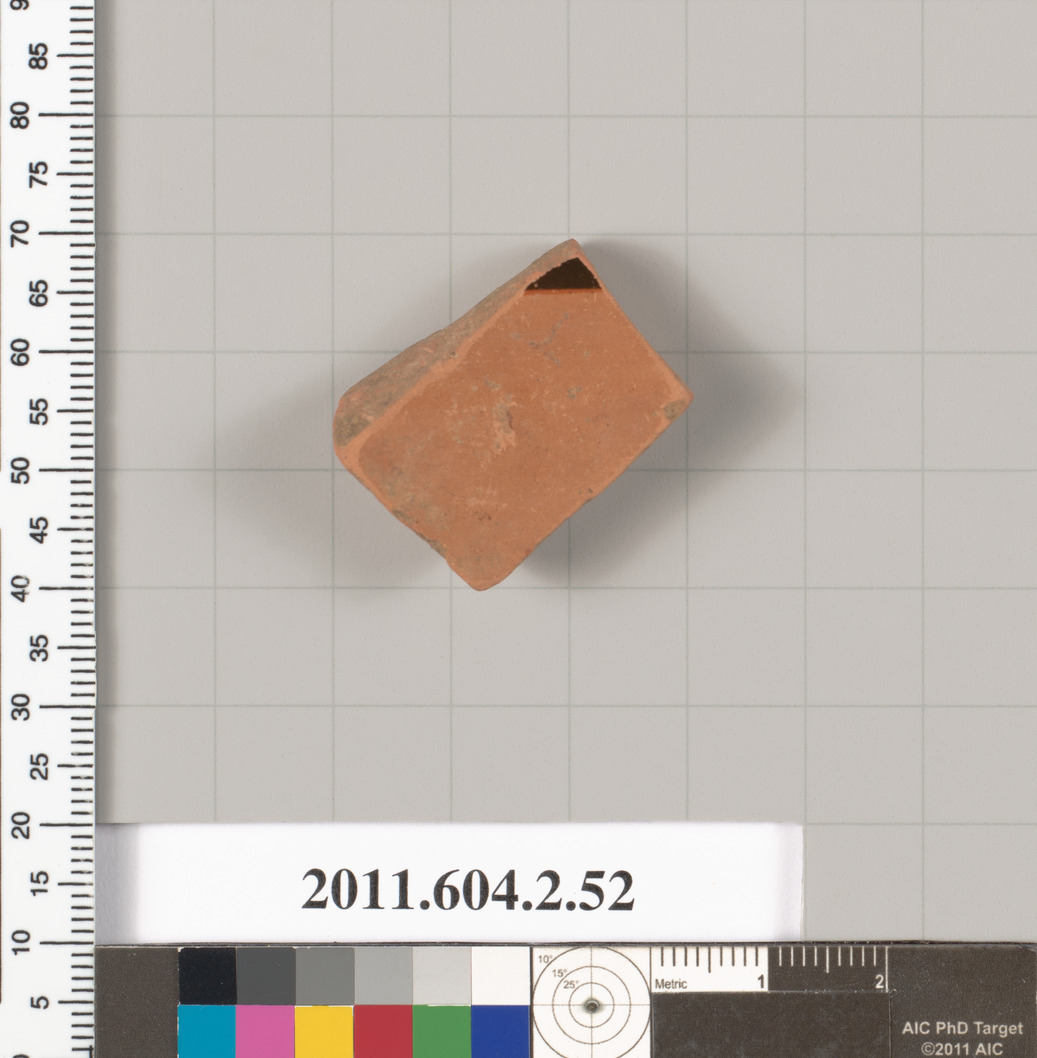
The Terracotta Fragment and the Architecture of Restraint: Informing the 2026 Old Money Silhouette
The study of heritage artifacts often reveals that the most profound design innovations are not born of novelty, but of a deep, almost archaeological excavation of shared human memory. Within the Lauren Fashion Heritage Lab, we routinely juxtapose our internal archives—such as the pastoral idyll of *Herdboys and Buffalos* and the celebratory *Wine Cup with Children at Play*—with external museum objects to decode the genetic code of enduring style. Today, we turn our analytical lens to a seemingly austere object: a terracotta fragment of an Attic pot from ancient Greece. At first glance, its broken edges and earthen surface appear distant from the polished world of luxury fashion. Yet, upon rigorous examination, this fragment serves as a foundational blueprint for the 2026 Old Money silhouette, articulating principles of *material honesty*, *architectural restraint*, and *quiet permanence* that will define the season’s most compelling offerings.
I. The Primacy of Material Honesty: From Clay to Cashmere
The Attic terracotta fragment, typically a shard of a *kylix* or *amphora*, possesses a specific, unvarnished tactility. Its surface—whether black-figured or red-figured—retains the trace of the potter’s wheel, the slight irregularity of hand-thrown form, and the mineral depth of iron-rich clay. This is not a material disguised to imitate another; it is a declaration of its own geological and artisanal origin. For the 2026 Old Money silhouette, this translates into a radical return to *material veracity*. We move away from high-shine, logo-emblazoned synthetics toward fabrics that speak their own language of provenance.
In practice, this means the silhouette will be anchored in heavyweight, undyed or minimally dyed cashmere and wool—fibers that, like clay, carry a memory of the land. The 2026 palette will be drawn from the earth itself: the deep umber of fired clay, the chalky white of unglazed bisque, the muted ochre of Attic slip. Garments will be cut to honor the drape and weight of the fabric, not to fight it. A tailored overcoat in undyed Mongolian cashmere, for instance, will not be structured with aggressive shoulder padding but will instead follow the natural fall of the material, creating a columnar, grounded silhouette that echoes the stable, weighty presence of the amphora. The internal genetic code of the *Herdboys*—with its celebration of natural, unforced harmony—finds its sartorial expression here: the fabric is not a canvas for a logo, but the message itself.
II. Architectural Restraint: The Geometry of the Fragment
The terracotta fragment is defined by its incompleteness, yet within that broken geometry lies a perfect logic. The curve of the pot’s belly, the sharp turn of the lip, the subtle groove of a decorative band—these elements are not arbitrary. They are the result of a rigorous, functional architecture designed to hold liquid, to be gripped, and to be viewed from multiple angles. The 2026 Old Money silhouette adopts this principle of *architectural restraint*, prioritizing structure over embellishment.
This is not the overt, corseted structure of a previous era, but a hidden, internal scaffolding. Consider the development of a new jacket silhouette for 2026: a single-breasted, three-button coat with a suppressed waist and a gently flared skirt. The seams are not merely functional; they are drawn as if by a compass, creating a series of vertical and horizontal lines that mimic the painted bands on the Attic vessel. The shoulder line is precise but soft, echoing the rounded turn of the pot’s shoulder. The silhouette is *complete* in its restraint, much like the fragment is complete in its brokenness—it does not yearn for more. This aligns with the philosophical stillness of the *Herdboys* aesthetic, where the empty space in the composition is as meaningful as the figures themselves. In our 2026 garments, the "empty space" is the unadorned expanse of fine wool or silk, a deliberate absence of clutter that allows the architectural line to resonate.
III. The Iconography of Quiet Permanence: Against the Ephemeral
The painted scenes on Attic pottery—whether depicting athletes, symposium revelers, or mythological battles—were not mere decoration. They were a codified language of civic virtue, social memory, and cultural identity. The *Wine Cup with Children at Play* from the Dutch Golden Age shares this communicative function, albeit with a different lexicon, celebrating the transient joy of childhood as a symbol of earthly abundance. The terracotta fragment, however, speaks to a more austere, enduring code. Its imagery, often rendered in stark black against the orange-red clay, possesses a graphic permanence that transcends its physical fragility.
For the 2026 Old Money collection, this translates into a deliberate move away from ephemeral trends toward *permanent iconography*. We are not designing for a single season’s Instagram feed, but for a decade of wear. This is expressed through the use of heritage codes—but codes that are abstracted and refined. Instead of a literal crest or logo, we employ subtle, almost architectural details: a hand-finished buttonhole, a specific lapel roll, a particular stitch density that is visible only upon close inspection. These are the "painted figures" of our modern garment—quiet markers of belonging that are legible only to those who understand the language. The 2026 silhouette is thus an heirloom in progress, designed to be passed down, its very wear and patina (like the worn surface of the terracotta) adding to its value and narrative. It is the antithesis of fast fashion, embodying the *Old Money* ethos of accumulation over consumption, of permanence over novelty.
IV. Synthesis: The Fragment as a Complete World
The most profound lesson of the Attic terracotta fragment is its demonstration that a part can contain the whole. A single shard can tell us about the vessel’s shape, its function, its artistic milieu, and the hands that made it. The 2026 Old Money silhouette, informed by this principle, is not a collection of disparate pieces but a cohesive, integrated system. The trousers are cut to relate to the jacket’s architecture; the knitwear’s gauge echoes the fabric’s weight; the accessories—a leather belt, a silk scarf—are chosen for their material integrity, not their branding.
This holistic approach mirrors the internal dialogue between our archived artifacts. The *Herdboys* teaches us the value of negative space and spiritual calm; the *Wine Cup* reminds us of the celebration of human craft and joy. The terracotta fragment unifies these themes under a banner of *classical restraint*. It grounds the ethereal quality of the pastoral in the solid, tangible reality of earth and fire. The 2026 silhouette is therefore a meditation on durability—not just physical durability, but cultural and aesthetic durability. It is a garment that carries the weight of history without being burdened by it, a modern form that whispers of ancient symmetries.
In conclusion, the terracotta fragment is not a relic to be admired from a distance, but a working drawing for the future. It instructs us to strip away the superfluous, to honor our materials, and to build with the confidence of those who know that true luxury is not loud, but lasting. The 2026 Old Money silhouette, as developed in our lab, is a direct response to this brief: a wardrobe of fragments that are, in themselves, complete worlds of quiet, powerful elegance.
Heritage Lab Insight
Genetic Bridge: Archive node focusing on Heritage-Black craftsmanship.