← BACK TO ARCHIVES
Silk
Heritage Synthesis: Silk with lattice of animals in medallions
Curated on Aug 24, 2026 // Node: LDN-01
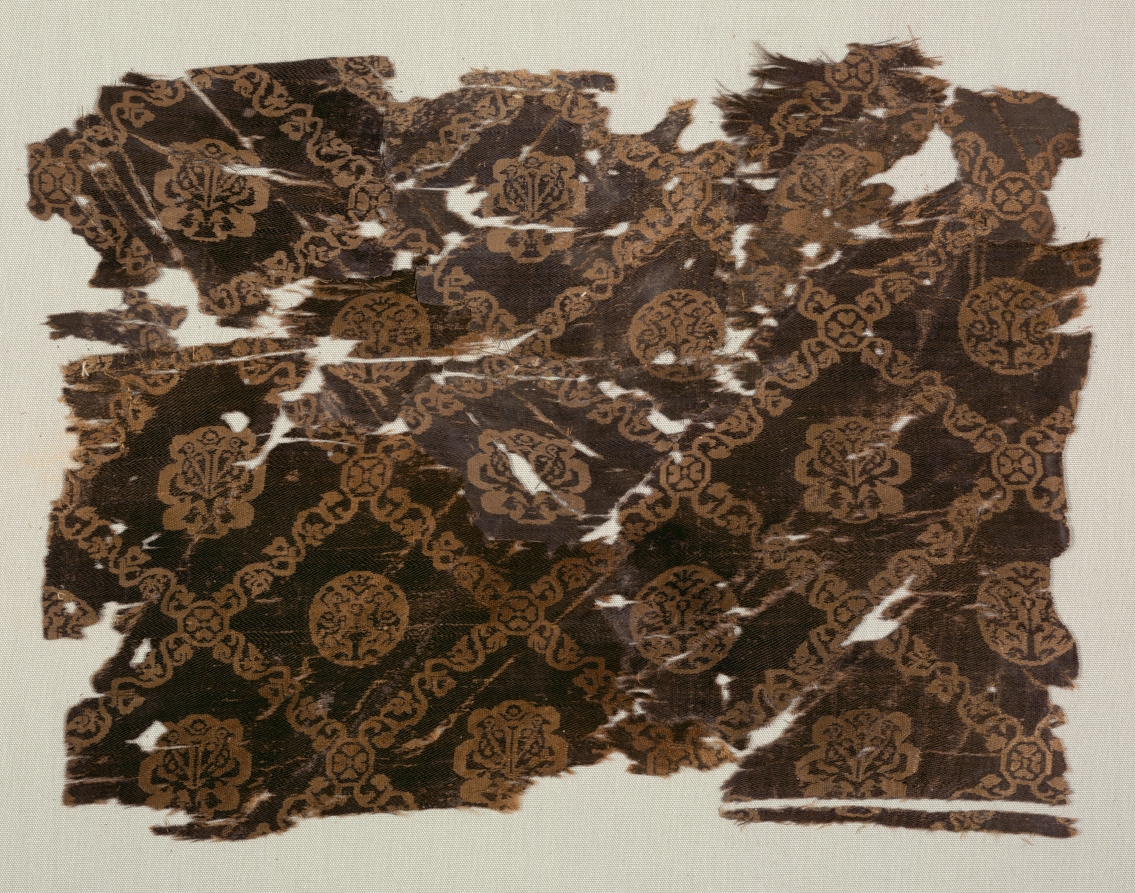
The Lattice of Beasts: An Heirloom of Imperial Loomcraft
In the hushed, wood-panelled offices of Savile Row, where the cut of a sleeve is debated with the gravity of a treaty, we rarely pause to consider the very fabric that drapes our finest commissions. Yet, when a client requests something truly exceptional—a dressing gown of unimpeachable authority, a smoking jacket that whispers of dynasties—our hands inevitably return to a particular textile: the silk lattice of animals in medallions. This is not merely cloth; it is a codified document of imperial power, a cartography of celestial order woven in lustrous thread. Its legacy is not one of fleeting fashion, but of enduring sovereignty, and to understand it is to understand the very grammar of luxury.
Materiality: The Weight of Light
The materiality of this silk is its first, most commanding argument. We speak not of the flimsy, commercial silks that drape department store mannequins. This is a *twill-weave* silk, often with a subtle, self-patterned ground—a *damassé* effect—that gives the fabric a liquid, mercurial depth. The warp and weft are of the highest grade, reeled from the cocoons of *Bombyx mori* fed on the finest mulberry leaves, producing a filament of extraordinary length and tensile strength. When held to the light, the silk does not merely reflect; it *absorbs* and *re-emits*, creating a chiaroscuro that shifts with the slightest movement. The medallions, or *roundels*, are not printed but *woven*—a feat of jacquard engineering that requires thousands of punched cards, each one a binary code of thread interlacing. The result is a fabric with a sculptural relief, a topography of raised motifs that invites the touch as much as the eye. The dyes, derived from madder root for the crimsons, indigo for the deep blues, and weld for the golds, are substantive, penetrating the fibre itself. They do not fade; they *age*, developing a patina of depth that no modern chemical process can replicate. This is a cloth built for centuries, not seasons.
Iconography: The Cosmic Menagerie
The design—a lattice of animals within medallions—is not decorative whimsy. It is a rigid, hierarchical system of symbols, a visual analogue to the imperial court’s own structure. The central medallion, or *tuan*, often contains a five-clawed dragon (*mang*), the exclusive emblem of the Emperor. Its serpentine form, coiled in pursuit of the flaming pearl, represents the dynamic forces of the cosmos—thunder, rain, and the cyclical renewal of life. The dragon is not a monster; it is a benevolent, omnipotent force, the guardian of the celestial mandate.
Surrounding this central authority, the lattice is formed by intersecting bands of stylised clouds (*xiangyun*) or geometric key-fret patterns (*leiwen*). Within the interstices of this lattice, we find the secondary beasts, each with a precise rank and meaning. The *qilin*, a chimeric creature of benevolence, signifies righteousness and the arrival of a sage. The *feng-huang*, or phoenix, is the empress’s emblem, representing virtue and grace. The white tiger (*baihu*) guards the west, a symbol of martial valour, while the tortoise-serpent (*xuanwu*) of the north denotes longevity and endurance. Even the smaller creatures—bats (for fortune, *fu*), cranes (for longevity), and butterflies (for joy)—are placed with deliberate intent. The entire composition is a microcosm of the imperial state: a central, absolute power, surrounded by a loyal, ordered hierarchy, all bound by the immutable laws of heaven. To wear this silk was to wear the universe on one’s shoulders.
Context: The Loom as Throne
This textile’s provenance lies in the imperial weaving workshops of the Ming (1368–1644) and Qing (1644–1912) dynasties, most notably the *Jiangning* and *Suzhou* bureaux. These were not factories; they were state institutions of immense prestige, staffed by master weavers whose skills were passed down through generations, often under oath of secrecy. The looms themselves were colossal, requiring two weavers to operate—one above, one below—in a choreographed dance of shuttle and treadle. A single bolt of this silk, measuring perhaps twelve yards, could take months to complete. The output was strictly rationed; patterns were registered, and any unauthorised replication was punishable by death. The silk was not a commodity; it was a *tribute*, a material expression of the emperor’s beneficence to his highest-ranking nobles and foreign envoys. To receive a robe of this fabric was to be admitted into the innermost circle of power.
The legacy of this weaving tradition extends far beyond the fall of the last emperor. When the Qing dynasty collapsed in 1912, the imperial workshops were disbanded, and their master weavers dispersed. Some found patronage among the wealthy merchant classes of Shanghai; others emigrated to Hong Kong and Southeast Asia, carrying their technical knowledge with them. It is this diaspora that preserved the art, and it is from these surviving ateliers that we source our contemporary commissions. The continuity is unbroken: the same patterns, the same materials, the same obsessive attention to structural integrity.
Relevance to the Modern House
Why, then, does this ancient textile resonate so profoundly with the modern Savile Row clientele? Because true luxury is not novelty; it is *permanence*. A bespoke suit from our house is an investment in a future that will outlast its owner. The silk lattice of animals in medallions offers the same promise. It is a statement of discernment that transcends fashion’s ephemeral cycles. When a client commissions a smoking jacket or an evening scarf in this fabric, they are not merely purchasing a garment; they are acquiring a piece of cultural patrimony, a wearable heirloom.
The weight of the silk, its substantial drape, and its intricate, tactile surface demand a certain posture, a certain confidence. It is not a fabric for the timid. It is for the man or woman who understands that authority is not shouted but *implied*—through the quiet, deliberate choice of a material that has clothed emperors. The lattice of beasts is a silent language, and to wear it is to speak with the authority of a thousand years of imperial history. In our fitting rooms, we do not simply measure a client; we measure them against this standard. And when the final stitch is placed, and the garment is presented, we know we have delivered more than a suit. We have delivered a legacy, woven in silk, fit for a throne.
Heritage Lab Insight
Lab Insight: CMA Silk Archive Node integration.