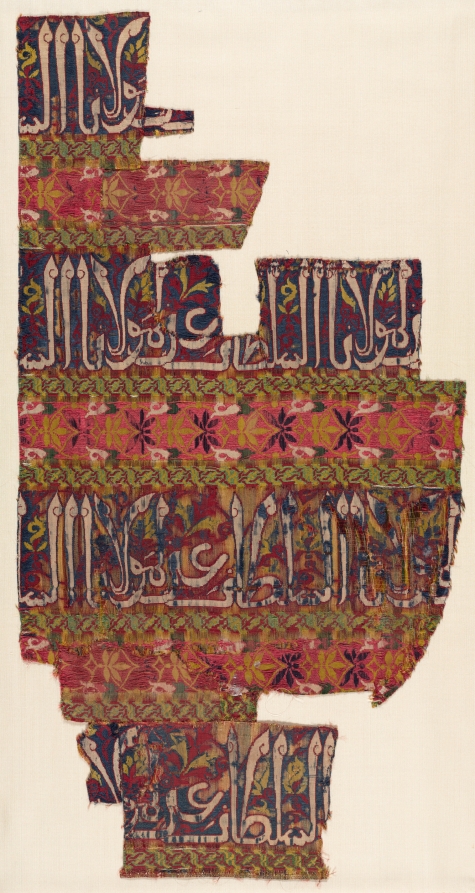
A Fragment of Woven Authority
One does not merely examine this artefact; one is received by it. It rests not as a mere scrap of discarded material, but as a sovereign fragment, a tactile whisper from a regime where fabric was not adornment but armament. The subject is a silk fragment, its dimensions humble, yet its implication vast. To hold it—with appropriate, gloved deference—is to handle a direct product of imperial will, a physical manifestation of a supply chain that began with a mulberry leaf and ended in the assertion of celestial mandate. This is not simply cloth; it is woven authority.
The Loom as an Instrument of State
Imperial silk weaving was never a cottage industry scaled up. It was, from its inception, a monumental and deliberate act of political technology. The legendary Leizu, consort of the Yellow Emperor, may have discovered the secret of the silkworm, but it was the bureaucratic might of successive dynasties that systematised it into a tool of governance. State-run ateliers, the most illustrious being those of the Ming and Qing Dynasties, operated not on principles of market demand, but on imperial decree. Their location, often within the very precincts of the Forbidden City, was a statement: the production of these symbols was too vital to be left beyond the palace walls.
Consider the logistics, a masterpiece of pre-industrial supply-chain management. Vast sericulture regions were designated, their output commandeered. The finest dyes—crimson from cochineal, vibrant yellow from gardenia, the profound blue from indigo—were sourced or conquered for. Patterns were not created by weavers; they were handed down by the Imperial Household Department. The dragon, the phoenix, the clouds—these were not motifs but heraldic codes in thread, their use legislated with exacting precision. A five-clawed dragon (long) was reserved for the Son of Heaven alone; a misstep in its depiction was not an aesthetic failure, but treason.
The Materiality of Command
The fragment itself, even in its silence, speaks volumes of this command structure. The silk is, of course, of a grade that beggars contemporary comparison. The yarn is impeccably even, a testament to the meticulous rearing of the worms and the skill of the reeler. Under magnification, the density of the weave reveals itself—a high thread count not for comfort, but for durability and to provide a flawless canvas for symbolism. The colours, though faded by centuries, retain a clarity and depth that speak of master dyers working with imperial licence to use the finest, most fugitive materials.
But the true language is in the weave structure. This is likely a kesi (cut silk) tapestry weave or a complex satin damask. Kesi, in particular, was the pinnacle. Literally meaning "cut silk," it employed a tapestry technique that allowed for curvilinear, painting-like designs without compromising the integrity of the warp. It was excruciatingly slow, requiring a different coloured bobbin for each element of the design. This was not efficiency; it was conspicuous consumption of time and skill, a direct correlation between the labour invested and the value of the symbol produced. The fragment, therefore, is a concentration of millennia of specialised human effort, all directed towards a single, overarching purpose: the visual articulation of power.
A Legacy Beyond the Palace Walls
The influence of this imperial system did not, could not, remain confined. It established a grammar of luxury that permeated the broader culture, setting an unassailable standard. The techniques, patterns, and colour palettes developed within the imperial workshops trickled down, through diplomatic gift-giving and the occasional, strictly controlled, commercial release, to influence the aristocratic and merchant classes. It created a hierarchy of taste where proximity to imperial style denoted social and political proximity to the throne itself.
Furthermore, this legacy formed the bedrock of China's soft power for centuries. The Silk Roads were not merely trade routes for a commodity; they were conduits for a complete aesthetic ideology. This fragment, or others like it, travelled west, astonishing courts from Persia to Byzantium to Rome with its brilliance and texture. It created a demand that was as much for the object as for the aura of the distant, sophisticated empire that produced it. The silk fragment was, in its global journey, an ambassador without portfolio, speaking of a civilisation so advanced it could transform the secretion of an insect into a substance of legend.
Conclusion: The Fragment as Testament
Thus, this silk fragment transcends its materiality. It is a node in a vast network of control, skill, and symbolism. It represents the ultimate subjugation of nature—the worm, the plant, the mineral—to human imperial design. In its exquisite threads, one reads the concentration of economic resources, the marshalling of artisan labour, and the codification of visual language into law. Its value to the Lauren Fashion Heritage Lab lies not in its potential for replication, but in its irrefutable testament to a principle: that true luxury is never accidental. It is always, invariably, the product of a formidable and focused will. It reminds us that before a fabric can clothe a body, it must first embody an idea. And no idea has ever been woven with more deliberate, dazzling authority than that of the imperial mandate, one shimmering thread at a time.