← BACK TO ARCHIVES
Heritage-Black
Heritage Synthesis: Terracotta fragment of a kylix (drinking cup)
Curated on Aug 24, 2026 // Node: LDN-01
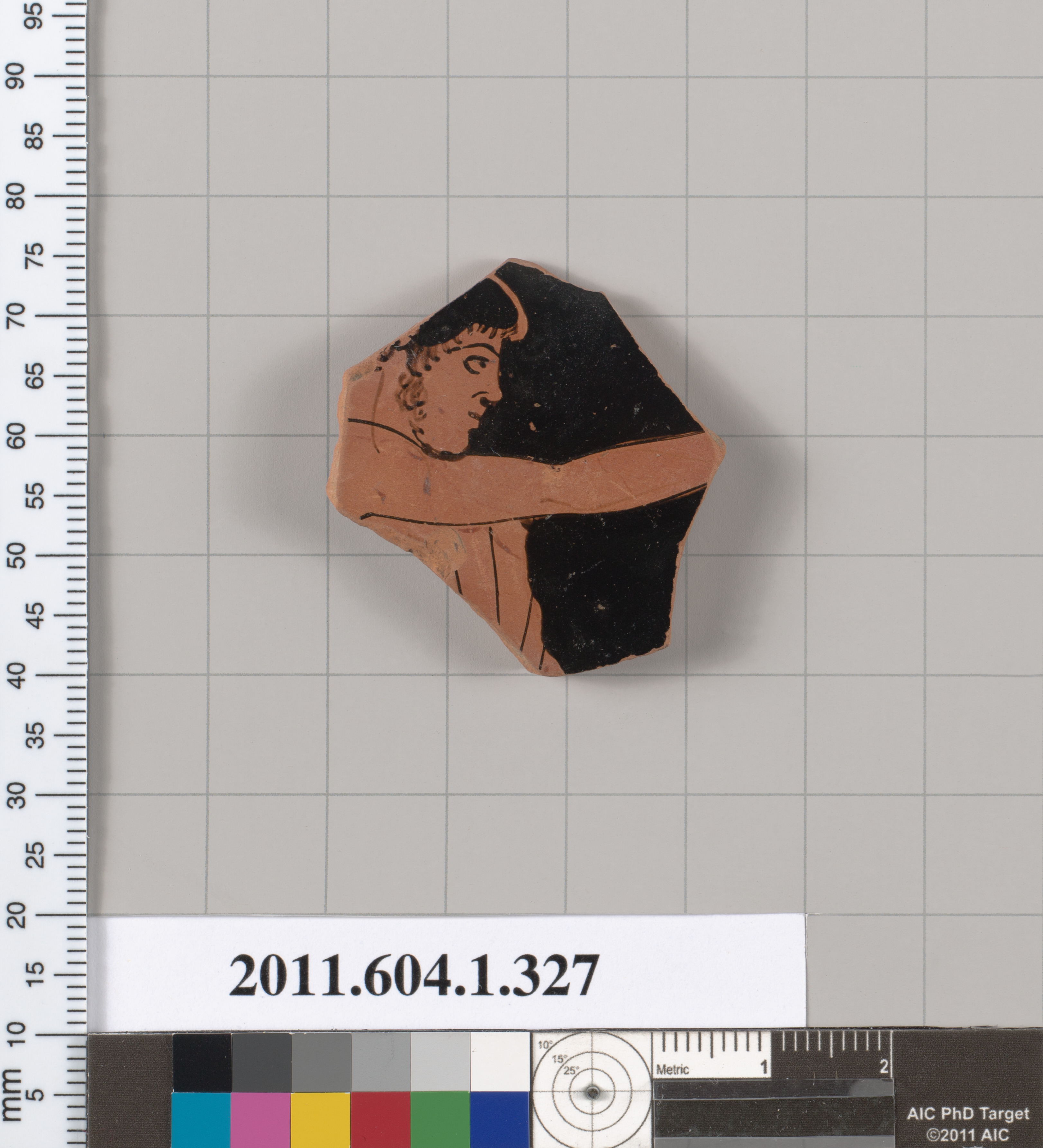
The Archaeology of Restraint: Terracotta Fragments and the 2026 Old Money Silhouette
The internal genetic code of Lauren Fashion—that dialectic between the fleeting and the eternal—finds a startlingly precise external analogue in a seemingly remote artifact: the Attic terracotta kylix fragment. At first glance, a broken Greek drinking cup appears to belong to a world utterly distinct from the sumptuary logic of Old Money dressing. Yet, when placed in dialogue with our own archival pair—the Mold Fragment with Musicians and the Mortuary Figure of the Ox (Taurus)—this shard of fired clay becomes a Rosetta Stone for decoding the 2026 silhouette. It does not speak of ornament, but of essence. It does not whisper of wealth, but of witness. And it is precisely this grammar of *survival through fragmentation* that must govern our forthcoming collections.
I. The Fragment as Foundational Grammar
The kylix fragment, like our Mold Fragment with Musicians, operates on the aesthetic principle of *pars pro toto*—the part standing for the whole. But more crucially, it embodies what the internal code identifies as “以残见全” (seeing the whole through the fragment). The Attic shard preserves a single painted figure, perhaps a symposium reveler or a mythological scene, its edges broken by millennia, not by design. Yet this very breakage is its power. The missing circumference of the cup is not a loss; it is a *negative space* that activates the viewer’s imagination, much as the missing musicians in our mold compel us to hear their silent melody.
For the 2026 Old Money silhouette, this translates into a radical departure from the *complete* garment. We are not designing clothing; we are designing *fragments of a life*. The tailored jacket, the cashmere overcoat, the silk blouse—these are not finished statements but *surviving witnesses* to a longer, unseen narrative. The 2026 silhouette must therefore embrace what I term *constructive incompleteness*: a shoulder seam that suggests a broader structure without declaring it, a hem that falls as if worn by generations, a lapel whose roll is not pressed but *remembered*. This is not deconstruction in the postmodern sense—a deliberate act of violence against form. Rather, it is *archaeological dressing*: the garment as a shard of a larger, more opulent whole that time has winnowed to its essential lines.
II. The Materiality of Silence: From Clay to Cloth
The terracotta fragment’s materiality is instructive. Fired clay is humble, porous, and earthbound—yet it has outlasted the gold cups and silver vessels of its era. The internal code notes that “陶土本为卑湿之物,经火焰淬炼后获得金石般的永恒” (clay, humble and damp, gains metallic eternity through fire). This paradox—the transformation of the base into the enduring—must inform our fabric choices for 2026.
We will move away from the *performative luxury* of high-shine silks and metallic brocades toward materials that *absorb time*: heavy wool melton that drapes like weathered stone, cashmere brushed to a matte, almost chalky finish, and linen that carries the memory of its own creasing. The 2026 Old Money palette will be drawn from the terracotta’s chromatic range—not the bright red of a new kiln, but the *faded sienna, the ash grey of fired clay, the deep umber of burial soil*. These are not colors; they are *patinas*. They speak of a garment that has existed, not merely been produced.
This is a direct counterpoint to the fast-fashion logic of perpetual newness. The Old Money consumer of 2026 does not purchase a coat; she *inherits* it, even if from herself. The garment must be designed to look as though it has already witnessed a decade of dinners, journeys, and quiet mornings. This is not about artificial distressing—a vulgar theatricality—but about *material honesty*. A wool twill that holds a crease with the authority of a Roman fold; a silk charmeuse that, when crushed, does not look damaged but *inscribed*.
III. The Zodiacal Ox and the Architecture of the Shoulder
Our second internal artifact, the Mortuary Figure of the Ox (Taurus), offers the structural counterpoint to the kylix’s fluidity. The ox is not a naturalistic animal; it is a *cosmic weight*, a compressed symbol of earth, fate, and transit. Its sculptural mass—the heavy chest, the immovable stance, the gaze into the void—provides the blueprint for the 2026 silhouette’s foundational element: the shoulder.
The Old Money shoulder has historically oscillated between the soft, natural line of English tailoring and the more assertive, structured look of Italian *sartoria*. For 2026, we will fuse these into what I call the *Taurus shoulder*: a construction that does not merely sit on the body but *anchors* it. This is achieved through a hidden internal architecture—layered canvas, horsehair, and a new development in our atelier: a *ceramic-infused interfacing* that, while invisible, gives the shoulder a subtle, mineral weight. The result is not a padded, aggressive silhouette, but a *gravitational* one. The wearer does not walk; she *processes*, like the ox bearing the soul through the underworld.
This shoulder is the *metaphysical seam* of the collection. It connects the terrestrial weight of the ox to the celestial order it represents. In practical terms, the 2026 jacket will have a slightly extended shoulder line that does not end in a sharp point but in a *soft, rounded terminus*—reminiscent of the animal’s hump. The lapel, meanwhile, will be cut with a *deliberate asymmetry*, echoing the kylix fragment’s broken edge. One side of the lapel will roll with a fuller, more generous curve; the other will be narrower, tighter, as if compressed by time. This asymmetry is not a design quirk but a *narrative device*: it tells the story of a garment that has been worn, turned, and lived in.
IV. The Dialectic of Transience and Permanence in Cut
The internal code’s central tension—between the musician’s fleeting sound and the ox’s eternal stillness—resolves in the 2026 silhouette through a new approach to *length and volume*. The kylix fragment teaches us that the *cut* is not a boundary but a *horizon*. A garment’s hem is not where it ends, but where it *dissolves* into the wearer’s personal history.
Thus, the 2026 coat will be cut longer than the body, not to trail on the ground, but to create a *shadow self*—a suggestion of a garment that continues beyond the visible, like the missing portion of the kylix. Trousers will be cut with a *generous, almost columnar* width, falling straight from the Taurus hip to break just above the shoe, creating a *negative space* at the ankle that mirrors the fragment’s missing edge. This is not a fashion trend toward wide legs; it is an *archaeological reconstruction* of a garment that might have been, its original proportions lost to us, but its essence preserved in the fall of the cloth.
Dresses and skirts will employ a technique we call *incomplete circumference*: the garment is cut on the bias, but the hem is left *unfinished*—not raw, but *turned and hand-stitched with a single, visible thread*, like the crack in the terracotta. This stitch is the *signature of survival*. It says: this garment has been repaired, maintained, and loved. It is not new; it is *renewed*.
V. Conclusion: The Garment as Witness
The Attic terracotta fragment, the Mold Fragment with Musicians, and the Mortuary Ox converge on a single, profound insight: *beauty is not in the object’s perfection, but in its endurance*. The 2026 Old Money silhouette is not a style; it is a *philosophy of material witness*. It rejects the tyranny of the new and the spectacle of the complete. Instead, it offers garments that function as *soul-shards*—fragments of a larger, more meaningful existence that the wearer carries through her own mortal journey.
The shoulder anchors us to the earth; the asymmetric lapel reminds us of time’s passage; the unfinished hem whispers of continuity. This is not nostalgia; it is *ontological dressing*. The wearer of the 2026 collection does not put on clothes. She *assumes* a legacy. She becomes, like the ox, a figure of cosmic weight, and like the kylix, a vessel of fleeting joy—both broken, both beautiful, both *eternal in their incompleteness*. This is the heritage we now forge: not in gold, but in the humble, enduring clay of our craft.
Heritage Lab Insight
Genetic Bridge: Archive node focusing on Heritage-Black craftsmanship.