← BACK TO ARCHIVES
Silk
Heritage Synthesis: Silk Fragment
Curated on Aug 24, 2026 // Node: LDN-01
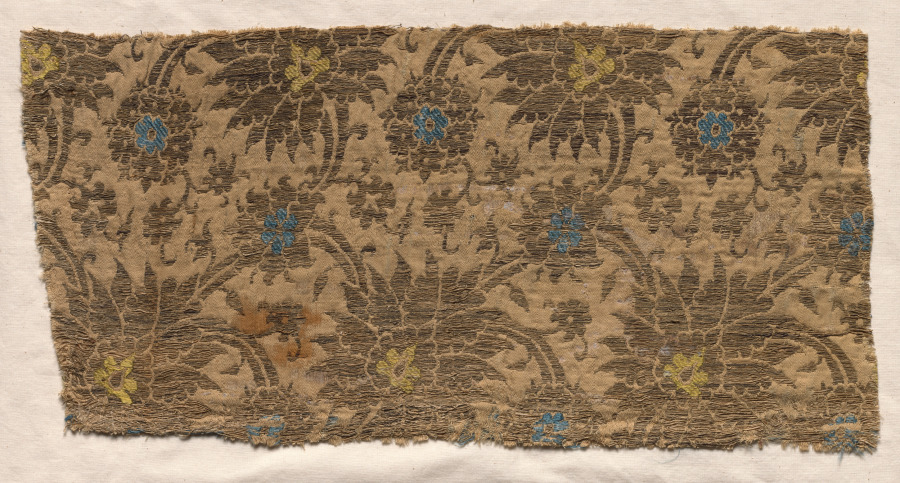
The Materiality of Legacy: A Silk Fragment in the Imperial Weave
In the hushed, lamplit quiet of a Savile Row workroom, where chalk dust settles on mahogany cutting tables and the air carries the faint, reassuring tang of wool and steam, one learns to read cloth the way a luthier reads wood. A bolt of cloth is not merely a commodity; it is a manuscript. And a fragment—a single, severed piece of silk, no larger than a gentleman’s pocket square—can hold within its warp and weft the entire political and aesthetic history of an empire. This artifact, a remnant of imperial silk weaving, is not a relic to be preserved under glass. It is a lesson in tensile strength, in the marriage of art and industry, and in the quiet, unyielding authority of provenance.
I. The Thread of Sovereignty
To hold this fragment is to hold a piece of statecraft. The imperial silk workshops of the Qing dynasty, particularly those of the Jiangnan region—Suzhou, Hangzhou, and Nanjing—were not mere factories. They were instruments of soft power, operating under the direct purview of the throne. The production of silk was a closely guarded state secret, its techniques passed down through generations of artisan families who were, in effect, civil servants of the loom. The materiality of this fragment speaks to that governance. The silk is not the flimsy, commercial grade found in modern retail; it is a dense, lustrous satin, with a hand that is both supple and substantial. The weave is impossibly fine, a count of threads that would baffle a contemporary mill. This is not cloth for the masses. This is cloth designed to be worn by a single man, the Son of Heaven, and to convey, without a single spoken word, the absolute, divinely ordained nature of his rule.
The dye, too, is a matter of imperial decree. The deep, oxblood crimson—a shade bordering on the lacquer of a ceremonial seal—was reserved exclusively for the highest echelons of the court. It was a colour born of madder root and cochineal, a chemistry that was as much alchemy as it was industry. To wear this colour was to announce one’s proximity to the throne; to wear it without permission was an act of treason. The fragment, therefore, is not just a piece of fabric. It is a legal document, a social contract, and a political statement, all woven into a single, continuous thread.
II. The Grammar of the Loom
For the tailor, the true genius of this silk lies not in its history, but in its behaviour on the bias. Modern silks, often weighted with metallic salts to increase their heft, are brittle and prone to splitting. This imperial silk, however, possesses a remarkable memory. It yields to the iron with a soft, almost reluctant grace, holding a crease with the precision of a pressed trouser seam, yet draping with a fluidity that defies its density. This is the result of a specific, painstakingly slow weaving process, often employing a drawloom operated by two artisans—one to throw the shuttle, another to manipulate the pattern harness above. The result is a cloth with a structural integrity that modern, high-speed looms cannot replicate. It is a fabric that understands tailoring. It does not fight the cutter’s shears; it collaborates with them.
This collaboration is the essence of the Savile Row ethos. We do not impose a silhouette upon cloth; we coax it out. A jacket cut from this silk would not be a stiff, ceremonial costume. It would be a living garment, one that moves with the wearer, responding to the subtle shifts of a shoulder or the bend of an elbow. The fragment’s selvedge, a crisp, unyielding edge, speaks to the discipline of its creation. It is a testament to the fact that true luxury is not about excess, but about precision. Every thread is where it should be, doing what it should do. There is no waste, no error, no hesitation. It is the grammar of perfection, written in a language of lustre and light.
III. The Tailor’s Dialogue with Empire
The legacy of imperial silk weaving is not a closed chapter. It is a living dialogue, one that continues in the quiet, obsessive workrooms of Mayfair. When a contemporary cutter handles a piece of this cloth, they are not merely working with a material; they are entering into a conversation with the master weavers of a bygone era. The fragment challenges the modern maker to rise to its standard. It demands a certain humility, a recognition that our tools and technologies, for all their sophistication, have not yet surpassed the intuitive genius of the hand.
The imperial workshops understood that cloth was a medium of power, and the tailor understands that power must be tailored. A suit is a form of armour, and the fabric is its plate. This silk, with its imperial provenance, offers a form of protection that is both physical and symbolic. It wraps the wearer in a history of authority, in the accumulated confidence of centuries of courtly ritual. To wear a garment cut from such a cloth is to inherit a portion of that authority, to carry the weight of an empire on one’s shoulders—not as a burden, but as a mantle.
IV. The Fragment as a Whole
In the end, the fragment is a paradox. It is a piece of something larger, a severed remnant of a whole that may no longer exist. Yet, in its incompleteness, it is utterly complete. It contains all the information a discerning eye needs: the quality of the fibre, the discipline of the weave, the authority of the dye. It is a microcosm of an entire civilisation, a distilled essence of imperial ambition and artisan skill.
For the Heritage Lab, this fragment is not an object of passive study. It is a benchmark. It is a reminder that the pursuit of excellence is a continuum, and that the standards set by the imperial looms of the East are not historical curiosities, but aspirational goals for the workshops of the West. As we preserve this artifact, we are not merely storing a piece of silk. We are safeguarding a standard. We are keeping alive the memory of a time when cloth was not just made, but authored; when a single thread could carry the weight of a dynasty. And in the hands of a master tailor, it still can. The fragment is small, but its lesson is vast: true heritage is not about looking back. It is about bringing the best of the past, thread by thread, into the present, and cutting it to fit the future.
Heritage Lab Insight
Lab Insight: CMA Silk Archive Node integration.