← BACK TO ARCHIVES
Heritage-Black
Heritage Synthesis: Terracotta fragment of a kylix (drinking cup)
Curated on Aug 24, 2026 // Node: LDN-01
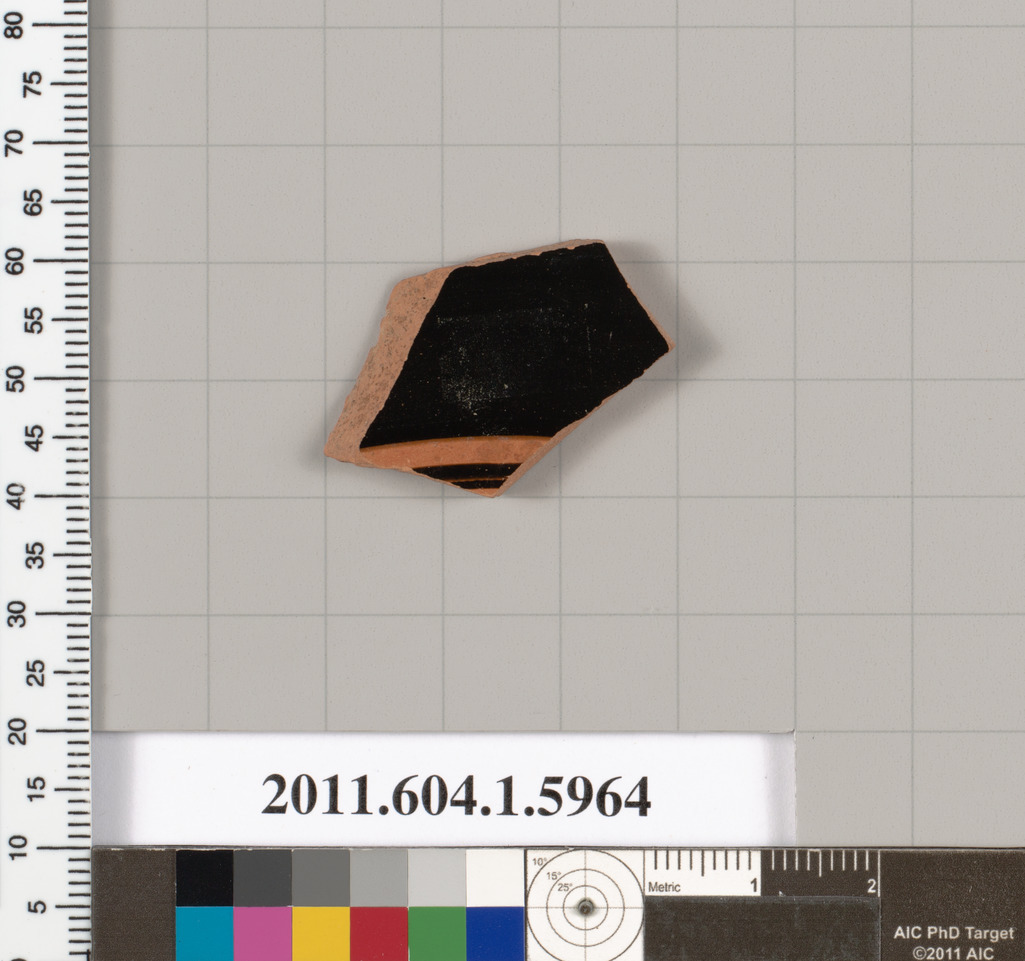
The Vessel and the Void: Reimagining Old Money Silhouettes through the Terracotta Kylix and the Jar (Hu)
The 2026 Old Money aesthetic—often misread as mere quiet luxury or a nostalgic return to bourgeois tailoring—demands a deeper archaeological excavation. At its core, the Old Money silhouette is not about fabric alone; it is about *containment*. It is the disciplined structuring of the body as a vessel for lineage, restraint, and temporal endurance. To inform this vision, we turn not to the obvious Western canon of tailoring, but to two seemingly disparate artifacts: the Greek Attic terracotta kylix fragment—a drinking cup broken yet resonant—and the ancient Chinese *Jar (Hu)*, a silent, unadorned ceramic form. Together, these objects reveal a profound dialectic between the *explicit* and the *implicit*, the *narrative* and the *essential*, which must govern the construction of the 2026 Heritage-Black wardrobe.
The Kylix Fragment: The Architecture of the Gesture
The museum artifact—a terracotta fragment of a kylix—is not a complete object. It is a shard, a remnant of a symposium, a vessel for wine that once facilitated philosophical discourse in ancient Athens. Its painted surface, now eroded, once depicted figures in motion, perhaps a scene of revelry or myth. For the designer, this fragment is a masterclass in *selective exposure*. The kylix’s form—a shallow bowl on a stem with two horizontal handles—is designed for the reclining drinker. Its function dictates its silhouette: wide, open, and horizontal. The fragment, however, compresses this horizontality into a vertical shard, forcing the eye to imagine the missing circumference.
This compression is the foundational principle for the 2026 Old Money shoulder. The current trend toward exaggerated, padded shoulders is a vulgar display of power—a *full kylix* shown to the room. The Heritage-Black response, informed by the fragment, is a *truncated shoulder*. We construct a jacket where the shoulder seam is slightly dropped, the sleeve head is softly rolled, and the pad is minimal—a mere suggestion of structure, like the curve of the kylix’s bowl implied by its broken edge. The garment does not announce its architecture; it *hints* at it. The lapel, similarly, should not be a wide, aggressive notch. Instead, it should be a narrow, elongated peak, echoing the kylix’s stem—a vertical line that draws the eye downward, not outward, creating a silhouette of introspective gravity rather than outward conquest. The fragment teaches us that *absence* is more powerful than presence. A jacket that does not fully define the body allows the wearer’s gesture—the way they lift a cup, the angle of their wrist—to become the primary narrative.
The Jar (Hu): The Poetics of the Unadorned Surface
Where the kylix fragment speaks of social performance, the *Jar (Hu)* speaks of ontological stillness. This ancient Chinese vessel, with its full belly, constricted neck, and stable foot, is the antithesis of Grecian theatricality. Its beauty lies in its *pu*—its unpolished, raw simplicity. As Laozi wrote, “Great skill appears clumsy.” The jar does not depict life; it *contains* it. Its surface, whether burnished or rough, holds the memory of the potter’s hands, the kiln’s fire, and the grains it once stored.
For the 2026 Old Money silhouette, the *Jar (Hu)* dictates the treatment of the garment’s *body*—the torso. In contrast to the kylix-inspired shoulder, the torso must be constructed with a sense of *volumetric silence*. This is not the oversized, shapeless drape of contemporary streetwear. It is a *structured fullness*—a coat or a dress that holds a generous amount of fabric but does not cling or flare dramatically. The fabric is the clay. We select a heavy, matte wool or a dense cashmere—materials that do not shine, that absorb light rather than reflect it, mimicking the low-luster terracotta. The construction should be minimal: no darts, no visible seaming, just a continuous, flowing cylinder of material that falls from the shoulder to the hem, like the jar’s belly descending to its foot.
The neckline is the jar’s *constricted neck*. It must be high and close to the throat—a mandarin collar, a funnel neck, or a simple banded crew. This closure focuses the gaze upward, toward the face, just as the jar’s narrow mouth focuses the contents within. The hem, corresponding to the jar’s stable foot, should have a subtle weight—a deep hem, a bias-cut finish, or a slight A-line that grounds the silhouette. The garment must feel *planted*, not floating. It must suggest that the wearer is rooted in a lineage of taste that does not need to explain itself. The *Jar (Hu)*’s internal void—the empty space that gives it function—is translated into the garment’s *interior ease*. The jacket is not cut to constrict; it is cut to allow the body to breathe, to move, to exist without the garment screaming for attention.
The Dialectic of Death and Daily Use
The profound connection between these two artifacts lies in their relationship to the void. The kylix fragment, in its brokenness, memorializes a moment of philosophical climax—the death of Socrates, as painted by David, where the cup of hemlock is raised in a final, rational gesture. The kylix is a vessel of *transcendence*; it holds the wine that loosens the tongue for dialectic, and ultimately, the poison that frees the soul. Its aesthetic is one of *dramatic finality*.
The *Jar (Hu)*, conversely, is a vessel of *continuity*. It holds the grain for tomorrow’s meal, the water for today’s thirst. It is not concerned with climax but with recurrence. Its brokenness is not a tragedy but a return to clay. This is the death of the everyday, not the death of the hero.
The 2026 Heritage-Black silhouette must synthesize these two poetics. It must have the *kylix’s* capacity for a single, memorable gesture—a sharp cuff, a precise pleat, a dramatic closure—but it must ground that gesture in the *jar’s* daily functionality. The result is a garment that is both a monument and a uniform. It is a black wool overcoat that, when worn, makes the wearer feel like a philosopher facing their end with clarity, yet it is also a garment that can be worn to a board meeting, a funeral, or a quiet dinner, without losing its dignity.
Material Translation: From Terracotta to Heritage-Black
The material palette for this silhouette is dictated by the artifact’s texture. Terracotta is not smooth; it is porous, slightly rough, and warm to the touch. Therefore, the fabrics chosen must reject the sterile finish of modern synthetics. We use **Heritage-Black**—a dye achieved through over-dyeing a deep indigo with a black walnut extract, resulting in a black that is not flat but has a brownish, earthy undertone, reminiscent of fired clay. The primary fabric is a *worsted flannel* with a visible, dry hand—a fabric that feels like it has been brushed by time. For evening, a *matte silk faille* with a subtle rib, echoing the kylix’s painted lines, is used, but it is never shiny. All hardware—buttons, zippers—must be made of dark, oxidized brass or horn, never polished metal. The goal is to create a garment that looks like it has existed for a century, not one that was manufactured yesterday.
Conclusion: The Wearing as an Act of Containment
The 2026 Old Money silhouette, informed by the terracotta kylix and the *Jar (Hu)*, is not a trend. It is a philosophical position. It rejects the loud, the fast, and the ephemeral. It embraces the *fragment* and the *whole*, the *gesture* and the *stillness*. The wearer of this Heritage-Black garment is not performing wealth; they are performing *containment*. They are the jar that holds the family’s history, and the kylix that raises a final toast to clarity. The garment is the vessel, and the body within is the void—empty, ready, and eternal. This is the true luxury: not the fabric, but the space it protects.
Heritage Lab Insight
Genetic Bridge: Archive node focusing on Heritage-Black craftsmanship.