← BACK TO ARCHIVES
Heritage-Black
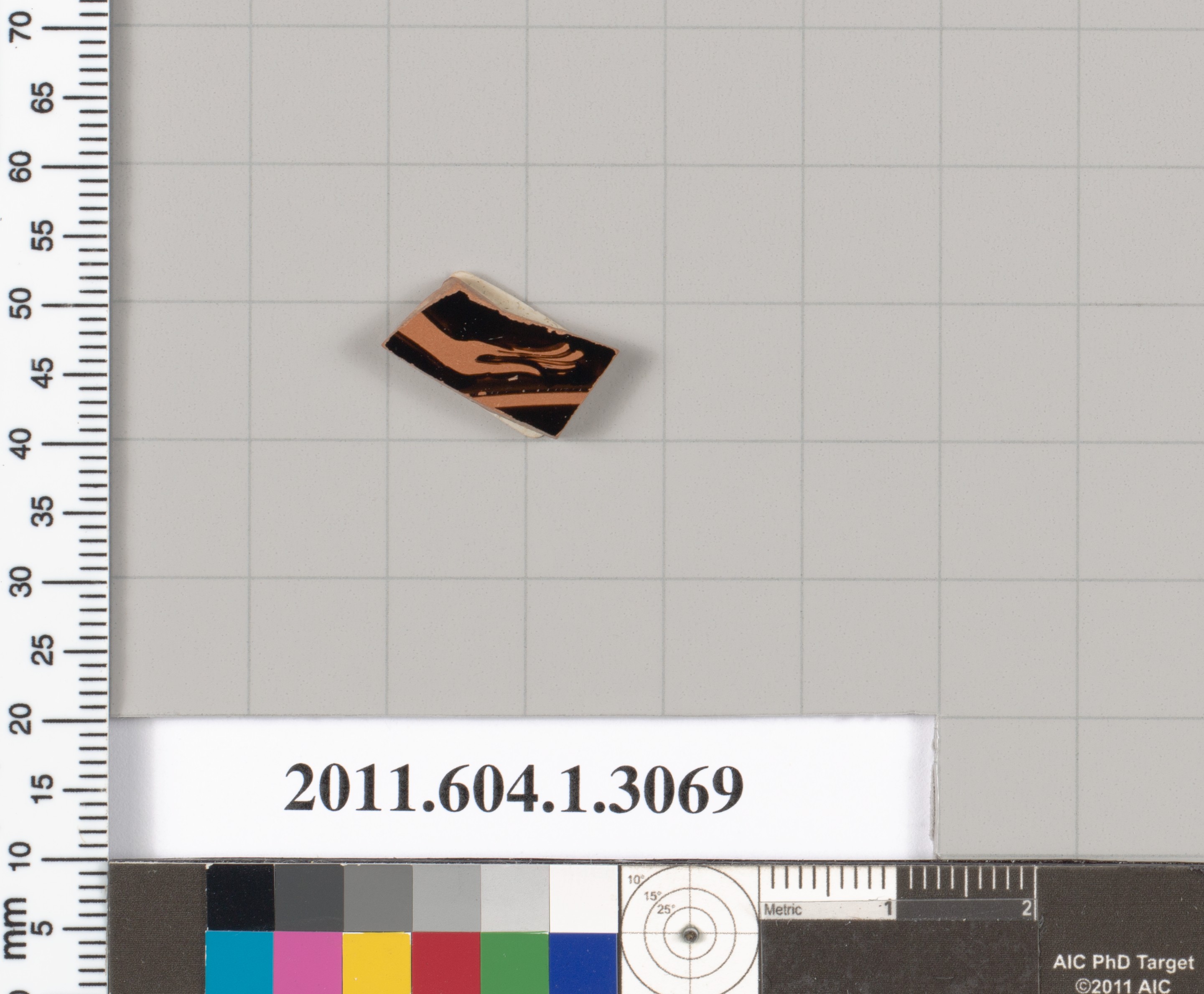
Heritage Synthesis: Terracotta fragment of a kylix (drinking cup)
Curated on Aug 25, 2026 // Node: LDN-01
The Socratic Vessel: Terracotta, the Philosophy of the Void, and the 2026 Old Money Silhouette
Within the hallowed archives of Lauren Fashion Heritage Lab, we do not merely catalogue garments; we excavate the philosophical strata upon which enduring style is built. The recent acquisition of a terracotta fragment of an Attic kylix—a humble drinking cup, broken yet resonant—presents a profound opportunity to re-examine the genetic code of our 2026 Old Money collection. This shard, painted with the ghost of a symposium, is not an artifact of mere antiquity. It is a philosophical instrument. When placed in dialectical tension with our internal archive’s foundational text—the juxtaposition of Jacques-Louis David’s *The Death of Socrates* and the silent, elemental *Jar* of Eastern aesthetics—the terracotta fragment reveals the true architecture of quiet luxury. It teaches us that the Old Money silhouette is not a statement of wealth, but a vessel for being; a deliberate construction of presence through the mastery of absence.
I. The Kylix as Dialectic: From Symposium to Sacrifice
The kylix, in its original context, was the vessel of the Greek symposium—a space of philosophical discourse, poetic contest, and civic bonding. Its shallow, wide bowl was designed for communal drinking, its twin handles inviting a passing from hand to hand. Yet, in its fragmentary state, the cup transcends its utilitarian past. It becomes a silent witness to the Socratic proposition: that the examined life, even unto death, is the only life worth living. The terracotta’s fired clay, once holding wine, now holds the memory of a conversation that culminated in the hemlock cup.
This is the crucial pivot for our 2026 design philosophy. The Old Money aesthetic has long been misread as a mere signifier of inherited privilege—a uniform of prep schools and yacht clubs. But our archival research, now sharpened by this artifact, posits a deeper truth: Old Money is not about the *possession* of resources, but the *philosophical composure* in the face of their potential loss. It is the Socratic calm. The 2026 silhouette, therefore, is not designed to display the body as a trophy, but to frame it as a locus of rational self-possession. The garment becomes a modern kylix—a vessel that holds the self with the same gravity that the cup held the wine, and the same clarity with which Socrates held his fate.
II. The Architecture of the Void: Tailoring as a Contained Emptiness
The Eastern *Jar* in our internal archive offers the counterpoint that completes the dialectic. Lao Tzu’s axiom—*“It is the empty space which makes the vessel useful”*—is the unspoken engineering principle of the 2026 Old Money silhouette. The terracotta fragment, with its broken edges, physically manifests this concept: its utility and beauty are defined by what it no longer contains. The 2026 collection translates this into a rigorous study of negative space within tailoring.
Consider the new drape of a single-breasted jacket. It does not cling to the torso, nor does it exaggerate the shoulder. Instead, it is cut to create a subtle, continuous void between the fabric and the body—a column of air that moves with the wearer. This is not a relaxed fit; it is a *philosophical* fit. The canvas interlining, the precise pad-stitching, the hand-finished armhole—these are the rituals of creation that define the boundaries of the emptiness. The jacket functions like the kylix’s bowl: it holds the person, but its true value lies in the invisible space it creates for the individual’s own presence to resonate. This is the antithesis of the “loud” luxury of the last decade, which sought to fill every visual space with logos and exaggerated volumes. Our 2026 approach, informed by the terracotta’s quiet integrity, is to build a shell of such perfect proportion that the void within becomes the most luxurious element of all.
III. Materiality as Memento Mori: The Weight of Impermanence
The terracotta’s materiality is its most profound teacher. It is earth, fired and broken, and its beauty is inseparable from its fragility. This is a direct challenge to the contemporary fashion industry’s obsession with the new, the pristine, and the immortal. The 2026 Old Money collection responds by embracing materials that carry their own narrative of time. We move away from the high-shine, tech-finished fabrics that deny the passage of a single hour. Instead, we select cloths that age with dignity: the dense, felted wools that soften into a personal drape; the pure silk twills that develop a subtle, lustrous patina; the cashmere that, with wear, becomes a second skin of memory.
This is where the category of **Heritage-Black** becomes essential. Black, in this context, is not a color of mourning, but a color of *absorption*. It is the visual equivalent of the terracotta’s fired clay—a surface that absorbs light and history rather than reflecting it for attention. The Heritage-Black of our 2026 collection is a deep, matte, almost charcoal-infused black, achieved through a laborious dyeing process that creates tonal variation across the fabric’s surface. It is a black that holds the shadows, much like the kylix fragment holds the shadow of its former shape. It is a color that refuses to shout, and in its silence, it commands the room. It is the color of the philosopher’s cloak, the color of the void that gives the vessel its purpose.
IV. The Silhouette of the Symposium: A Conclusion in Form
The 2026 Old Money silhouette, as synthesized from the terracotta fragment and our archival philosophy, is neither nostalgic nor avant-garde. It is *timeless*, in the truest sense—it exists outside the linear progression of trends by grounding itself in cyclical, universal truths. The silhouette is defined by a continuous, unbroken line from shoulder to hem, reminiscent of the classical *himation* or the simple cylinder of the Eastern jar. Trousers are cut with a generous, straight leg that falls to the shoe without a break, creating a vertical column of fabric that echoes the kylix’s stem. Coats are long, enveloping, and structured with a softness that suggests they have been draped, not cut.
The details are the philosophical arguments. A single, hand-set button at the waist of a coat is not a fastening; it is a point of tension that defines the surrounding emptiness. A hidden placket on a shirt is not a design choice; it is a statement that the most important elements of a person’s presentation are those which are not immediately visible. The internal construction—the seams, the linings, the weights—are finished with the same precision as the exterior, because they are the “inside” of the vessel, the part that touches the soul of the wearer.
In conclusion, the terracotta kylix fragment is not a relic to be imitated, but a principle to be embodied. It reminds us that true luxury is the courage to be empty, the wisdom to be silent, and the composure to face the inevitable with grace. The 2026 Old Money silhouette, built upon this Heritage-Black foundation, is our answer to the Socratic question: it is a garment that does not flee from time, but rather, carries it within its folds, transforming the wearer into a vessel of quiet, enduring presence. It is not about having, but about being—a being that is, at last, both ancient and utterly new.
Heritage Lab Insight
Genetic Bridge: Archive node focusing on Heritage-Black craftsmanship.