← BACK TO ARCHIVES
Silk
Heritage Synthesis: Dragon
Curated on Aug 25, 2026 // Node: LDN-01
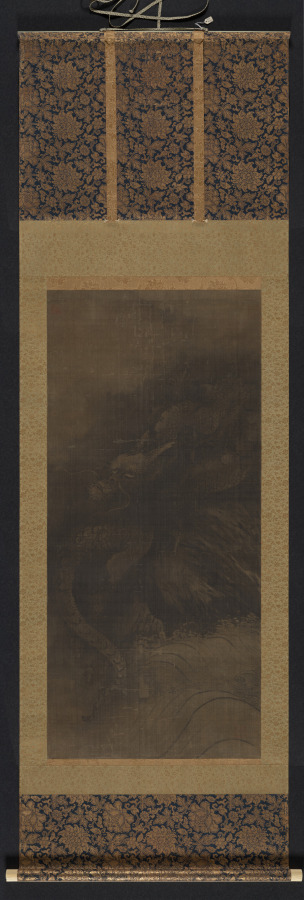
The Dragon in Silk: An Heirloom of Imperial Authority and Tailored Mastery
In the rarefied atmosphere of London’s Savile Row, where cloth is cut with the precision of a surgeon’s scalpel and the weight of a garment is measured in generations, one motif transcends mere decoration. The dragon, rendered in lustrous silk, is not a pattern; it is a document. It is a codified language of power, a tactile memory of dynastic ambition, and a testament to the singular material that made such grandeur possible. To understand the dragon in silk is to understand the very genesis of luxury as a political instrument—a legacy that, while born in the Forbidden City, finds a quiet, tailored resonance in the ateliers of Mayfair.
The Material Imperative: Why Silk, Why the Dragon
Silk was never merely a textile; it was a strategic currency. For millennia, the sericulture of the East was a state secret, guarded with the ferocity of a crown jewel. The resulting fabric—lighter than a whisper, stronger than steel at equivalent weight, and possessing a chromatic depth that dyes could only dream of—became the ultimate signifier of rank. In the imperial courts of China, the dragon was not a choice but a prerogative. The five-clawed *mang* dragon was the exclusive emblem of the Emperor, his immediate family, and the highest echelons of the nobility. To wear a dragon with five claws in silk was to declare one’s place in the celestial hierarchy; to wear a four-clawed variant was to acknowledge a subordinate, yet still exalted, station. The material itself enforced the law. The sheer technical difficulty of weaving a continuous, undulating dragon form into a silk ground—often using supplementary wefts of gold-wrapped thread—demanded a level of craftsmanship that was, by definition, exclusive. The loom was a political stage, and the weaver was its silent actor.
The Imperial Loom: Weaving the Cosmic Order
The legacy of imperial silk weaving is not a romantic myth; it is a logistical triumph. The great imperial workshops, such as the *Jiangning* and *Suzhou* bureaus, operated under a mandate of perfection. A single bolt of ceremonial silk, known as *duan* or *satın*, could take months to complete. The dragon motif, often depicted amidst clouds, waves, and the sacred *shou* (longevity) characters, was not merely illustrative. Each element was a cosmological coordinate. The dragon’s serpentine body represented the dynamic flow of *qi* (vital energy) between heaven and earth. The clouds were the breath of the divine; the waves, the foundation of the empire. The weaver, working on a drawloom that could require two operatives—one to manipulate the pattern harness, another to throw the shuttle—was effectively transcribing a sacred text into a wearable form. The precision was absolute. A single broken thread in the dragon’s eye was a catastrophic omen, rendering the entire bolt unfit for imperial use. This obsession with perfection is the direct ancestor of the Savile Row ethos, where a hand-finished buttonhole or a perfectly matched stripe is not a detail but a moral imperative.
From Forbidden City to Savile Row: A Translation of Authority
The journey of the dragon from the imperial throne to the British gentleman’s wardrobe is a study in cultural translation. The 19th-century trade in Chinese export silks brought these magnificent textiles to European shores, where they were initially prized as exotic curiosities. However, the true Savile Row appropriation was not literal. It was conceptual. The Edwardian and interwar tailors did not cut a Chinese robe; they cut a tailored jacket or a smoking jacket, but they understood the *gravitas* of the silk. They recognised that a silk dressing gown, or a silk-lined dinner jacket, carried a silent authority. The dragon, when it did appear—often as a subtle, embroidered motif on a silk robe or as a jacquard pattern in a luxurious tie—was not a costume. It was a nod to a lineage of power. The British gentleman, like the Chinese emperor, was not dressing for comfort. He was dressing for command. The silk’s natural lustre, its ability to catch light and shadow, provided a quiet, unspoken dominance that wool could not replicate.
The Technical Heirloom: Preserving the Craft
What the modern heritage specialist must appreciate is that the dragon in silk is a repository of technical knowledge that is nearly extinct. The imperial weavers used a technique known as *kesi* (cut silk) or, more commonly, *tapestry weaving*, where the weft threads are individually manipulated to create the design, leaving small slits where colours change. This is the antithesis of machine production. It is a form of painting with thread. In the context of Savile Row, this translates to an appreciation for the *hand* of the fabric. A true heritage silk for a bespoke garment is not a flat, printed reproduction. It is a woven structure, where the dragon’s scales are created by the interplay of warp and weft, giving the fabric a three-dimensional depth that moves with the wearer. The modern tailor who sources a period-correct imperial silk—perhaps a fragment of a 19th-century court robe—is not merely buying cloth. He is acquiring a piece of a larger narrative. He is commissioning a garment that carries the weight of a thousand looms, a thousand years of protocol, and the unyielding discipline of a craft that demanded nothing less than perfection.
Conclusion: The Enduring Thread
The dragon in silk is more than a heritage artifact; it is a living principle. It teaches us that true luxury is not about excess but about restraint and significance. The imperial weaver’s restraint was enforced by law; the Savile Row tailor’s restraint is enforced by taste. Both, however, share a fundamental belief: that a garment should be an extension of the wearer’s identity, not a distraction from it. When a client today commissions a silk dressing gown with a discreet, hand-embroidered dragon at the collar, he is not engaging in cosplay. He is participating in a continuum of authority. He is acknowledging that the material—silk—is not a passive surface but an active agent. It carries the memory of the mulberry leaf, the patience of the silkworm, the genius of the weaver, and the ambition of the emperor. In the hushed, wood-panelled fitting rooms of London, the dragon still breathes. It is not a relic. It is a standard, cut from the finest cloth, and stitched with the unbroken thread of history.
Heritage Lab Insight
Lab Insight: CMA Silk Archive Node integration.