← BACK TO ARCHIVES
Heritage-Black
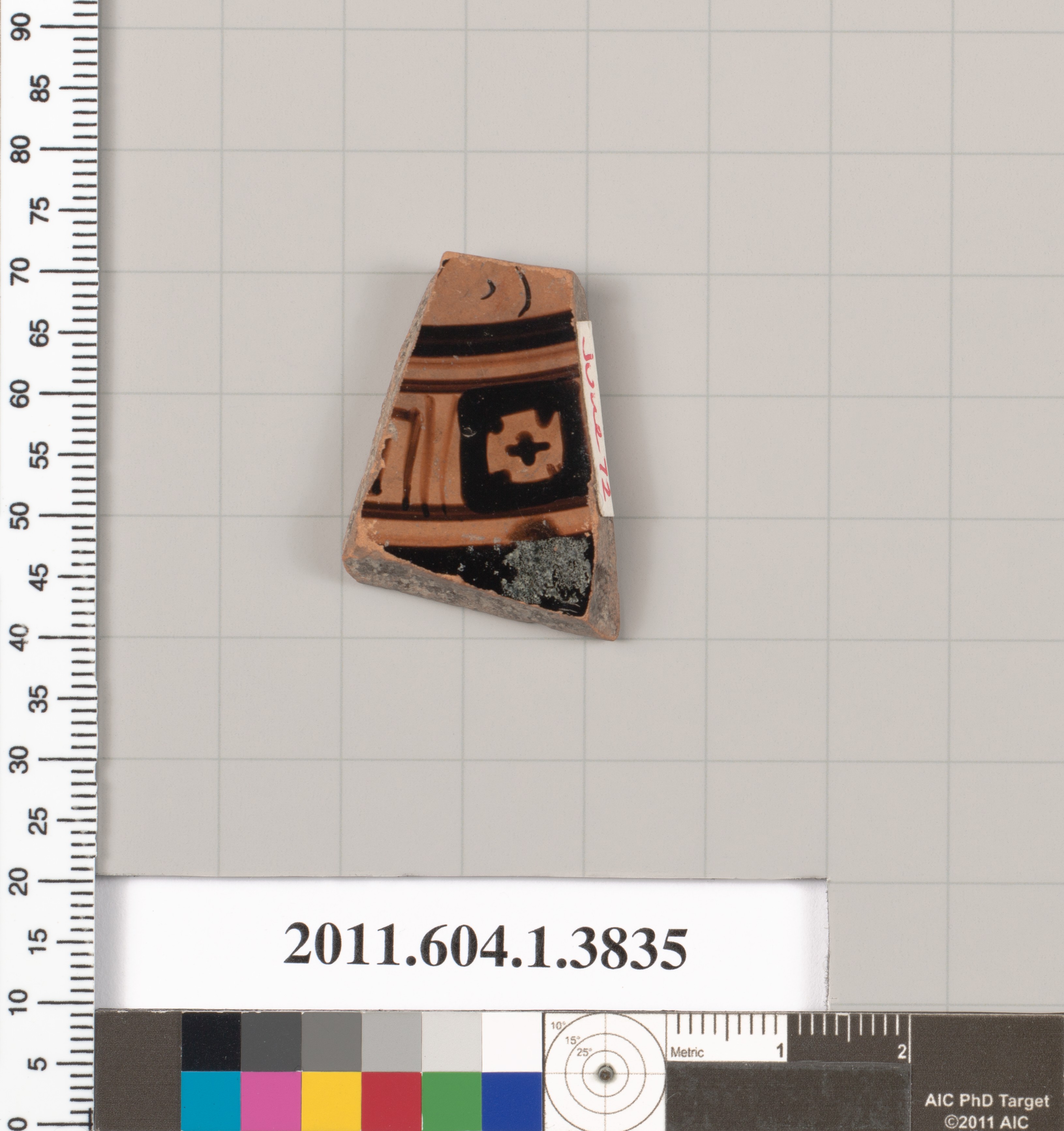
Heritage Synthesis: Terracotta fragment of a kylix (drinking cup)
Curated on Aug 25, 2026 // Node: LDN-01
From Terracotta Fragment to Tailored Eternity: The Attic Kylix and the 2026 Old Money Silhouette
The terracotta fragment of an Attic kylix—a humble shard of a Greek drinking cup, its surface worn to a matte, earthen finish—does not immediately announce itself as a progenitor of contemporary luxury. Yet within its broken curve and the ghost of a painted figure, there lies a profound architectural logic that speaks directly to the 2026 Old Money silhouette. To understand this connection, one must first abandon the notion that heritage fashion merely borrows decorative motifs. Instead, we must recognize that the kylix embodies a *structural philosophy*—one of balance, restraint, and the deliberate concealment of effort—that is the very DNA of understated wealth. This essay argues that the terracotta kylix, when read through the lens of classical proportion and material honesty, offers a blueprint for the 2026 Old Money wardrobe, one that privileges *volume over ornament*, *gravity over spectacle*, and *the patina of use over the gloss of novelty*.
I. The Kylix as a Study in Proportional Discipline
The Attic kylix, particularly in its late Archaic and Classical forms, is a masterpiece of geometric negotiation. Its shallow bowl, two horizontal handles, and elevated stem create a tripartite structure that is both functional and ceremonial. The bowl’s diameter-to-depth ratio is meticulously calibrated: too shallow, and it becomes impractical; too deep, and it loses its elegant, low-slung profile. This is not accidental. Greek potters, working without the aid of modern measurement tools, internalized a canon of proportions that echoed the harmonic ratios found in architecture and sculpture. The kylix’s silhouette, when viewed in profile, is a study in horizontal tension—the handles extending outward like arms, the bowl resting with quiet confidence on its stem.
For the 2026 Old Money silhouette, this translates directly into the construction of tailored outerwear and suiting. Consider the modern reinterpretation of the *overcoat*: the ideal Old Money coat does not cling to the body, nor does it balloon into shapelessness. Instead, it follows the kylix’s logic—a generous but controlled volume in the chest and shoulders, a clean, uninterrupted line from the armhole to the hem, and a subtle, almost imperceptible taper at the waist. The shoulders, like the kylix’s handles, are not exaggerated but are *present*, providing a visual anchor that allows the rest of the garment to drape with ease. This is the antithesis of the aggressive, padded shoulders of power dressing or the slouchy, unstructured forms of contemporary streetwear. The Old Money silhouette, like the kylix, is a negotiation between support and release—a garment that holds its shape without appearing rigid, that moves with the body without sacrificing its architectural integrity.
II. Material Honesty and the Patina of Time
The terracotta of the kylix is not a precious material. It is fired clay, common and utilitarian. Yet its value lies precisely in its honesty. The surface, once painted with black-figure or red-figure scenes, now bears the marks of centuries—scratches, chips, and a subtle variation in tone that no reproduction could ever replicate. This is the essence of *patina*: the accumulation of time and use as a form of aesthetic value. In the 2026 Old Money wardrobe, this principle manifests in the choice of fabrics that age gracefully and visibly. Think of a heavyweight wool flannel from a historic mill, its surface developing a soft, lustrous sheen with wear. Think of a vicuña scarf, whose fibers become more supple and warm with each season. Think of a pair of unlined, hand-stitched leather loafers that mold to the foot, developing creases that tell the story of every step.
The kylix fragment teaches us that luxury is not about perfection but about *authenticity*. A new garment that looks artificially distressed is a counterfeit of this philosophy. The true Old Money approach is to purchase materials that are inherently durable and beautiful, then allow time to do its work. This is why the 2026 silhouette favors natural fibers—cashmere, wool, silk, and cotton—over synthetics. Synthetic fabrics are static; they resist the imprint of the body and the passage of time. Natural fibers, like terracotta, are dynamic. They breathe, they yield, they record. The Old Money wearer does not fight this process; they embrace it, understanding that a garment’s value increases as it becomes uniquely theirs.
III. The Concealed Narrative: From Painted Scenes to Quiet Details
The kylix’s painted interior—the *tondo*—often depicted scenes of symposium, mythology, or daily life. These images were not merely decorative; they were *narrative*, encoding social values, religious beliefs, and personal identity. However, these narratives were only visible when the cup was in use, when the drinker tilted the vessel toward themselves. To an observer, the kylix appeared as a simple, unadorned form. This layering of meaning—public simplicity, private complexity—is a cornerstone of Old Money aesthetics.
In 2026, this translates to the *interior* of the garment. The exterior of a bespoke jacket may appear austere: a solid navy or charcoal, a clean notch lapel, no visible branding. But inside, the jacket reveals its secrets: a hand-embroidered monogram on the lining, a ticket pocket made from a vintage silk scarf, a surgeon’s cuff with functioning buttons, and a canvas structure that has been painstakingly hand-padded to create a subtle, three-dimensional drape. These details are not for the public eye; they are for the wearer, a private language of craftsmanship and personal history. Like the kylix’s tondo, they are revealed only in moments of intimacy—when the jacket is removed, when the cuff is turned back, when the garment is examined closely by a knowledgeable eye. This is the antithesis of the logo-driven luxury of previous decades. The 2026 Old Money silhouette is not about shouting; it is about whispering, and the whisper is only audible to those who speak the same language of quality.
IV. The Dialectic of Chaos and Order: A Synthesis
The internal genetic code of Lauren Fashion, as articulated in the comparative study of Daumier’s lithograph and the Song dynasty vase, offers a crucial dialectic that the kylix helps to resolve. Daumier’s *Caricaturana* presents chaos—the moral and social disorder of July Monarchy France—through exaggerated, grotesque forms. The Song vase presents order—the philosophical tranquility of the *dao*—through abstracted, rhythmic waves. The kylix, however, occupies a middle ground. Its form is rigorously ordered, yet its painted scenes often depict the *symposium*, a ritualized space where order and chaos meet. The symposium was a controlled environment for the exploration of excess, where wine, poetry, and philosophy coexisted with drunkenness and revelry. The kylix, as the vessel of this ritual, embodies the tension between discipline and release.
For the 2026 Old Money silhouette, this dialectic is resolved through *versatility*. The wardrobe is not monolithic; it is a system of pieces that can be assembled to express different moods and contexts. A structured, double-breasted blazer (order) can be paired with a fluid, pleated trouser (chaos). A crisp, white poplin shirt (order) can be worn with a hand-knotted, textured silk tie (chaos). The silhouette is not a uniform but a *language*, capable of expressing both gravitas and ease. This is the ultimate luxury: the ability to navigate the social world with the same grace and control that the kylix navigates the space between the hand and the lip. The wearer, like the Greek symposiast, is both participant and observer, engaged in the drama of life while maintaining a cool, external composure.
V. Conclusion: The Eternal Return of the Fragment
The terracotta fragment is incomplete, yet it is precisely this incompleteness that makes it so potent. It invites the viewer to imagine the whole, to reconstruct the kylix in the mind’s eye. Similarly, the 2026 Old Money silhouette is not a fixed set of garments but an *ideal*—a continuous process of refinement and personalization. It is a wardrobe that is never finished, always evolving through the addition of a new piece, the repair of an old one, the discovery of a vintage treasure. The fragment teaches us that heritage is not a museum piece to be preserved under glass; it is a living tradition to be reinterpreted with each generation.
The kylix, with its humble clay and broken edges, thus becomes a powerful symbol for the Old Money ethos. It reminds us that true elegance is not about acquisition but about *curation*. It is about choosing objects—and garments—that are honest in their materials, disciplined in their proportions, and rich in their hidden narratives. It is about allowing time to add its own layer of beauty, and about understanding that the most profound luxury is the quiet confidence of those who know their own history. As we look toward 2026, the Old Money silhouette will not be defined by novelty or spectacle, but by this enduring, classical wisdom—a wisdom that, like the kylix’s painted tondo, is revealed only to those who take the time to look closely, and to understand.
Heritage Lab Insight
Genetic Bridge: Archive node focusing on Heritage-Black craftsmanship.