← BACK TO ARCHIVES
Silk
Heritage Synthesis: Fragment with falconer riding a bull in a rondel
Curated on Aug 26, 2026 // Node: LDN-01
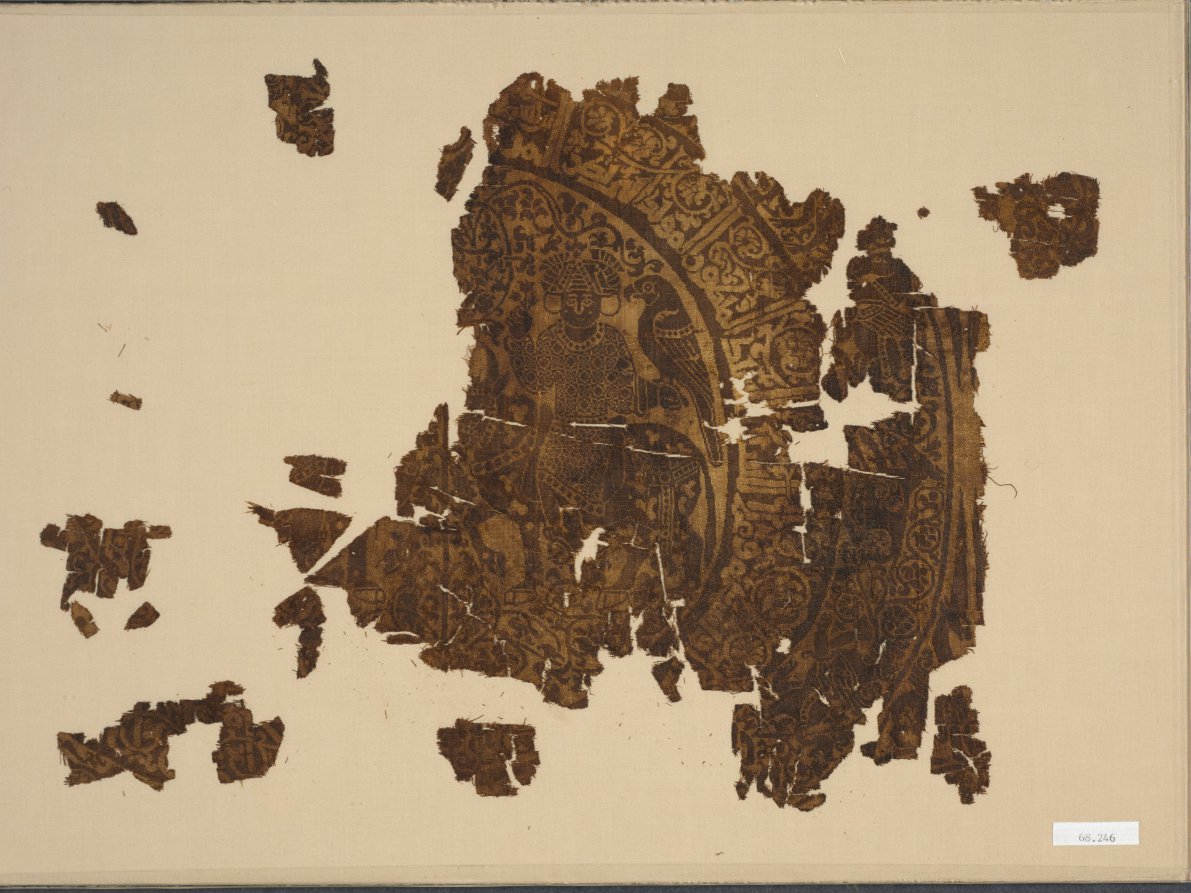
The Rondel and the Reins: Deconstructing a Fragment of Imperial Silk
In the hushed, wood-panelled ateliers of Savile Row, we speak of cloth not merely as fabric, but as a repository of intent. A bolt of worsted carries the discipline of its weave; a length of silk, however, carries the echo of an empire. The fragment before us—a silk rondel depicting a falconer astride a bull—is precisely such an artifact. It is not a mere decorative remnant; it is a compressed dossier of political power, technical virtuosity, and cross-cultural dialogue, stitched into a single, luminous circle. To examine it is to read a dispatch from a vanished world, one where the loom was a more potent instrument of statecraft than the sword.
Materiality and the Imperial Mandate
The material itself is the first testament to its provenance. Silk, in the medieval and early modern periods, was not a commodity; it was a currency of prestige, a diplomatic weapon, and a sacred textile. Its production was a closely guarded imperial monopoly, particularly within the Byzantine and, later, the Sassanian and Islamic courts. The very fibre, derived from the mulberry-fed silkworm, was a symbol of the empire’s reach—a biological and logistical triumph that required vast networks of trade, cultivation, and skilled labour. The fragment’s materiality, therefore, is not incidental. The lustrous, tightly woven ground, likely a compound weave such as samite or lampas, speaks to a level of technical mastery that could only be sustained by a state-sponsored workshop. These *gynaecea* or *zandaniji* workshops were the precursors to the great royal manufactories, operating under the direct patronage of the crown. The silk’s density and the fineness of its warp and weft threads indicate a loom of considerable complexity, operated by artisans whose skill was a form of national treasure. To hold this fragment is to hold the product of an entire economic and social system, one predicated on the absolute authority of the sovereign.
Iconography: The Falconer, The Bull, and the Cosmic Order
The central motif—a falconer riding a bull within a circular frame, or rondel—is a masterclass in layered symbolism. The rondel itself is a significant choice. Its perfect geometry imposes a sense of order and eternity upon the dynamic scene within. It is a microcosm, a contained universe where the forces of nature and royalty are held in perfect balance. This framing device is typical of imperial silks, which often used repeating circular or octagonal patterns to create a sense of rhythmic, infinite power across a larger textile.
The bull is a figure of immense, primal strength. In many ancient and medieval cultures, from Mithraic Persia to the agrarian societies of the Mediterranean, the bull represented fertility, earthly power, and untamed natural force. It is the beast of the field, the engine of agriculture, and the symbol of a kingdom’s material wealth. To ride a bull is to master the land itself. The falconer, in contrast, represents the dominion of the sky. The falcon, a bird of prey, is the emblem of aristocratic hunting, of swift, decisive action, and of a vision that transcends the mundane. Falconry was the sport of kings, a ritualised display of control over the wild. By placing the falconer on the bull, the artist has fused the two realms: the chthonic power of the earth and the celestial authority of the sky are brought under a single, human command.
This is not a genre scene. It is a statement of imperial cosmology. The ruler, represented by the falconer, is not merely a political leader; he is the axis mundi, the pivot around which the natural and divine orders revolve. He commands the beast of burden and the bird of prey, the land and the air. The composition is a visual assertion of the sovereign’s absolute, God-given right to rule. The careful, almost heraldic, rendering of the animals—the bull’s muscular form, the falcon’s sharp profile—suggests a deliberate move towards abstraction and symbolism, moving away from naturalistic representation towards a codified language of power.
The Legacy of Imperial Weaving: A Dialogue Across Empires
This fragment is not an isolated masterpiece; it is a node in a vast network of cultural transmission. The motif of the rider, particularly the hunter, has deep roots in Persian and Central Asian art, from the great rock reliefs of the Sassanian kings to the intricate metalwork of the Sogdians. The silk trade along the routes we now call the Silk Road was not merely a conduit for goods; it was a pipeline for ideas, motifs, and techniques. A Chinese weaver’s pattern could find its way to a Byzantine court, where it would be re-interpreted with Hellenistic naturalism. A Sassanian royal hunting scene could be adapted by a Central Asian workshop, its iconography subtly altered to suit a new patron’s political agenda.
The presence of this fragment, with its fusion of motifs, suggests it was produced in a milieu where such cross-pollination was the norm. It could be a product of the Sogdian workshops, which were the great intermediaries of the Silk Road, or a later Islamic atelier that inherited and transformed these earlier traditions. The very fact that the image is so self-assured, so confident in its symbolism, indicates that it was created within a mature, established tradition of imperial weaving. The weavers were not copying; they were synthesising, creating a new visual language that spoke to their own court’s power while acknowledging the prestige of the traditions that came before.
The legacy of this weaving tradition is profound. It established a template for luxury textile production that would be emulated for centuries, from the great silk mills of Lucca and Venice to the royal manufactories of Louis XIV’s France. The idea that a textile could be a political statement, a piece of propaganda woven in gold and silk, is a direct inheritance from the workshops that produced this fragment. When a Savile Row tailor cuts a length of cloth, he is not just shaping a garment; he is participating in a lineage of craft that stretches back to these imperial looms. The precision, the respect for material, the understanding that cloth carries meaning—these are the enduring principles of our trade, and they are all present, in miniature, within this single, extraordinary rondel.
In conclusion, this fragment is far more than a piece of silk. It is a testament to the enduring power of the woven image. It is a document of imperial ambition, a masterpiece of technical skill, and a bridge between cultures. To study it is to understand that the finest tailoring, like the finest weaving, is never just about the cloth. It is about the story the cloth tells, the authority it confers, and the legacy it carries. And this fragment tells a story of absolute power, rendered in the most luxurious and enduring medium the ancient world ever knew.
Heritage Lab Insight
Lab Insight: CMA Silk Archive Node integration.