← BACK TO ARCHIVES
Heritage-Black
Heritage Synthesis: Terracotta fragment of a kylix (drinking cup)
Curated on Aug 26, 2026 // Node: LDN-01
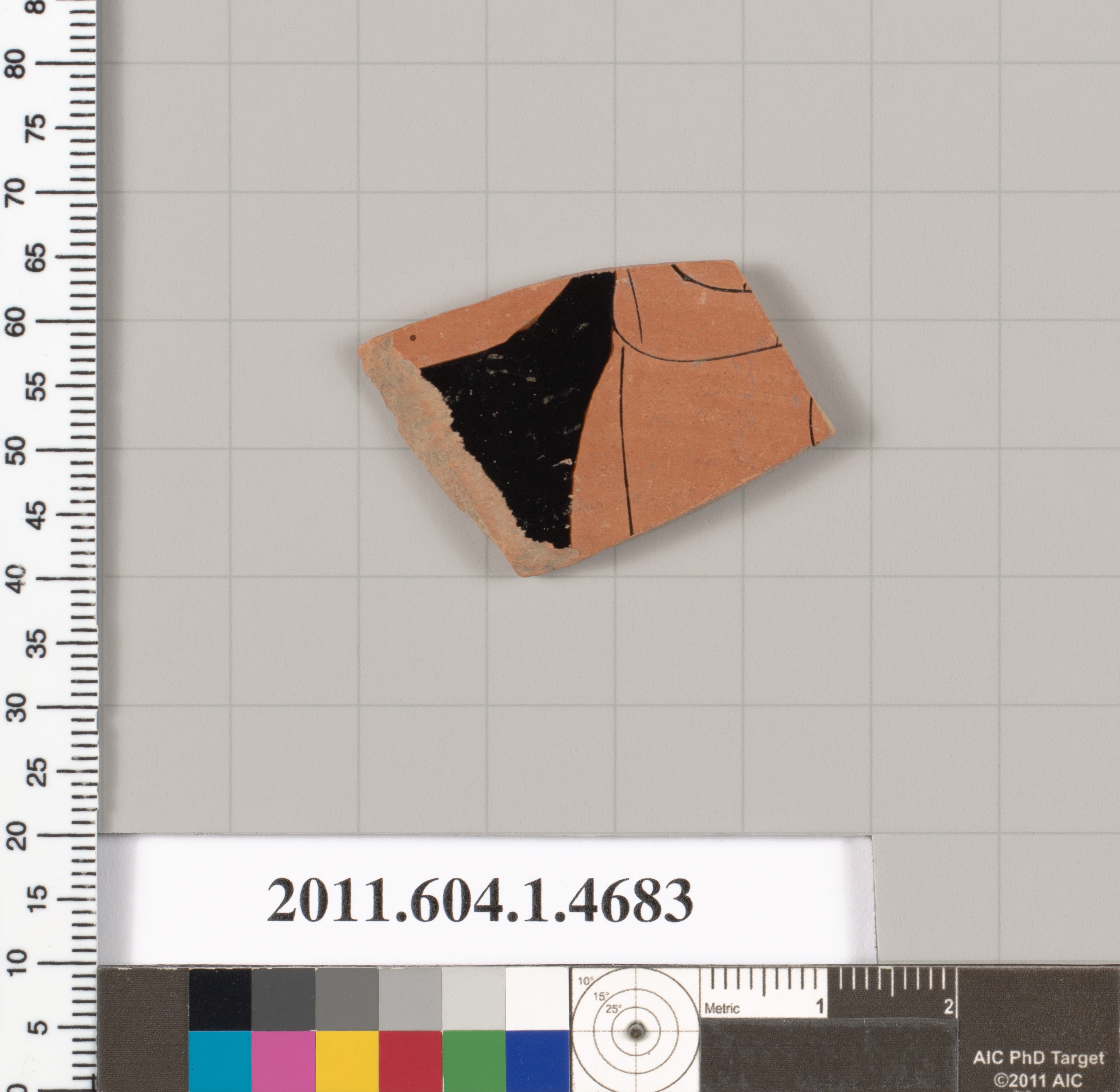
The Mirror and the Kylix: Dialectics of Emptiness and Plenitude in the Formation of 2026 Old Money Silhouettes
The internal genetic code of Lauren Fashion Heritage Lab—rooted in the poetic dialectic between the *Udumbara* temple plaque and the Han dynasty bronze mirror—offers a profound hermeneutic lens through which to interrogate a seemingly disparate artifact: the Attic terracotta kylix fragment. At first glance, the chasm between a 5th-century BCE Greek drinking cup and the contemplative metaphysics of East Asian aesthetics appears unbridgeable. Yet, as the internal text reminds us, true aesthetic power resides not in superficial form but in the *“象外之象”* (the image beyond the image) and the *“灵动之境”* (the realm of dynamic vitality). The kylix, with its fragmented terracotta body, becomes an unexpected interlocutor in this dialogue—a vessel that, like the bronze mirror, mediates between the mundane and the cosmic, and like the wooden plaque, achieves profundity through the poetics of absence and presence. For the 2026 Old Money silhouette, this synthesis yields a design philosophy grounded not in ostentatious display, but in the quiet authority of *heritage-black*—a color that absorbs light, much as the kylix’s dark glaze absorbed the gaze of symposiasts, and much as the lacquered void of the temple plaque absorbs worldly noise.
The Kylix as a Cartography of the Social Cosmos
The terracotta kylix fragment, typically decorated with red-figure or black-figure imagery, was not merely a utilitarian object. It was the epicenter of the *symposium*—a ritualized space where Athenian aristocracy performed its civic and philosophical identity. The kylix’s shallow, wide bowl and twin handles demanded a specific gestural choreography: the drinker reclined, lifted the cup with a bent elbow, and tilted the head back to consume wine in a single, elegant motion. This physicality is crucial. Unlike the deep, concealing *kantharos*, the kylix exposed the drinker’s face to the room, making the act of drinking a public spectacle of composure. The painted figures on the interior tondo—often a reveler, a satyr, or a mythological scene—were visible only to the drinker as the wine receded, creating a private revelation within a communal act.
This dual function—public exterior and private interior—mirrors the Han bronze mirror’s philosophical duality. The mirror’s obverse, polished to a reflective sheen, was a tool for self-correction; its reverse, densely packed with the *“神兽车马”* (divine beasts and chariots), was a map of the celestial order. The kylix, similarly, offers a *“满”* (plenitude) of narrative on its exterior—often depicting processions, battles, or Dionysian thiasoi—while its interior tondo presents a moment of *“空”* (emptiness) or singular focus. For the 2026 Old Money silhouette, this translates into garments that are architecturally restrained on the surface—clean lapels, unadorned wool, minimal hardware—but which reveal, upon closer inspection or movement, a hidden layer of intricate craftsmanship: a hand-stitched silk lining in a deep oxblood, a concealed placket with mother-of-pearl buttons, or an internal corsetry structure that sculpts the body without external trace. The silhouette becomes a kylix for the modern elite: externally disciplined, internally sumptuous.
Terracotta’s Tactile Grammar and the Rejection of Synthetic Opulence
The materiality of terracotta—fired clay, porous, warm to the touch, inherently fragile—offers a corrective to the contemporary fashion industry’s obsession with technical synthetics and hyper-polished surfaces. Terracotta’s beauty lies in its *imperfection*: the slight irregularity of the wheel-thrown rim, the variance in glaze thickness, the crack lines that speak of centuries of use and burial. This aligns with the Buddhist aesthetic of *wabi-sabi* and the plaque’s celebration of *“木质纹理与墨色交融”* (wood grain merging with ink). The 2026 Old Money silhouette must therefore reject the *“new”* in favor of the *“ancient”*—not in a nostalgic sense, but in a material one. We propose garments crafted from heavyweight, unbrushed cashmere that retains the natural lanolin and slight tooth of the fleece; from virgin wool woven on shuttle looms that produce a subtle, irregular slub; from silk twills that are left uncalendered to preserve their organic drape.
The kylix’s terracotta body, when held, transmits the warmth of the hand—a phenomenological connection that digital fashion cannot replicate. Similarly, the 2026 silhouette must prioritize *haptic* experience. A tailored overcoat in *heritage-black* should feel substantial, almost architectural, yet soften with body heat over time, molding to the wearer’s shoulders like a well-worn path. The internal canvas of the jacket—traditionally made of horsehair and wool—should be visible only through the armhole, a quiet testament to the garment’s construction. This is the “mirror” function: the garment reflects the wearer’s discipline, posture, and history. Just as the Han mirror’s reverse side depicted the *“西王母”* (Queen Mother of the West) enthroned among beasts, the internal structure of a 2026 jacket might feature a hand-embroidered lineage mark—a subtle heraldry of the house, invisible to the uninitiated but legible to the connoisseur.
The Dialectic of “Empty” and “Full” in Silhouette Architecture
The internal code’s central thesis—that *“空”* (emptiness) and *“满”* (fullness) are not opposites but variations on a single aesthetic theme—finds its most direct expression in silhouette. The kylix’s profile is a study in negative space: the wide, shallow bowl creates a void that holds liquid, while the two handles extend outward, creating a dynamic tension between containment and release. For 2026, we propose a silhouette that employs *strategic emptiness*: a dropped shoulder that creates a void between the sleeve and torso, allowing air to circulate; a high, stand-away collar that frames the neck without touching it; a hem that falls just above the ankle, revealing a sliver of leather shoe or bare skin. This is not minimalism as reduction, but minimalism as *resonance*—the void becomes a site of potential, much like the plaque’s *“空寂”* (serene emptiness) that births myriad forms.
Conversely, the *“满”* of the kylix’s painted exterior—its dense figuration—inspires a counterpoint of *controlled plenitude* in specific garment zones. A 2026 evening coat might feature a fully embroidered back panel, echoing the mirror’s *“满工布局”* (full-work composition), while the front remains starkly plain. The embroidery would not depict literal mythological scenes but abstracted motifs—interlocking spirals, wave crests, or geometric lattices—drawn from the kylix’s decorative vocabulary. These motifs would be executed in black-on-black thread, using varying textures (matte silk, glossy viscose, metallic gut) to create a play of light that shifts with the wearer’s movement. This is the *“动的韵律”* (dynamic rhythm) of the Han mirror translated into textile: the garment appears static, but upon turning, reveals a kinetic universe.
Heritage-Black as the Chromatic Synthesis
The choice of *heritage-black* as the category tag is not arbitrary. Black, in the context of the kylix, is the color of the fired clay’s slip—the *megara* black that formed the background for red-figure scenes. It is also the color of the lacquered wood of the temple plaque, and the patinated bronze of the Han mirror. Black is the color of *absorption*—it does not reflect, but swallows light, creating a depth that invites prolonged contemplation. For the 2026 Old Money silhouette, heritage-black is not a mere neutral; it is a philosophical position. It rejects the algorithm-driven pastel palettes of fast fashion and the neon accents of streetwear. It signals a commitment to permanence, to the *“三千年一现”* (once-in-three-thousand-years) rarity of the Udumbara flower. A garment in heritage-black is not worn; it is *inhabited*. It does not shout; it *resonates*.
In conclusion, the Attic kylix fragment, when viewed through the dual lens of the Udumbara plaque and the Han bronze mirror, ceases to be a mere archaeological curiosity. It becomes a design manifesto for 2026: a call to create garments that are at once vessels of social ritual and mirrors of inner cultivation. The silhouette must be *empty* enough to allow the wearer’s presence to fill it, and *full* enough to reward sustained attention. It must be *terracotta* in its honesty—embracing imperfection, texture, and time—and *bronze* in its cosmic ambition—encoding the wearer’s place within a larger order. The 2026 Old Money aesthetic is not about wealth; it is about *witness*—the ability to see, and to be seen, across the ages. And in that act of seeing, we find the *“象外之象”* that unites Athens, Chang’an, and the ateliers of the future.
Heritage Lab Insight
Genetic Bridge: Archive node focusing on Heritage-Black craftsmanship.