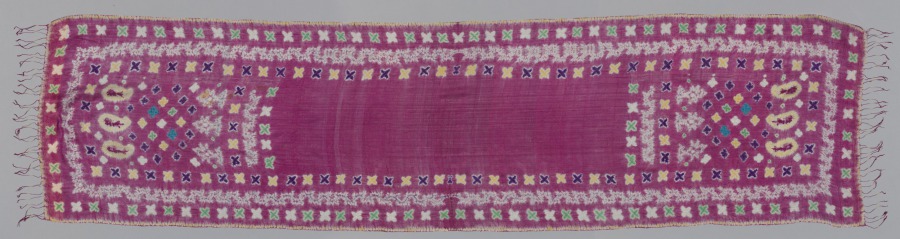
Category: Silk
The Material Paradox: Strength in Delicacy
In the hushed ateliers of London’s Savile Row, where the air is thick with the scent of wool and the quiet authority of a well-turned lapel, we seldom pause to consider the thread that binds our craft to a more ancient, more opulent lineage. Yet, the silk veil—that most ephemeral of garments—is not a whisper of frivolity. It is a testament to the tensile strength of empire, a paradox of diaphanous fragility that has, for millennia, carried the weight of dynasties, diplomacy, and desire. To handle a silk veil is to hold a document written not in ink, but in the continuous filament of the Bombyx mori moth, a thread that once dictated the flow of gold across continents and the very hierarchy of royal courts.
The materiality of silk is the first, and most profound, lesson in this heritage. Unlike cotton or linen, which are spun from short staples, silk is a single, unbroken protein filament, often extending over a mile in length. This continuous fibre grants the veil its singular properties: a tensile strength comparable to steel at an equivalent diameter, yet with an unparalleled drape and a lustrous, prismatic sheen that no synthetic can replicate. The imperial legacy of silk weaving is not merely a story of craftsmanship; it is a story of controlled chemistry. The sericin, the gum that coats the raw filament, required the meticulous, almost alchemical, process of degumming—a technique perfected in the imperial workshops of Hangzhou and Suzhou. The result was a fabric of such evenness and purity that it became the standard against which all other textiles were measured. For the Savile Row tailor, this material discipline is familiar; we understand that the integrity of a garment lies in the unseen, in the canvas and the seam, just as the veil’s integrity lies in the invisible, continuous thread that refuses to break.
Imperial Weave: The Politics of the Veil
The legacy of imperial silk weaving is inextricably linked to the politics of the veil. In the Tang and Song dynasties, the veil was not a mere accessory; it was a coded language of rank and ritual. The weimao, a wide-brimmed hat with a silk veil cascading to the shoulders, was worn by aristocratic women to shield themselves from the gaze of the common world, a physical manifestation of Confucian propriety. Yet, the very quality of the silk—its translucency—created a paradox. It obscured, but it also revealed, hinting at the silhouette beneath, a play of concealment and display that was the prerogative of the highest echelons of society. The imperial looms, guarded by state edict, produced these veils with patterns reserved solely for the emperor and his court. The dragon, the phoenix, the cloud-and-thunder motifs were not decorative; they were cosmological declarations, woven into the very fabric of the wearer’s identity. To wear a forbidden pattern was an act of treason, punishable by death. Thus, the silk veil was a political instrument, a wearable law that delineated the boundaries of power.
This imperial context is crucial for the modern interpreter. When we consider the silk veil today, we must shed the contemporary association with bridal sentimentality or evening glamour. The historical veil was a statement of sovereignty. It was the fabric of the Silk Road, a commodity so valuable that it functioned as currency, paying for armies and forging alliances. The Roman Empire’s infamous drain of gold to the East was, in large part, a payment for Chinese silk. The veil, in its most luxurious iterations, was the ultimate diplomatic gift, a token of imperial favour that could pacify a warlord or seal a treaty. The weight of this history is felt in the hand of the fabric. A genuine imperial-grade silk veil has a particular heft, a subtle resistance to the touch, born of the high twist of the yarn and the density of the weave. It is not a flimsy scarf; it is a structured, architectural piece of cloth that holds its shape even as it floats.
From Court to Couture: A Savile Row Reading
How, then, does the Savile Row establishment read this artifact? We are not in the business of reproduction, but of interpretation. The legacy of imperial silk weaving informs our approach to luxury, which is predicated on the principle of invisible perfection. The imperial weaver’s obsession with flawlessness—the rejection of any slub, any irregularity—mirrors our own commitment to the hand-finished buttonhole, the perfectly matched stripe. The silk veil, in its purest form, is a masterclass in restraint. It requires no embellishment; its power lies in its material integrity. This is the antithesis of the fast-fashion ethos, where fabric is a disposable canvas for print. The imperial veil is the fabric itself as the message.
In our contemporary practice, we might commission a silk veil for a client not as a symbol of subservience, but as a marker of discernment. The client who understands the legacy of the weave—who can feel the difference between a 12-momme and a 19-momme silk, who recognises the crispness of a Habutai versus the fluidity of a Charmeuse—is the client who appreciates the deeper narrative of their wardrobe. The veil becomes a quiet, personal heirloom, a piece of history that drapes over the shoulders with the same authority as a bespoke overcoat. It is a reminder that true luxury is not loud; it is the silent, confident knowledge of provenance.
To wear a silk veil today is to participate in a continuum. It is to acknowledge that the hand that wove it once answered to an emperor, that the thread itself travelled thousands of miles, crossing deserts and mountains, carrying with it the ambitions of an empire. The materiality of silk is not merely a physical property; it is a historical force. The veil, in its delicate strength, is a monument to that force. It is, in the final analysis, the most enduring cut of all—a cut that transcends tailoring, a cut that is woven, not sewn, into the very fabric of civilisation.