← BACK TO ARCHIVES
Heritage-Black
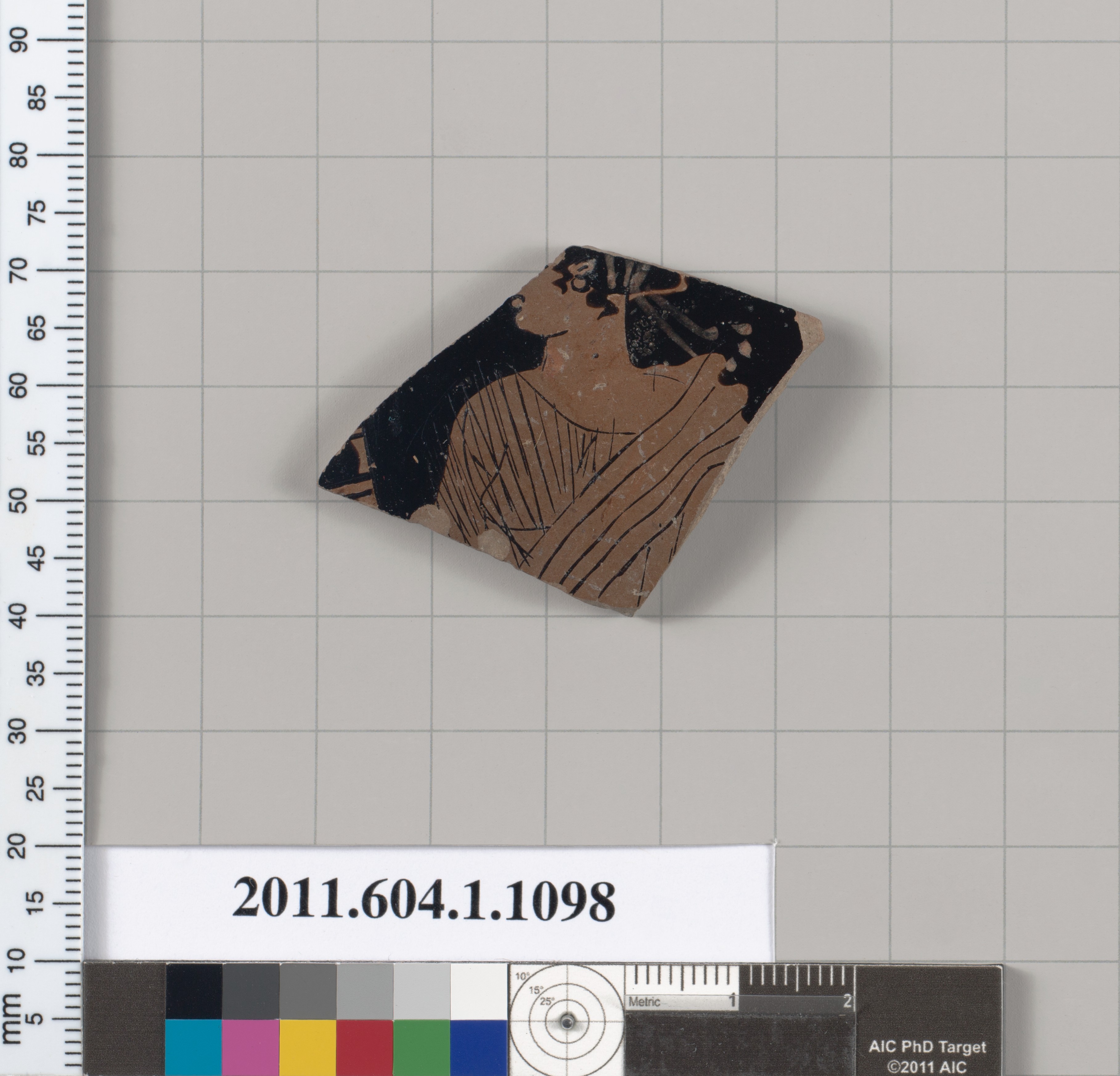
Heritage Synthesis: Terracotta fragment of a kylix (drinking cup)
Curated on Aug 26, 2026 // Node: LDN-01
The Terracotta Kylix and the Architecture of Restraint: Toward a 2026 Old Money Silhouette
In the vast visual chronicle of human civilization, few artifacts speak with such quiet authority as the terracotta fragment of an Attic kylix—a Greek drinking cup, broken yet eloquent. Its surviving shard preserves the echo of symposia, of philosophical discourse, of wine-dark rituals conducted in the golden light of the Aegean. But for the Lauren Fashion Heritage Lab, this fragment is not merely an archaeological curiosity. It is a design blueprint, a philosophical manifesto, and a corrective to the excesses of contemporary luxury. When read alongside our internal archives—particularly the dialectical tension between Western “embodied sublimity” and Eastern “internalized majesty” as exemplified by Frémiet’s *Joan of Arc* and the Shang-Zhou jade axe—the kylix fragment reveals the foundational grammar for the 2026 Old Money silhouette: a grammar of *controlled asymmetry*, *material honesty*, and *ritualized restraint*.
I. The Fragment as a Pedagogical Object: Imperfection as Inheritance
The kylix fragment is, by definition, incomplete. Yet its incompleteness is not a deficiency; it is a narrative device. Unlike the bronze *Joan of Arc*, which thrusts upward in a spiral of heroic transcendence, or the jade axe, which compresses cosmic order into a symmetrical, polished emblem, the terracotta shard offers a third mode: *the fragment as a synecdoche of lived history*. In the 2026 Old Money silhouette, this translates into a deliberate departure from the pristine, the logo-laden, and the overtly new. The heritage consumer does not purchase a garment; she inherits a story. Therefore, our design language must embrace what we term *“curated wear”*—subtle irregularities in weave, hand-finished seams that mimic the potter’s fingerprint, and a tonal palette drawn from the kylix’s fired clay: burnt sienna, ochre, deep umber, and the black of Attic slip.
This is not nostalgia; it is a philosophical position. The kylix fragment teaches us that *authority accrues to what survives*, not to what is manufactured for instant impact. In practical terms, the 2026 silhouette will favor garments that appear to have existed before their wearer—pieces with a sense of pre-history. A double-faced cashmere overcoat, cut with a soft shoulder and a slightly elongated hem, will be finished with hand-bound buttonholes that echo the potter’s incised lines. Trousers will drape with a fluidity that suggests repeated wear, breaking softly over the shoe, never creased with aggressive precision. The fragment’s broken edge becomes a metaphor for the *deliberate omission*—a jacket that stops just below the hip, a sleeve that ends at the wrist bone, a collar that refuses to stand too tall. This is the aesthetic of the *unfinished thought*, which in Old Money circles signals confidence rather than carelessness.
II. Symmetry, Asymmetry, and the Logic of the Symposium
The kylix, in its original form, was a vessel for communal drinking—a ritual of equality among aristocrats. Its painted interior, often depicting revelers or mythological scenes, was revealed only as the wine receded, a slow unveiling of narrative. This *temporal revelation* is crucial for the 2026 silhouette. Unlike the jade axe’s static, frontal symmetry, the kylix offers a *rotational symmetry*—a design that unfolds as the viewer moves, or as the wearer turns. The Old Money silhouette must therefore incorporate *asymmetric closures*: a single-breasted jacket with an off-center placket, a coat with a diagonal seam that references the kylix’s tondo, a skirt with a subtle high-low hem that mimics the cup’s flaring lip.
Yet this asymmetry must be disciplined. The kylix fragment is not chaotic; its curves are mathematically derived, its proportions governed by the golden ratio. Similarly, our 2026 garments will employ asymmetry *within a rigid framework*. A blazer may have one pocket lower than the other, but the difference will be measurable—perhaps two centimeters, no more. A trouser leg may be slightly wider at the hem, but the taper will follow a precise geometric progression. This is the *“internalized majesty”* of the East, translated into the *“embodied sublimity”* of the West: the wearer projects power not through volume or ornament, but through the *exactness of deviation*.
III. Material Honesty: From Terracotta to Heritage-Black
The kylix fragment is unglazed on its exterior, revealing the raw, porous clay beneath. This *material honesty* is the antithesis of the bronze’s theatrical patina or the jade’s polished translucence. For 2026, we propose a return to *unadorned luxury*—fabrics that speak for themselves without the crutch of embroidery, logos, or metallic threads. Our Heritage-Black category, in particular, will foreground wool, cashmere, and silk in their most unprocessed states: undyed, unbrushed, uncalendered. The texture of a raw silk twill, the nub of a tweed, the slight irregularity of a hand-loomed wool—these become the new markers of status, replacing the flash of gold-thread or the sheen of brocade.
This is a direct response to the kylix’s lesson: *the vessel is not the message; the ritual is*. In Old Money culture, the garment is a vessel for the self, not a billboard for the brand. Therefore, the 2026 silhouette will minimize hardware (buttons in matte horn or wood, never polished metal), eliminate visible zippers, and favor interior construction over exterior display. A jacket’s canvas will be hand-padded, its lapels rolled to perfection, but these details will be visible only to the trained eye—or to the tailor who created them. This is the *“silent luxury”* that the kylix fragment embodies: a luxury that requires knowledge to decode, and thus excludes the uninitiated.
IV. The Ritual of Dressing: From Symposium to Sartorial Ceremony
Finally, the kylix fragment reminds us that clothing, like drinking, is a ritual. The symposium was not a casual act; it was a structured ceremony with rules, hierarchies, and symbolic meanings. Similarly, the 2026 Old Money silhouette demands a *ritualized approach to dressing*. This does not mean corsets or restrictive tailoring; rather, it means garments that require *intentionality*. A coat with a hidden placket that must be buttoned in a specific order. A scarf that must be tied in a particular knot. A pair of trousers that must be cuffed to a precise length. These small ceremonies create a *temporal pause* in the wearer’s day, a moment of mindfulness that echoes the symposium’s libation to the gods.
In this, we see the convergence of Frémiet’s *Joan of Arc* and the jade axe: both are objects of *ceremonial gravity*. The kylix fragment, though humble, shares this gravity. It is not a decoration; it is a tool for communion. Our 2026 garments must function similarly—as tools for the wearer’s self-communion, for the silent negotiation between the individual and the social order. The silhouette, therefore, will be *architectural but not constraining*: broad shoulders that taper to a nipped waist (echoing the kylix’s curve), a full skirt that moves with the body (mirroring the cup’s flare), and a length that grazes the ankle (recalling the vessel’s foot). Each garment will be a *vessel for presence*, not a costume for performance.
Conclusion: The Fragment as Future
The terracotta kylix fragment, broken and silent, holds more wisdom than a thousand pristine artifacts. It teaches us that *completion is not the goal; continuity is*. For the 2026 Old Money silhouette, this means designing garments that will age with grace, that will carry the wearer’s history, and that will, in their eventual fraying and fading, become more valuable—not less. The fragment’s exposed clay is our palette; its rotational symmetry is our blueprint; its ritual context is our philosophy. In Heritage-Black, we will forge a silhouette that is neither nostalgic nor futuristic, but *timeless in its materiality*—a garment that, like the kylix, reveals its deepest truths only to those who take the time to drink from it.
Heritage Lab Insight
Genetic Bridge: Archive node focusing on Heritage-Black craftsmanship.