← BACK TO ARCHIVES
Silk
Heritage Synthesis: Rank Badge (buzi)
Curated on Aug 26, 2026 // Node: LDN-01
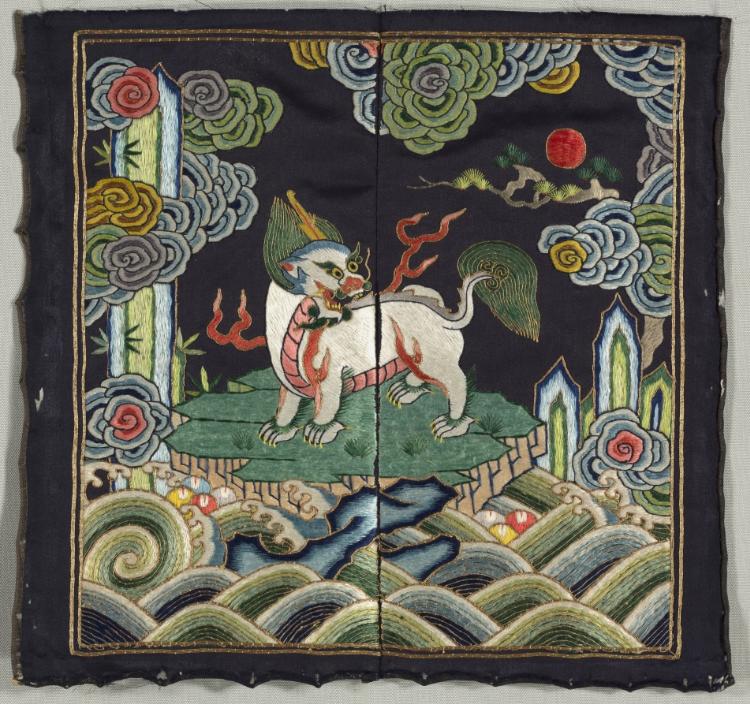
The Rank Badge (Buzi): Woven Authority and the Legacy of Imperial Silk
In the rarefied atmosphere of a Savile Row fitting room, where cloth is measured in ounces and character is cut from the bolt, one learns to read the language of textiles. A worsted flannel speaks of boardroom discretion; a cavalry twill whispers of country weekends. Yet no garment in the Western canon carries the sheer semiotic weight of the Chinese *buzi*—the Mandarin square, or rank badge. For over five centuries, this small, exquisitely woven panel of silk was not merely an adornment but a legal document, a social contract, and a masterpiece of material engineering. To examine the *buzi* is to understand that cloth has always been the most potent medium of power, and that the imperial silk loom was the original atelier of authority.
The Material Imperative: Silk as Sovereign Currency
The *buzi*’s authority begins with its substrate. Silk, in the imperial Chinese context, was not a luxury; it was a state monopoly, a form of currency, and a metaphysical conduit. The mulberry silkworm (*Bombyx mori*) was guarded with the ferocity of a crown jewel, and the sericulture that produced its filament was a ritualized, almost sacred, industry. For the *buzi*, the choice of silk was deliberate. Its lustrous surface caught light in a way that amplified the embroidered or woven imagery, creating a dynamic interplay of sheen and shadow that mimicked the emperor’s own celestial radiance. The ground fabric—often a tightly woven satin or gauze—provided a flawless canvas for the *kesi* (slit tapestry) or *suzhou* embroidery techniques. In *kesi*, the weft threads are individually manipulated to create pictorial detail, resulting in a fabric where the image is not printed or dyed but literally constructed thread by thread. This is not mass production; this is bespoke weaving at its most extreme, a process so labour-intensive that a single badge could take months to complete. The materiality, therefore, was the first message: this object was expensive, rare, and demanded a level of craft that only a state-sponsored loom could sustain.
The Grammar of Rank: Decoding the Buzi
If silk was the language, the *buzi*’s iconography was its grammar. Instituted in its codified form during the Ming dynasty (1368–1644) and refined under the Qing (1644–1912), the badge was a square or circular panel worn on the chest and back of the *pufu* (surcoat). Its placement was precise: front and center, directly over the heart and spine, ensuring that the wearer’s identity was announced before a word was spoken. The system was hierarchical and unforgiving. Civil officials wore birds—the crane for first rank, the golden pheasant for second, the peacock for third—each bird chosen for its Confucian virtues: wisdom, dignity, or beauty. Military officials wore beasts—the *qilin* (mythical chimerical creature) for first rank, the lion for second, the leopard for third—each representing martial ferocity and strength. This was not mere decoration; it was a sartorial legal code. To wear a crane when one was entitled only to a pheasant was a capital offense, an act of lèse-majesté that threatened the entire cosmological order.
The *buzi*’s composition followed a strict formal logic. The central bird or beast was always depicted in profile or frontal view, surrounded by auspicious symbols—clouds, waves, the *shou* character for longevity, and the *wan* swastika for eternity. The background was not empty space but a carefully orchestrated celestial landscape, often featuring the *lìshuǐ* (rising waves) at the bottom, symbolizing the sea of chaos from which the empire emerged. The entire composition was framed by a border, typically of geometric patterns or stylized dragons, which served as a visual containment of the wearer’s authority. This was not a free-form artistic expression; it was a heraldic system as rigid as any European coat of arms, but with a metaphysical weight that the West rarely achieved.
The Imperial Loom: A Legacy of Precision and Patronage
The production of *buzi* was inseparable from the imperial silk workshops in Nanjing, Suzhou, and Hangzhou. These were not factories in the modern sense but vast, hierarchical ateliers overseen by eunuch directors and staffed by hereditary artisans. The looms themselves were technological marvels—massive, hand-operated drawlooms that required two weavers: one to throw the shuttle, and one perched atop the frame to manipulate the thousands of heddles that created the pattern. This division of labour mirrored the imperial bureaucracy itself: the master weaver (the official) and the drawboy (the subordinate), working in perfect synchronization to produce a flawless result. The legacy of this system is not merely historical; it persists in the DNA of modern luxury. The concept of a garment that encodes status, that is produced by a small, highly skilled team over months, and that is intended to be read by a discerning audience—this is the very definition of haute couture. The *buzi* is the ancestral prototype of the Savile Row suit, where the cut, the cloth, and the buttonhole stitch all communicate a specific social standing.
From Court to Closet: The Buzi’s Contemporary Resonance
The *buzi* was abolished with the fall of the Qing dynasty in 1912, but its legacy did not die. It was absorbed into the vocabulary of Chinese dress, reappearing in the *qipao* and modern ceremonial attire as a decorative motif, albeit stripped of its legal power. Yet for the contemporary heritage specialist, the *buzi* offers a profound lesson in the relationship between material, craft, and identity. In an era of fast fashion and digital printing, the *buzi* stands as a monument to the idea that clothing is not a passive covering but an active agent of communication. Its silk ground, its *kesi* construction, and its iconographic precision all demand a level of respect that we rarely afford to textiles today.
To wear a *buzi* was to accept a contract with the state, a commitment to the virtues of one’s rank. To study it is to understand that true luxury is not about excess but about exactitude—the exact thread, the exact bird, the exact placement. The imperial silk loom, with its relentless pursuit of perfection, has bequeathed to us a standard that even the most discerning tailor on Savile Row would recognize: the cloth is never just cloth. It is a biography, a badge, and a legacy, woven in silk and sealed with authority. The *buzi* remains the ultimate testament to the fact that what we wear is who we are, and that the loom, not the sword, often holds the true power of empire.
Heritage Lab Insight
Lab Insight: CMA Silk Archive Node integration.