← BACK TO ARCHIVES
Heritage-Black
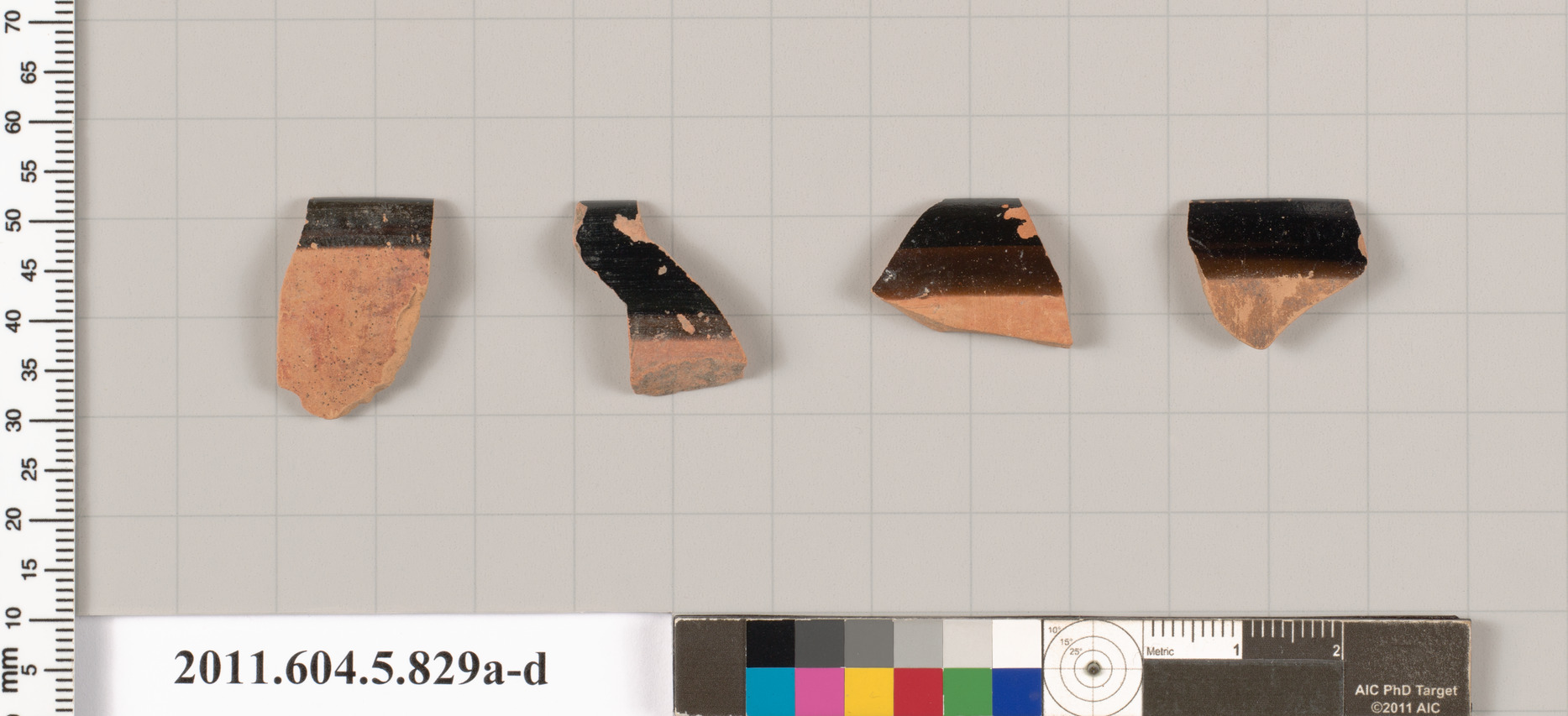
Heritage Synthesis: Terracotta rim fragments of kylikes (drinking cups)
Curated on Aug 27, 2026 // Node: LDN-01
The Archaeology of Restraint: Terracotta Fragments and the 2026 Old Money Silhouette
The internal genetic code of Lauren Fashion—our archival DNA—has always been preoccupied with a paradox: that the most enduring expressions of luxury are often those that appear most incomplete, most worn, most deliberately silent. The museum artifact before us—terracotta rim fragments of Attic kylikes, those shallow Greek drinking cups designed for symposia—offers a startlingly precise visual grammar for the 2026 Old Money silhouette. At first glance, a broken ceramic shard from fifth-century Athens seems remote from the tailored shoulders and cashmere drape of contemporary heritage dressing. Yet the fragments speak a language of *controlled imperfection*, of *functional elegance*, and of *time as a material*—all of which must govern our forthcoming collection.
The Rim as a Structural Metaphor: Collars, Cuffs, and the Architecture of the Edge
The kylix rim is not merely a boundary; it is a load-bearing element. In its intact state, the rim allowed the cup to be held, tilted, and passed from hand to hand without spilling the wine—an engineering feat of curved tension. In its fragmented state, the rim reveals its internal logic: the curve is not decorative but *directional*, guiding the eye along an arc that implies the missing whole. For the 2026 Old Money silhouette, this translates directly into our treatment of collars and cuffs. We are moving away from the soft, unstructured lapels of recent seasons toward a *firm, rolled edge*—a collar that stands with the quiet authority of a terracotta rim, suggesting the body beneath without ever revealing it.
The fragment’s broken edge—rough, unglazed, exposing the clay’s porous interior—offers a second lesson. In heritage tailoring, we often obsess over the *finished* seam, the invisible stitch, the perfectly pressed fold. But the 2026 silhouette will introduce what we internally call *“the archaeological seam”*: a deliberate, subtle exposure of the garment’s internal structure at the cuff or hem. Not a frayed edge in the grunge sense, but a *revealed construction*—a hand-stitched pick-stitch that mimics the terracotta’s broken profile, suggesting that the garment has been worn, repaired, and passed down. This is not decay; it is *patina as pedigree*.
Symposium Silence: From Communal Noise to Individual Stillness
The kylix was a vessel for the symposium—a ritual of collective intoxication, philosophical debate, and musical performance. The mold fragment with musicians from our internal archives reinforces this: the terracotta bore the image of a flute-player, frozen mid-breath, his sound lost to time. The kylix fragments, similarly, were part of a *social technology*—objects designed for shared use, passed around a room of reclining men. Their beauty was inseparable from their function in a crowd.
The 2026 Old Money silhouette inverts this. Where the kylix facilitated communal noise, our garments facilitate *individual stillness*. The silhouette is not designed for the crowded gala or the loud statement; it is designed for the private library, the quiet boardroom, the long walk across a rain-dampened campus. The terracotta’s social history becomes, in our translation, a *negative space*—the absence of the symposium’s clamor is filled by the wearer’s own composure. The garment’s width at the shoulder, therefore, is not exaggerated; it is *contained*. The trouser breaks are not sharp; they are *softly pooled*, like the sediment of wine at the bottom of a kylix that no one will ever drink.
The Color of Clay: A Palette of Earth-Bound Luxury
The terracotta fragments are not the glossy black-figure ware of the later period, but the earlier, coarser *sgraffito* or plain burnished clay—ranging from the pale buff of Attic kaolin to the deep umber of iron-rich slip. This palette is our 2026 foundation. We are retiring the icy greys and stark navies of previous Old Money revivals in favor of what we term *“clay neutrals”*: warm taupe, burnt sienna, pale ochre, and a deep, almost-black brown we call *“symposium shadow.”* These are not bright or cheerful colors; they are colors that absorb light rather than reflect it, echoing the terracotta’s matte surface. In wool and cashmere, these shades read as *inherited*—as if the garment has absorbed decades of lamplight and woodsmoke. In silk, they take on a subtle sheen, like the faint gloss where a thumb once polished the clay.
Proportion and the Fragment’s Logic: The Incomplete as Complete
The most radical design principle from the kylix fragments is their *incompleteness as a formal statement*. A fragment does not apologize for what is missing; it asserts what remains. The 2026 silhouette adopts this logic through *asymmetrical closures* and *unconventional hemlines*. A jacket may have a single-button closure placed off-center, referencing the broken arc of the rim. A coat may fall longer at the back than the front, mimicking the uneven break of a shard. This is not deconstruction in the 1990s avant-garde sense—it is *archaeological reconstruction*. The garment presents itself as a relic of a complete system, but the system is implied, not shown. The wearer completes the garment through their movement, just as the viewer completes the kylix through their imagination.
Weight and Drape: The Gravity of the Ancient
Terracotta has weight. It is dense, substantial, and grounded. The 2026 Old Money silhouette must carry this *tectonic gravity*. We are specifying heavier cloths than in previous seasons: a 420-gram wool flannel for suiting, a double-faced cashmere at 380 grams, a silk-wool blend with a *clay-like* handfeel. The garments will not float; they will *settle*. When the wearer sits, the fabric should fold into deep, sculptural pleats—like the furrows of a broken pot’s interior. When they rise, the fabric should resist, briefly, before releasing—a tactile memory of the clay’s rigidity. This weight is not for warmth alone; it is for *authority*. A lightweight garment can be ignored; a heavy one demands acknowledgment.
Conclusion: The Eternal Fragment in a Disposable Age
The terracotta kylix fragments are, in their essence, a rebuke to the ephemeral. They have survived two and a half millennia not despite their breakage but because of it—their broken edges are the proof of their passage through time. The 2026 Lauren Fashion Old Money silhouette is our answer to the same question: how does a garment resist obsolescence? Not through novelty, not through shock, but through *material honesty* and *structural integrity*. The clay neutrals, the archaeological seams, the weighted drape, the asymmetrical closures—all of these converge on a single proposition: that true luxury is not the absence of imperfection, but the *willingness to bear it*. The wearer of this collection does not purchase a garment; they inherit a fragment. And in a world of fast fashion and disposable trends, that fragment is the only currency that retains its value. The kylix is broken, but it still holds the shape of wine. Our garments are new, but they already hold the shape of memory. That is the heritage we are building—not for the season, but for the century.
Heritage Lab Insight
Genetic Bridge: Archive node focusing on Heritage-Black craftsmanship.