← BACK TO ARCHIVES
Heritage-Black
Heritage Synthesis: Terracotta rim fragment of a kylix (drinking cup)
Curated on Aug 27, 2026 // Node: LDN-01
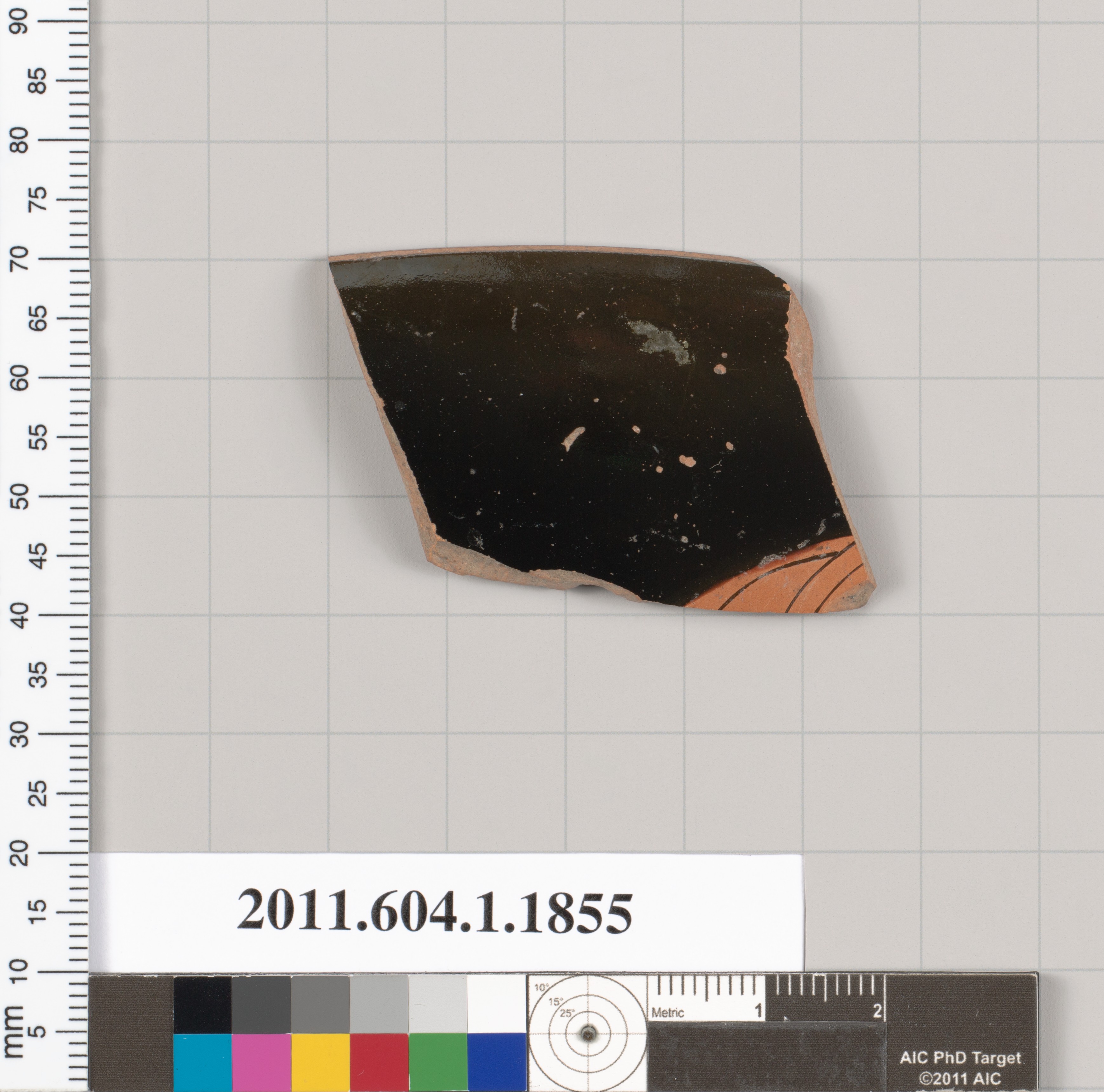
The Archaeology of Restraint: Terracotta Fragments and the 2026 Old Money Silhouette
In the hushed archives of the Lauren Fashion Heritage Lab, we often speak of the *genetic code*—the invisible thread that connects a 5th-century BCE shard of Attic terracotta to the fall of a shoulder seam in a 2026 double-faced cashmere coat. The museum artifact before us—a rim fragment of a Greek *kylix*, its terracotta body worn to a tactile softness, its glaze chipped into a map of forgotten symposiums—is not merely a relic of classical antiquity. It is a blueprint for the coming season’s most potent aesthetic argument: that true luxury is the disciplined subtraction of the superfluous.
The *kylix* fragment speaks in a language of deliberate incompletion. Its broken edge is not a flaw but a testament to time’s curation. The interior glaze, once a glossy black, now bears the micro-scratches of a thousand libations, each mark a silent record of use. This is the foundational paradox of what we at Lauren Fashion term *Heritage-Black*—a material philosophy that does not seek pristine newness but rather the *patina of purpose*. For the 2026 Old Money silhouette, this translates into a radical departure from the performative opulence of previous decades. We are not designing garments; we are designing *surfaces of inheritance*.
From Symposium to Sartorial Silence: The Geometry of the Rim
The *kylix*’s rim is a study in controlled curvature—a shallow, flaring lip designed for the easy grip of a reclining philosopher, yet its profile possesses an almost architectural severity. This dual nature—utilitarian ease married to geometric precision—is the exact tension we are engineering into the 2026 shoulder line. The Old Money client does not wear a power shoulder; she wears a *structural whisper*. Our new tailoring, informed by this fragment, abandons the exaggerated padding of the 1980s revival. Instead, we employ a technique we internally call *the broken contour*: a shoulder seam that is set slightly forward, mimicking the *kylix*’s outward flare, then abruptly softened at the deltoid. The result is a silhouette that suggests strength without assertion, presence without aggression.
The terracotta’s color—that earthy, unglazed umber between burnt sienna and pale ochre—has directly influenced our 2026 palette. We have moved beyond the stark neutrals of minimalist fashion toward what our atelier calls *archaeological tones*: the precise hue of sun-dried clay, the faded umber of a vase buried for two millennia, the chalky white of lime mortar. These are not colors that announce themselves; they are colors that *age gracefully*. In double-faced wool and matte silk twill, these shades create a sartorial equivalent of the fragment’s surface—a fabric that appears to have been worn by generations, even before it leaves the workroom.
The Logic of the Empty Center: The Cup’s Interior and the Garment’s Void
The most profound lesson of the *kylix* fragment lies not in its exterior but in its interior—the shallow, glazed bowl that once held wine. That concave space, now empty, is the artifact’s true subject. In Greek sympotic culture, the cup was not an object of display but a vessel of *shared absence*; its value was realized only in the act of being drained, passed, refilled. For 2026, we translate this into the *negative-space silhouette*.
Consider our new floor-length coat, cut from a single piece of vicuña-blend felt. There is no dart, no seam at the waist; instead, the fabric is allowed to fall from the shoulders in a continuous, unbroken column. The garment’s power resides in the void it creates between the body and the cloth—a breathing space, a pocket of air that moves with the wearer. This is not the exaggerated volume of avant-garde design; it is the *measured emptiness* of the *kylix* bowl. The coat’s interior is lined with a whisper-thin layer of silk charmeuse in a matching terracotta tone, so that when the wearer lifts an arm, a flash of that ancient clay color appears—a private acknowledgment of the fragment’s inner glaze. This is the Old Money code: the secret, the unseen, the detail that rewards only the closest observer.
The Patina of Use: Distressing as a Luxury Signifier
The *kylix* fragment’s broken edge challenges the modern fashion industry’s obsession with perfection. In 2026, we are deliberately introducing *controlled imperfection* into our garments—not as a gimmick, but as a philosophical statement. Our denim, woven in a Japanese mill on vintage shuttle looms, is treated with a new enzymatic wash that mimics the *kylix*’s interior scratches: not random abrasion, but a patterned, repetitive micro-distressing that suggests decades of folding and unfolding. Our leather goods—the new saddle bag, the unlined glove—are tumbled with pumice stones to achieve a surface that feels *pre-owned*, as if inherited from a grandmother who wore them through a hundred country weekends.
This is the antithesis of fast-fashion’s shiny newness. It is the aesthetic of the *kylix*’s rim: worn smooth by the thumbs of long-dead drinkers, yet still perfectly functional. The 2026 Old Money silhouette thus becomes a *living artifact*—a garment that does not merely clothe the body but *records* its history. We encourage our clients to wear their Lauren pieces hard, to let the elbows of a cashmere jacket develop a subtle sheen, to let the hem of a wool skirt brush against pavements until it frays slightly. This is not damage; it is *narrative*.
Conclusion: The Fragment as a Complete Whole
The terracotta *kylix* fragment teaches us that wholeness is not a matter of completeness but of *resonance*. A broken cup can hold more meaning than a pristine one, because its fracture invites the viewer to complete the story. In the 2026 collection, we apply this principle to every silhouette. A jacket is cut with a slightly asymmetric hem, echoing the fragment’s broken edge. A skirt is pleated in a pattern that, when viewed from a certain angle, suggests the fluting of a classical column. A scarf is woven with a single, deliberate imperfection—a thread of a different terracotta shade, visible only in direct sunlight.
This is the true inheritance of the *kylix*: not a copy of its form, but an adoption of its *ethics*. The Old Money aesthetic has always been about the accumulation of quiet power, but in 2026, we redefine that power as *the ability to withhold*. The most luxurious garment is not the one that shouts the loudest, but the one that, like the terracotta fragment, sits in silence and lets its material history speak. The cup is broken, but its rim still holds the shape of a hand. The coat is empty, but its void is full of potential. This is the Lauren Fashion Heritage Lab’s gift to the coming year: a silhouette built on the archaeology of restraint, where every seam is a scar, every fold a memory, and every garment a fragment of a larger, more beautiful whole.
Heritage Lab Insight
Genetic Bridge: Archive node focusing on Heritage-Black craftsmanship.