The Veil of Civilization: Philae, Photographic Melancholy, and the 2026 Old Money Silhouette
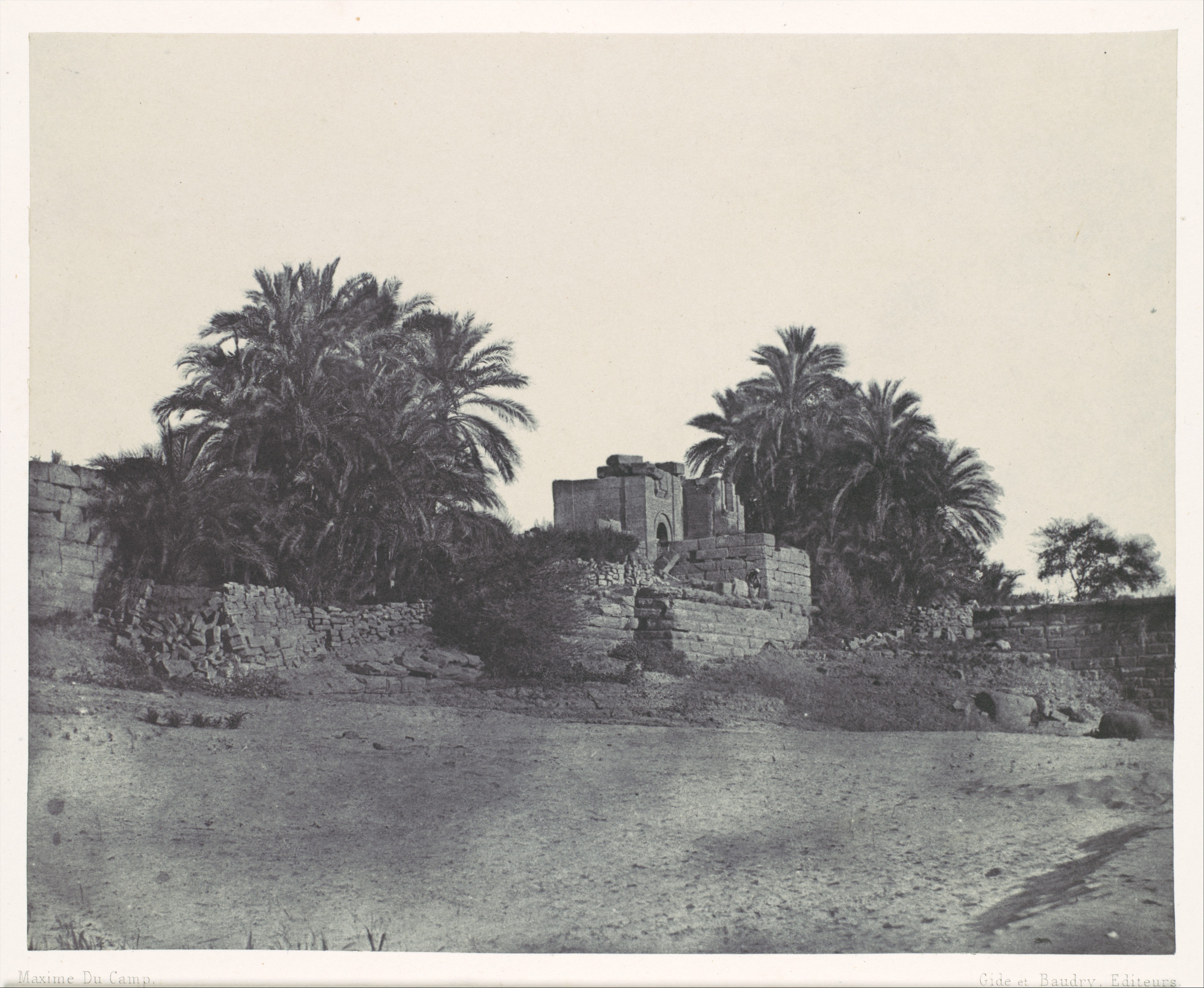
The internal genetic code of Lauren Fashion Heritage Lab, analyzing the dialogue between a Renaissance cassone and a Mughal miniature, reveals a core principle: surfaces are never innocent. They are aesthetic membranes that transmit ideology, where fabric, paint, and ornament encode narratives of power, gender, and control. This analytical framework finds a profound and haunting resonance in the provided museum artifact: the salted paper print titled Nubie. Philae, produced via the Blanquart-Évrard process from a paper negative. This mid-19th century photograph of the Philae temple complex, emerging from the very dawn of technological image-making, does not merely depict a landscape; it performs a specific cultural veiling. It informs the 2026 Old Money silhouette not through literal pattern translation, but by embodying the aesthetic politics of heritage, melancholy, and the authoritative surface that the silhouette seeks to articulate.
The Photographic Surface as Woven Melancholy
The chosen photographic process is critical to decoding its message. The Blanquart-Évrard process, enabling slightly wider dissemination of images, still yielded prints with a distinctive tonal range—often soft, with rich blacks and a palpable texture that itself feels woven, like a fragile textile of light and shadow. The use of a paper negative further imbues the image with a granular, non-mechanical quality. Nubie. Philae is thus not a transparent window onto antiquity, but a crafted artifact of perception. Like the painted surface of the Famous Women cassone or the intricate talents (elephant trappings) in the Mughal painting, this photograph is a mediated surface. It presents the Philae temples not in their lived, sun-bleached reality, but through a Western Romantic lens of sublime decay. The monuments are framed as majestic, silent, and abandoned—a visual trope that served to legitimize colonial narratives of a glorious past awaiting Western rediscovery and stewardship. The photographic "weave" here captures stone as if it were a crumbling brocade, its patterns of light and shadow dressing the ruins in a garment of melancholy.
From Architectural Drapery to Sartorial Architecture
This informs the 2026 Old Money silhouette through the conceptual translation of structure as drapery and drapery as authority. The Old Money ethos, as interpreted by Lauren, is not about ostentatious logos but about the silent, imposing language of inherited form. The Philae photograph teaches us about the power of the patinated surface and the imposing silhouette that emerges from shadow.
First, the Silhouette as Monument: The 2026 line interprets the temple's colonnades and pylons not as literal shapes, but as principles of verticality and groundedness. Garments will employ architectural seaming—strong shoulder lines that echo entablatures, columnar sleeves, and A-line skirts that flare with the solidity of a stone base. The fabric, however, contradicts the expected hardness. Inspired by the photograph's textured, shadowy print, we move beyond rigid wools to heritage-black matte jerseys, heavy crêpes, and double-faced cashmere that hang with the solemn weight of a velvet curtain. The silhouette is monumental, yet the hand-feel is melancholically soft, creating a tension between public imposingness and private, tactile refinement.
Second, The Veil of Non-Ostentation: Just as the photograph veils the complex political reality of 19th-century Egypt in an aesthetic of timeless ruin, the Old Money silhouette employs a "veil" of impeccable, unadorned fabric. This is the heritage-black—a black so deep and complex it absorbs light like the photographic shadows in the temple's inner sanctums. Embellishment, if present, is structural: seams are highlighted like the lines between stone blocks; pintucks mimic the striations of weathered granite; a rare flash of metallic thread (a nod to the Caparisoned Elephant's gold) appears only as a hidden piping, a private knowledge of luxury. The power lies in what is withheld, in the surface that declares its depth through absence of frivolity.
The Politics of Temporal Patina and Permanence
The Famous Women cassone used narrative painting to fossilize female virtue; the Mughal miniature used decorative pattern to manifest imperial order. The photograph of Philae uses the melancholy of decay to assert a cultural claim. The 2026 Old Money silhouette learns from this aesthetic of earned patina. It rejects the sheen of the new in favor of fabrics that possess an innate depth of character—milled wool with a faint nap, linen blended with silk for a subdued luster that resembles sun-bleached stone, brushed cashmere that feels already softened by time. The cut is deliberately unfaddish, aspiring to a timelessness that mirrors the (perceived) eternal nature of the ruins. This is not vintage revival, but the projection of a lineage that appears to exist outside of fashion's temporal cycle, much as the photograph attempted to place Philae outside of contemporary history.
Ultimately, Nubie. Philae provides the crucial lesson of authoritative backdrop. The temples form a staggeringly beautiful but silent stage. The 2026 Old Money wearer is both the monument and its authoritative observer. The clothing creates a similarly potent, reserved backdrop for the individual's presence. It does not shout; it absorbs gaze and projects stability. In an era of digital image saturation and frantic self-display, this silhouette returns to the 19th-century photograph's power: the power of the composed, textured, and melancholic surface that speaks of history, permanence, and unassailable taste. It answers the internal genetic code's final question by asserting that today's most potent visual surface carries a narrative of silent continuity, weaving control over one's own image through the profound authority of heritage-black and architectural form.