← BACK TO ARCHIVES
Silk
Heritage Synthesis: Cloth of gold with felines and eagles
Curated on Aug 27, 2026 // Node: LDN-01
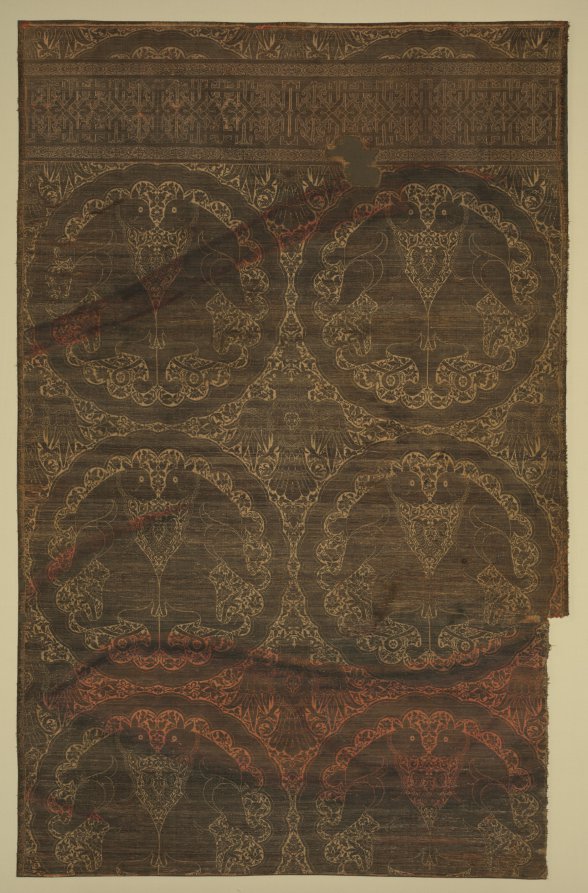
The Golden Thread: Deconstructing the Imperial Legacy of Cloth of Gold
In the hushed, wood-panelled ateliers of Savile Row, where the air is thick with the scent of chalk, worsted wool, and quiet ambition, we speak of cloth not merely as fabric, but as narrative. We understand that a garment is a biography, stitched and tailored. Yet, there are rare textiles that transcend biography to become epic poetry. The cloth of gold, woven with felines and eagles, is precisely such a material. It is not simply a luxury; it is a political manifesto, a theological argument, and a cartographic claim, all rendered in lustrous silk and gilded metal. To handle a fragment of this cloth is to hold the pulse of an empire.
Materiality and the Alchemy of Silk
The foundation of this extraordinary textile is, of course, the silk itself. But this is not the silk of a simple foulard or a lightweight summer suiting. This is a warp-faced silk of formidable density, a structure engineered for permanence, not ephemerality. The silk filaments, reeled from the cocoons of *Bombyx mori*, were spun with a precision that speaks to centuries of accumulated expertise. The ground weave, often a twill or a compound weave such as a lampas, provides a sturdy, unyielding canvas. It is a material that does not drape; it commands. It possesses a stiff, almost architectural presence, designed to hold its shape against the weight of its own opulence.
The "cloth of gold" designation is not hyperbole. The weft threads are not merely gold-coloured; they are true metal. Strips of gilded silver or gold leaf, beaten to a diaphanous thinness, were carefully wound around a silk core. This technique, known as *filé*, created a thread that was at once flexible and impossibly brilliant. The result is a surface that behaves like a liquid mirror, shifting from deep, burnished amber to a blinding, sunlit blaze with the slightest movement. This is a materiality that demands a specific kind of light—the flickering candlelight of a throne room, the dappled sunlight of a royal procession—to be fully appreciated. It is a fabric that performs.
The Heraldic Bestiary: Felines and Eagles as Imperial Lexicon
The iconography woven into this silk is as deliberate as the weave structure. The feline and the eagle are not decorative flourishes; they are a codified language of power. The feline, often depicted as a lion or a panther, represents terrestrial sovereignty. It is the king of beasts, a symbol of courage, strength, and unyielding dominion over the earthly realm. In the context of imperial weaving, the feline is the embodiment of the ruler’s physical power, his ability to command armies and maintain order across vast, land-based territories. The posture of the beast—whether rampant, passant, or confronting its counterpart—adds another layer of meaning, often referencing specific dynastic myths or military victories.
The eagle, in stark contrast, is the sovereign of the celestial sphere. It is the messenger of the gods, the embodiment of vision, foresight, and divine inspiration. In many imperial traditions, from the Roman *aquila* to the Byzantine double-headed eagle, this bird is the direct link between the mortal ruler and the heavens. Its presence on the cloth signifies that the emperor’s authority is not merely a human construct but is sanctioned by a higher power. The eagle’s gaze, rendered in fine silk and metal thread, is a constant reminder of the ruler’s omniscience, his ability to see all that transpires within his domain.
The deliberate pairing of these two motifs is the crux of the cloth’s political message. It creates a dialectic: the earth and the sky, the physical and the spiritual, the temporal and the eternal. The ruler who wears this cloth is not merely a man; he is a universal sovereign, a microcosm of the cosmos itself. He is the point where the terrestrial and celestial planes intersect. This is not a garment for a courtier; it is a garment for a demigod.
The Legacy of Imperial Silk Weaving
This cloth of gold is the apotheosis of a weaving tradition that was, for millennia, a closely guarded imperial secret. The production of such textiles was not a commercial enterprise; it was a state monopoly, controlled by imperial workshops. These ateliers, often located within the palace complex, were staffed by master weavers whose skills were passed down through generations. The patterns were not designed by artists but by court officials who understood the political and religious significance of every motif. The looms themselves were massive, complex machines that required a team of weavers to operate, with a single master controlling the intricate pattern via a system of cords and pedals.
This legacy is one of immense technical sophistication. The creation of a cloth of gold with a complex heraldic design required an almost unimaginable level of coordination between the drawboy, who manipulated the pattern cords, and the weaver, who threw the shuttles. A single mistake could ruin weeks of work. The resulting fabric was therefore not just a luxury good; it was a testament to the organisational genius of the empire, a physical manifestation of its ability to marshal resources, expertise, and time on a monumental scale.
From Imperial Court to Savile Row
For the modern connoisseur on Savile Row, this cloth is a profound source of inspiration, though we rarely, if ever, use it for a commission. Its weight and rigidity make it unsuitable for a contemporary suit. Yet, its principles inform our craft. We understand that true luxury is not about fleeting trends but about permanence, about the integrity of the material and the depth of its story. When we select a heavy, pure wool worsted for a winter overcoat, we are echoing the same desire for a cloth that has substance, that will hold its shape and its presence for decades. When we choose a silk lining with a subtle, geometric pattern, we are paying homage to the idea that the inside of a garment should be as considered as the outside.
The cloth of gold with felines and eagles is a relic, but it is not a dead one. It is a benchmark. It reminds us that the finest tailoring is not about construction alone; it is about the curation of meaning. It challenges us to consider what stories our own cloths tell. In a world of fast fashion and disposable trends, the legacy of imperial silk weaving stands as a defiant testament to the power of patience, skill, and the enduring language of beauty. It is a golden thread that connects the thrones of antiquity to the quiet, exacting work of the modern tailor, reminding us that we are not just makers of clothes, but custodians of history.
Heritage Lab Insight
Lab Insight: CMA Silk Archive Node integration.