← BACK TO ARCHIVES
Heritage-Black
Heritage Synthesis: Terracotta fragment of a kylix (drinking cup)
Curated on Aug 28, 2026 // Node: LDN-01
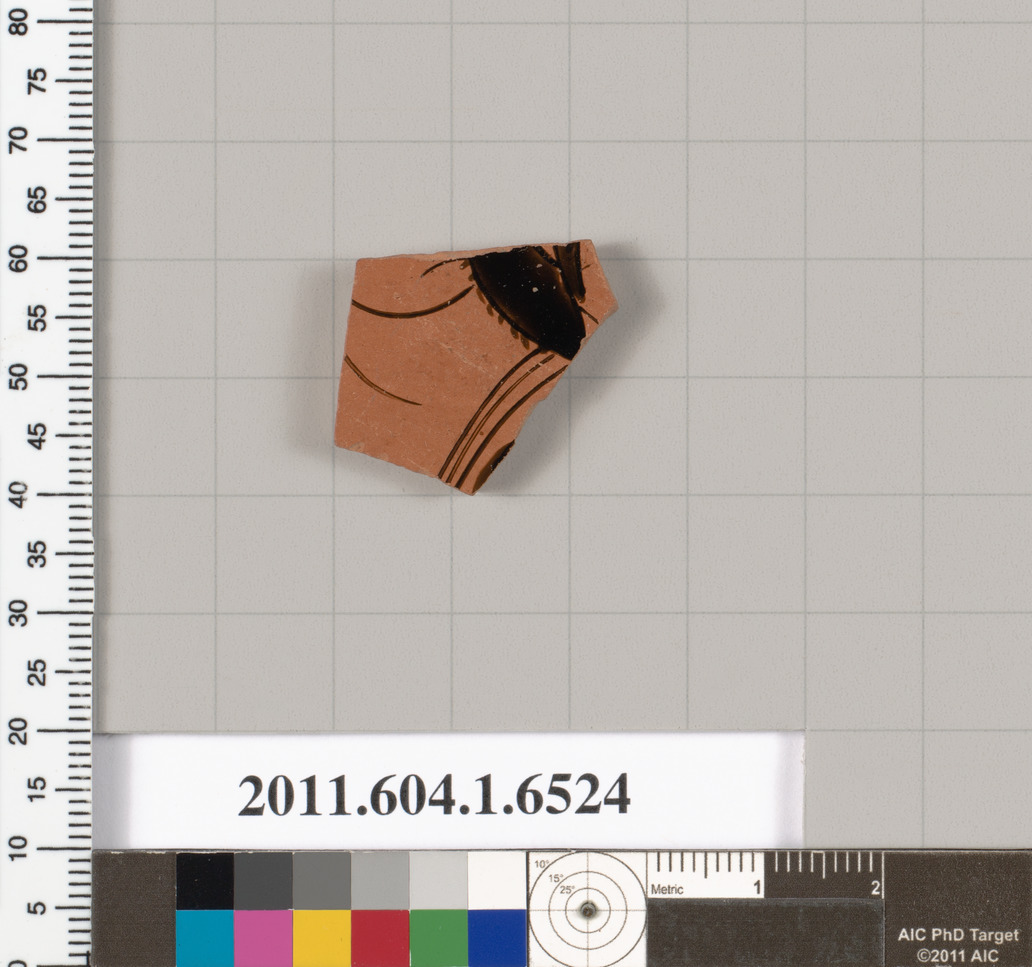
The Dialectics of Containment: Terracotta Fragments and the Architecture of Old Money Silence
The internal genetic code of Lauren Fashion—articulated through the sculptural finality of *The Death of Socrates* and the ceramic infinitude of the *Vase (Meiping) with Waves*—presents a profound philosophical tension: the vessel as a site of heroic narrative versus the vessel as a site of cosmic emptiness. The museum artifact before us, a terracotta fragment of an Attic kylix (drinking cup), is neither marble nor porcelain, yet it operates as the missing dialectical link between these two extremes. It is a shard of a vessel that once held wine, conversation, and the democratic ethos of the symposium. For the 2026 Old Money silhouette, this fragment is not an archaeological curiosity but a generative blueprint. It instructs us to construct garments that function as *containers of restraint*—silhouettes that do not shout, but rather hold their breath, allowing the wearer’s presence to fill the negative space. The kylix fragment, broken yet eloquent, teaches that true heritage is not about pristine preservation but about the dignified acceptance of wear, time, and the quiet authority of what remains.
I. The Kylix as a Grammar of Social Geometry
The Attic kylix was a low, wide-bowled drinking vessel with two horizontal handles, designed for reclining symposiums. Its painted interior—often depicting mythological scenes or erotic revelry—was only visible when the drinker tilted the cup to the lips. This is a crucial phenomenological detail: the kylix’s primary visual statement was *hidden until the moment of consumption*. Its exterior, typically black-glazed or minimally decorated, presented a facade of austere uniformity. The fragment we examine, with its broken rim and surviving handle root, embodies this principle of *delayed revelation*. For the 2026 Old Money silhouette, this translates into a radical rejection of immediate legibility. The suit, the overcoat, the sheath dress—these are the *exterior glaze* of the kylix. They must be impeccable in their restraint: a charcoal flannel with a barely perceptible herringbone, a black cashmere coat with a hidden interior pocket of vermilion silk, a wool crepe dress whose structural darting is visible only upon close inspection. The Old Money aesthetic, as informed by this terracotta, is not about displaying wealth but about *concealing narrative*. The garment is a vessel whose interior life—the lining, the hand-stitched seams, the provenance of the cloth—is the true symposium, accessible only to those who know how to tilt the cup.
II. From Socratic Death to Symposium Life: The Body as Receptacle
*The Death of Socrates* presents the body as a heroic vessel, its musculature straining to contain a departing soul. The kylix, conversely, presents the body as a *social vessel*—one that holds wine, not ideology. Yet both are concerned with the *act of tilting*. Socrates tilts his head upward toward the heavens; the symposiast tilts the kylix toward his lips. The terracotta fragment, in its broken state, captures this moment of inclination permanently. For the 2026 silhouette, this suggests a new relationship between the garment and the body’s posture. The Old Money look of the past was rigid—a power suit of squared shoulders and cinched waists. The terracotta-informed silhouette of 2026 must be *preternaturally fluid*, engineered to accommodate the subtle tilts of conversation, the lean of a confidential whisper, the slight backward inclination of a person listening with genuine interest. This is achieved through fabric technology and cut: a wool gabardine with a four-way stretch that retains its memory, a silk-wool blend that drapes like liquid but recovers its crease. The garment becomes a *kylix for the torso*—a vessel that holds the body’s poise without constraining its dialectical movement. The shoulder line softens, not to slouch, but to allow the head to tilt toward another speaker. The waist is defined, not to corset, but to create a fulcrum for the subtle pivots of social engagement.
III. The Waves of Meiping and the Terracotta’s Broken Rim: On Imperfection as Luxury
The *Vase (Meiping) with Waves* achieves its sublime effect through the tension between a rigid silhouette and an infinitely flowing surface pattern. The terracotta fragment achieves its pathos through the opposite: a broken form with a static, monochrome surface. Yet both reject the Socratic ideal of perfect, narrative-driven representation. The Meiping’s waves are not realistic water; they are the *idea* of water, the rhythm of change. The kylix fragment is not a complete cup; it is the *idea* of a cup, the memory of a symposium. For 2026 Old Money, this convergence dictates a new material philosophy: *the luxury of the incomplete*. This does not mean distressed or deconstructed fashion in the grunge or avant-garde sense. Rather, it means garments that embrace the *patina of use* as a design principle. A herringbone wool jacket with a slightly worn elbow—not from age, but from a deliberate finishing process that mimics decades of wear. A pair of wool trousers with a crease that has been pressed so deeply it appears almost scarred. A cashmere scarf with a hand-rolled edge that is intentionally irregular, echoing the broken rim of the kylix. These are not flaws; they are *testimonies of continuity*. They signal that the wearer is not a newcomer to wealth but a custodian of a lineage that has weathered storms—like the waves on the Meiping, like the break on the kylix. The 2026 silhouette must therefore be *constructed with an archaeology of use*: seams that are felled and reinforced, buttons of corozo or antique horn, linings of cupro that will wear thin in exactly the right places. The garment is not a product; it is a *fragment* of a future heirloom.
IV. The Symposium of Silence: Color and Texture as Unspoken Language
The terracotta fragment’s palette—the deep, burnt orange of fired clay, the black of the glaze, the cream of the reserved ground—offers a chromatic departure from the monochrome tyranny of contemporary minimalism. Old Money has long been associated with navy, charcoal, and beige. The kylix fragment, however, suggests a *terracotta-inflected neutrals*: a burnt sienna that is not rust but the color of ancient pottery, a black that is not void but the deep brown-black of obsidian, a cream that is not white but the color of unbleached linen. These colors, when applied to 2026 silhouettes, create a *chromatic archaeology*. A double-faced wool coat in a deep terracotta, lined in a black silk twill, worn over a cream silk blouse—this is not a costume but a *palimpsest* of Mediterranean heritage. The texture is equally crucial. The kylix’s surface is neither polished marble nor glossy porcelain; it is *matte, granular, tactile*. The 2026 Old Money fabric must echo this: a worsted wool with a dry, toothy hand; a silk faille with a subtle rib; a cashmere that is brushed to a soft haze but not a slick finish. These textures invite touch, not as a display of wealth, but as an acknowledgment of *material honesty*. The garment speaks in a low, granular voice—the voice of the symposium, not the amphitheater.
V. Conclusion: The Vessel as a Moral Posture
The terracotta kylix fragment, in its broken humility, resolves the dialectic between Socratic heroism and Meiping’s cosmic flow. It is not a monument to a single death, nor a symbol of eternal change. It is a *utilitarian relic*—a piece of a cup that was used, dropped, broken, and discarded. Yet its survival, its presence in the museum case, transforms it into a *moral artifact*. It teaches that the highest form of beauty is not in the perfect vessel but in the vessel that has *served its purpose and accepted its fate*. For the 2026 Old Money silhouette, this is the ultimate lesson: the garment must not be a sculpture of the self, but a *vessel for living*. It must be cut to allow movement, woven to breathe, and colored to age gracefully. It must be a fragment that, when found by future generations, will speak not of a moment of fashion but of a lifetime of *measured grace*. The terracotta informs the silhouette not by dictating its shape but by defining its *ethos*: the silhouette is a container for the wearer’s own symposium—their conversations, their silences, their tilts toward others. In this, the Old Money garment achieves the final dialectic: it is both the *Socratic body*—a disciplined, expressive form—and the *Meiping void*—a receptive, silent space. It is, in essence, a *terracotta fragment of a life well-lived*, broken only by time, and therefore immortal.
Heritage Lab Insight
Genetic Bridge: Archive node focusing on Heritage-Black craftsmanship.