← BACK TO ARCHIVES
Silk
Heritage Synthesis: Tiger
Curated on Aug 28, 2026 // Node: LDN-01
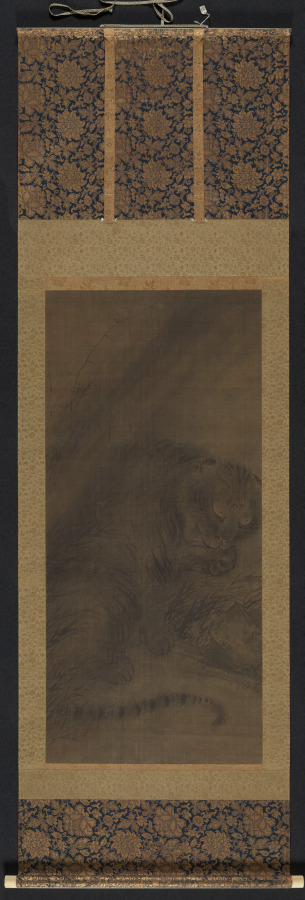
The Tiger in Silk: A Study of Imperial Authority and Material Mastery
In the hushed, wood-panelled ateliers of Savile Row, where cloth is measured in generations rather than metres, one understands that fabric is never merely fabric. It is a document. It is a declaration. It is, in the most refined sense, a weapon of quiet authority. When we speak of the tiger rendered in silk, we are not discussing a mere pattern or a decorative flourish. We are examining a profound convergence of natural ferocity and human artifice—a legacy born in the imperial weaving sheds of China, where the loom was a throne and the silk thread was a sceptre.
The Material Imperative: Why Silk, Why the Tiger
To appreciate the tiger’s place in imperial silk, one must first appreciate the material itself. Silk is not a humble fibre. It is a protein filament, secreted by the *Bombyx mori* silkworm, and its production—sericulture—was for millennia a state secret of the highest order. The Chinese imperial court held a monopoly on the finest grades, and the punishment for smuggling silkworm eggs or mulberry seeds was death. This was not mere protectionism; it was theological. Silk was believed to be a conduit between the earthly and the celestial. Its lustre, its ability to take dye with an almost liquid depth, and its whisper-quiet drape rendered it the only appropriate medium for communicating with the divine and for clothing those who stood between heaven and earth.
The tiger, in this context, was not a random choice. In the Chinese cosmological system, the tiger is the King of the Western Quadrant, the lord of autumn, and the master of metal—the element of sharpness, justice, and martial might. Unlike the dragon, which represented the emperor’s spiritual and celestial mandate, the tiger represented his temporal, physical power. It was the beast that guarded the gates of the underworld, the creature that could repel evil spirits, and the emblem of the military marshal. To weave the tiger in silk was to fuse the most precious material with the most potent symbol of terrestrial dominance. The result was not a textile; it was a talisman.
The Imperial Weaving Legacy: The Loom as a Political Instrument
The legacy of imperial silk weaving is not a romantic footnote; it is a rigorous, bureaucratic history of control. The imperial workshops, particularly those of the Ming (1368–1644) and Qing (1644–1912) dynasties, were housed in the great cities of Nanjing, Suzhou, and Hangzhou. These were not small artisan studios. They were vast industrial complexes, employing thousands of weavers, dyers, and pattern-makers, all overseen by eunuch administrators who reported directly to the throne. The looms themselves—the massive drawlooms requiring two operatives, one for the weave and one for the pattern—were technological marvels. They could hold hundreds of warp threads, each individually controlled, allowing for the creation of intricate, multi-coloured designs that were, in effect, painted with thread.
The tiger motifs produced on these looms were not casual. They were codified. In the Ming dynasty’s sumptuary laws, the tiger was reserved for military officials of the third and fourth ranks, embroidered or woven onto their *buzi* (rank badges). But the most spectacular examples were reserved for the emperor himself. The imperial tiger robes, known as *jifu*, were not daily wear; they were ceremonial armour. Woven with gold-wrapped silk threads, the tiger’s stripes were rendered in a technique called *kesi* (cut silk), where the weft threads are individually woven into the warp, creating a tapestry-like effect that is almost impossibly fine. The tiger’s eyes were often picked out in a deep, reflective black silk, so that they appeared to follow the viewer—a deliberate psychological device to intimidate courtiers and foreign envoys alike.
Materiality in Practice: The Hand and the Eye
From a Savile Row perspective, we understand that the true value of a garment lies in its construction, not its surface. The same applies to imperial silk. The tiger was not merely printed or painted; it was *built*. The weaver had to calculate the tension of the warp to accommodate the dense weft of the tiger’s body. The stripes required a subtle gradation of tone—from the deepest umber to a pale, almost golden ochre—to suggest the animal’s muscular form beneath the fur. This demanded not only technical skill but a profound anatomical understanding. The tiger’s haunches had to be suggested, not outlined. Its tail had to curve with a calligraphic grace that echoed the brushstrokes of a master painter.
The tactile quality of the silk was equally crucial. Imperial silk was often treated with a starch made from rice or seaweed to give it a slight stiffness, a *crispness* that allowed the robe to hold its shape. When the emperor moved, the silk would rustle with a sound like dry leaves—a deliberate acoustic signal of his presence. The tiger, woven into this stiff, lustrous ground, would catch the light differently with each movement. In candlelight, the gold threads would flash, and the tiger would appear to be alive, prowling across the emperor’s chest. This is the essence of materiality: the fabric does not merely depict power; it *performs* power.
Translation to the Modern Wardrobe
For the contemporary gentleman, the legacy of the tiger in imperial silk offers a profound lesson in restraint and intentionality. The modern Savile Row client does not wear a tiger robe to the office. But he can wear a silk twill tie, woven in a dark, midnight blue, with a subtle, tonal tiger stripe pattern that is only visible at close range. Or a silk pocket square, hand-rolled, featuring a single, embroidered tiger’s paw—a nod to the imperial *buzi* without the overt martial declaration. The key is in the *weight* of the silk. A heavy, 16-momme silk will drape with a certain gravitas; a lighter, 12-momme silk will move with a fluid ease. The choice of silk weight is a choice of character.
The construction matters equally. A well-made silk garment, like a well-made suit, is a study in hidden structure. The seams are pressed open, the interlinings are chosen for their resilience, and the buttonholes are hand-stitched with a silk thread that matches the fabric’s hue. This is the modern translation of the imperial weaver’s craft. It is not about ostentation; it is about the quiet confidence of knowing that every detail has been considered, every thread has a purpose.
Conclusion: The Enduring Thread
The tiger in imperial silk is not a historical curiosity. It is a benchmark of excellence. It reminds us that true luxury is not about volume or visibility, but about the mastery of material and the discipline of design. When you wear a piece of silk that carries this heritage—whether it is a vintage *kesi* panel set into a modern smoking jacket, or a contemporary tie woven in the same spirit—you are not wearing a pattern. You are wearing a legacy of imperial authority, distilled through the hands of master weavers, and refined for the modern world. It is a quiet statement, but it is unmistakable. And that, in the end, is the very definition of Savile Row.
Heritage Lab Insight
Lab Insight: CMA Silk Archive Node integration.