← BACK TO ARCHIVES
Heritage-Black
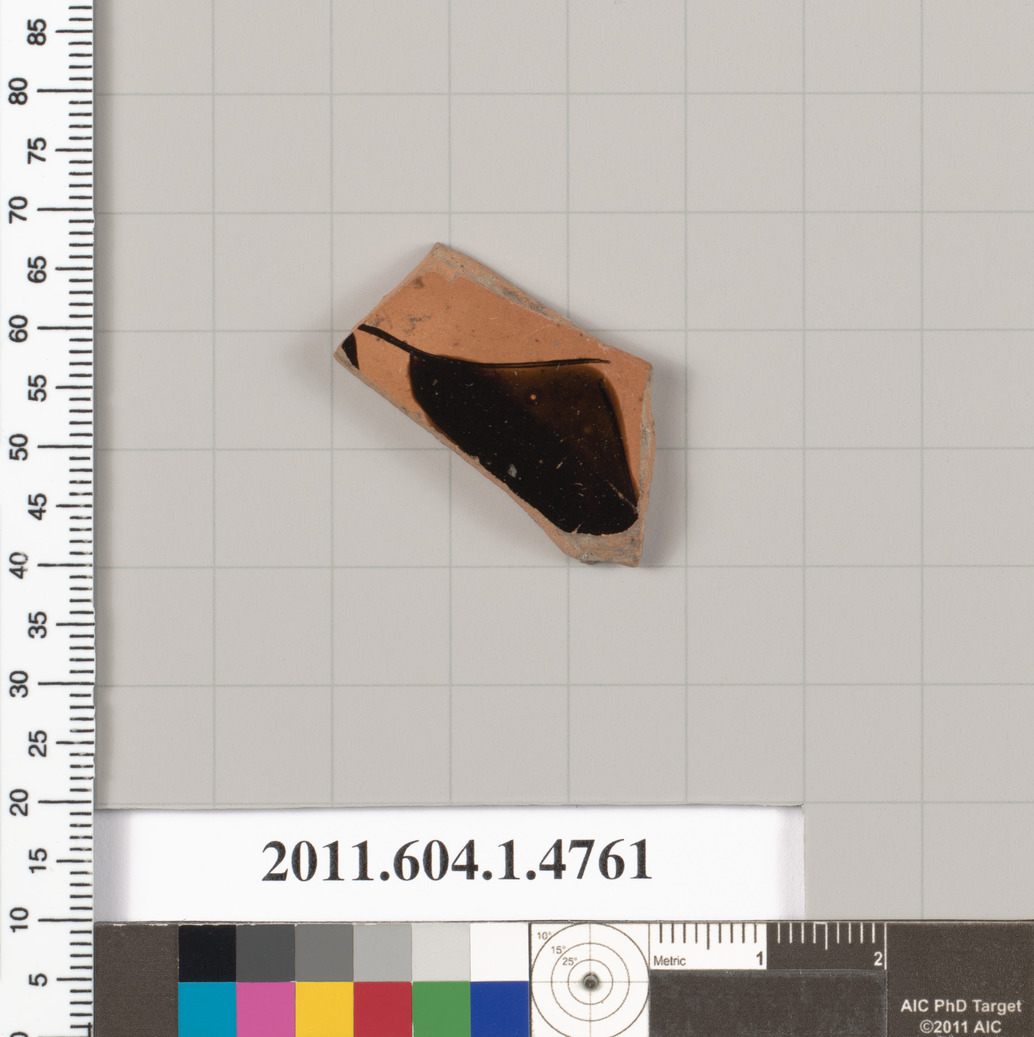
Heritage Synthesis: Terracotta fragment of a kylix (drinking cup)
Curated on Aug 28, 2026 // Node: LDN-01
The Grammar of Eternity: Translating Ancient Rhythmic Form into the 2026 Old Money Silhouette
The Lauren Fashion Heritage Lab’s internal archive has long maintained a dialectical tension between two modes of temporal representation: the *instantaneous* and the *cyclical*. This dialectic finds its most potent archaeological expression in the British Museum’s paired Egyptian artifacts—the “Mold Fragment with Musicians” and the “Section of a Coffin Platform.” Yet when we introduce the Greek Attic terracotta kylix fragment into this visual conversation, a third, more complex register emerges. The kylix—a drinking cup designed for the symposion, the Greek ritual of convivial excess—does not merely depict movement; it *contains* it. Its tondo, or interior circular field, forces the viewer’s eye into a rotational path, mimicking the cup’s own physical circulation among reclining drinkers. This is neither the frozen musical instant of the mold fragment nor the cosmic repetition of the coffin panel. It is a *performed* eternity—one that unfolds through the body’s engagement with an object.
For the 2026 Old Money silhouette, this terracotta fragment offers a foundational principle: **garment as vessel, not surface**. The Old Money aesthetic—often misread as mere restraint or minimalist luxury—is, in its authentic heritage form, a study in *contained dynamism*. The kylix teaches us that the most sophisticated form of elegance is one that directs the eye toward a central, quiet point while the periphery remains in disciplined motion. The 2026 silhouette, therefore, does not rely on loud ornament or structural novelty. Instead, it borrows the kylix’s logic of the *tondo*: a central focal point—a precise shoulder seam, a sharp lapel notch, a single line of tonal stitching—around which the fabric’s drape, weight, and fall are organized as concentric, rhythmic waves.
From Symposion to Sartorial Ritual: The Rotational Silhouette
The terracotta fragment’s painted figures—typically a reclining youth or a maenad in ecstatic dance—are rendered with a contour line that the Greeks called *rhythmos*, meaning “measured flow.” This is not the Egyptian profile’s stiff, symbolic elongation. The Greek line *breathes*; it swells and contracts with the musculature beneath. In translating this to the 2026 Old Money wardrobe, we must consider the **rotational drape**. Traditional tailoring relies on vertical and horizontal planes—the jacket’s front edge, the trouser’s crease. The kylix-informed silhouette introduces a *circular* plane: a coat that wraps and overlaps with a subtle spiral, a skirt cut on a bias that creates a continuous, unbroken flow around the body. The wearer’s movement activates this circle, just as the drinker’s hand activated the kylix’s painted narrative.
Consider the *heritage-black* wool overcoat for Autumn/Winter 2026. Its construction should not be judged by its flat lay on a table, but by its behavior in motion. The shoulder—informed by the kylix’s rim—must have a clean, decisive edge, while the body of the coat, cut from a single continuous panel, should fall with a *gravitational pull* that mimics the kylix’s deep bowl. The internal canvas, the horsehair interlining, is our equivalent of the terracotta’s clay body: it provides the *structural memory* that allows the wool to return to its original form after being crushed, folded, or draped over a chair. This is the sartorial equivalent of the kylix’s fired permanence—a garment that resists entropy through the intelligence of its internal architecture.
The Fragment as Design Philosophy: Wabi-Sabi in the Western Canon
The kylix fragment we possess is broken—a shard of a larger whole. This is crucial. Unlike the Egyptian coffin panel, which presents a complete, closed system, the Greek fragment *invites* the viewer to complete it. This is the aesthetic of *paralipsis*—the deliberate omission that creates greater presence. For the 2026 Old Money silhouette, this translates into a design language of **strategic incompleteness**. Not in the sense of frayed hems or deconstruction (that is a different, more aggressive tradition), but in the sense of *negative space* as a positive design element.
A 2026 evening gown in heritage-black silk crepe might feature a back that is entirely unadorned—a vast, empty field—while the front carries a single, precise line of hand-stitched sequins that trace the collarbone and descend in a gentle arc toward the waist. This is the kylix’s tondo made garment: the eye is drawn to the painted scene (the sequin line), but the *meaning* is generated by the empty terracotta ground surrounding it. The wearer’s skin, the fabric’s subtle sheen, the play of shadow in the unadorned areas—these become the “unpainted” parts of the vessel, allowing the observer’s gaze to rest and, in resting, to perceive the garment’s true luxury: its *temporal generosity*. Old Money is not about showing everything at once; it is about revealing a single, perfect moment, like the kylix’s painted figure glimpsed between sips of wine.
Material Translation: Terracotta’s Thermal and Tactile Logic
Terracotta is a low-fired clay, porous and warm to the touch. Its color ranges from a deep umber to a pale ochre, depending on the iron content. For the 2026 collection, this material logic translates into a palette of **earthy neutrals**—not the sterile beige of minimalism, but the living, breathing tones of fired earth: burnt sienna, raw umber, and a deep, almost blackened bronze. These colors are not chosen for their trendiness but for their *archaeological resonance*. They speak of kilns, of hands, of the transformation of raw matter into enduring form.
In terms of fabric weight, the kylix’s terracotta suggests a *medium-heavy* hand. The 2026 Old Money suit should have a *substantial* feel—not stiff, but with a deliberate, grounded presence. A wool-cashmere blend with a high twist yarn will mimic the terracotta’s density, while a brushed surface will echo its matte finish. The *heritage-black* category, in this context, is not a negation of color but a *concentration* of it—a black that has absorbed all the earth tones, resulting in a depth that is almost viscous. This black is the kylix’s black-figure painting: not a void, but a field of intense, compressed energy.
Conclusion: The Garment as an Archaeological Event
The 2026 Old Money silhouette, informed by the Greek terracotta kylix fragment, rejects both the Egyptian mold’s frozen instant and the coffin panel’s static eternity. It proposes a third way: **ritualized movement**. The garment is not a monument to a single moment, nor a symbol of cosmic order. It is a vessel for the wearer’s own *rhythmos*—their personal, measured flow through the world. Just as the kylix was passed from hand to hand, its painted scenes unfolding in a continuous narrative of shared pleasure, so too does the heritage-black garment become a medium for social performance. It is designed to be seen in motion, to be touched, to be lived in.
The terracotta fragment’s broken edge is not a sign of loss, but of *potential*. It reminds us that the most enduring forms are those that acknowledge their own incompleteness, leaving room for the viewer, the wearer, and the passage of time to complete the story. In this sense, the 2026 Old Money silhouette is not a nostalgic return to a past aesthetic, but a forward-looking engagement with a *timeless grammar*—the grammar of rhythmic containment, of strategic omission, and of material honesty. It is a garment that, like the kylix shard, will be more beautiful in fifty years, its surface worn to a soft patina, its lines softened by use, its story enriched by every body that has inhabited it. This is the true heritage of Lauren Fashion: not the preservation of a style, but the cultivation of a *temporal intelligence* that allows the wearer to move through the present with the grace of antiquity and the precision of the future.
Heritage Lab Insight
Genetic Bridge: Archive node focusing on Heritage-Black craftsmanship.