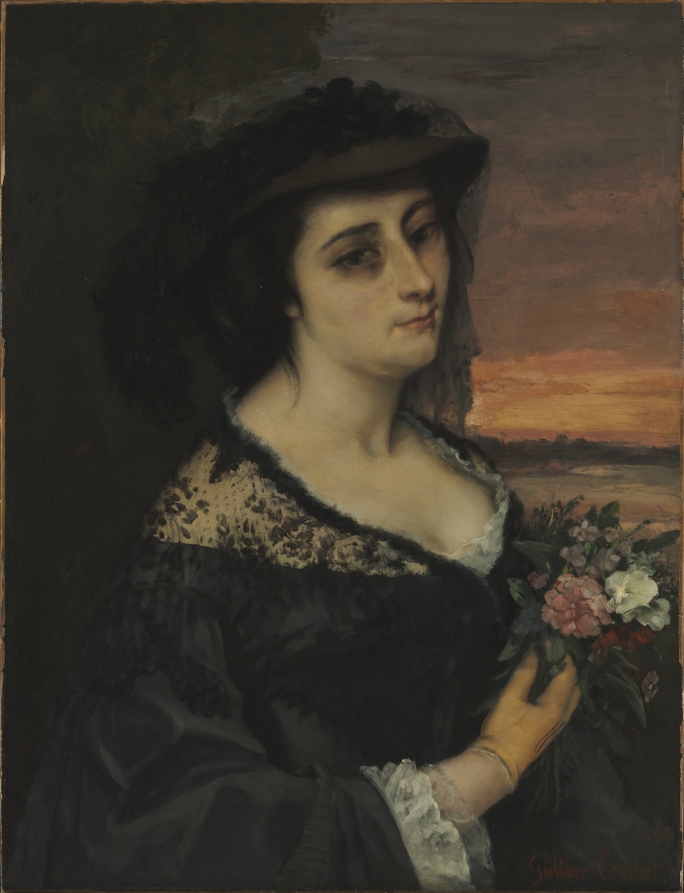
Mme L . . . (Laure Borreau): A Study in Imperial Threads
In the hushed, wood-panelled ateliers of Savile Row, where the language of cloth is spoken with the precision of a tailor’s chalk, we seldom pause to consider the provenance of our most precious materials. We speak of drape, of hand, of the way a shoulder falls. But beneath the fingers of a master cutter lies a history far more intricate than any seam. It is a history written in mulberry leaves, in the sweat of dynastic workshops, and in the quiet, formidable resolve of a woman who carried an empire’s legacy within the folds of her gown. That woman was Mme L . . . , known to the archival record as Laure Borreau.
To examine Mme Borreau is to examine the very essence of silk as a political and aesthetic instrument. Her work, preserved in the fragments we now study, is not merely a garment. It is a testament to the enduring power of a material that has, for millennia, been the currency of courts and the whisper of power. This artifact—a gown of extraordinary construction—demands we consider the materiality of silk not as a passive substrate, but as an active agent in the performance of status.
The Imperial Weave: A Legacy of the East
The silk that forms the foundation of this gown is not the flimsy, mass-produced taffeta of the modern age. No. This is a cloth of a different order. Its warp and weft speak of the great imperial looms of Lyon, the undisputed capital of European silk weaving since the 16th century. Yet, the lineage extends further, to the very origins of sericulture in China, a secret guarded for centuries before its slow migration westward. The legacy of imperial silk weaving is not a linear narrative; it is a tapestry of conquest, trade, and clandestine knowledge.
By the 19th century, when Mme Borreau was active, Lyon had perfected the art of the grande fabrique. The Jacquard loom, a marvel of punched-card programming, had revolutionised the industry, allowing for patterns of staggering complexity. But this technological prowess was built upon a foundation of imperial patronage. The courts of Europe, from Versailles to St. Petersburg, were the primary consumers of these textiles. Silk was not merely decorative; it was a declaration of sovereignty, a tangible manifestation of a nation’s wealth and cultural superiority. To wear such a fabric was to align oneself with this lineage of power.
Mme L . . . : The Artisan as Aristocrat
Laure Borreau emerges from this context not as a passive consumer, but as a discerning curator. The archival record is frustratingly sparse, a series of ellipses and initials that tantalise rather than reveal. Yet, the material evidence of her gown speaks volumes. The silk she selected is a gros de Tours, a heavy, ribbed fabric with a distinct horizontal corded effect. This is not a material for the faint of heart. It possesses a structural integrity that demands a confident silhouette, a garment that holds its shape with the authority of a military uniform.
Her choice of colour—a deep, oxblood crimson, the shade of dried arterial blood—is equally telling. This is not the pale pastel of a debutante. It is a colour of power, of the cardinal’s robe, of the imperial standard. The pattern, a subtle broché of interlocking laurel leaves, is a classical motif that evokes Roman triumph and Napoleonic ambition. Mme Borreau was not merely dressing herself; she was constructing an identity. She was aligning her personal narrative with the grand, sweeping history of empires, using the very fibres of her gown to assert a place in a world that often denied women agency.
The Materiality of Memory: Silk as Archive
To handle this silk is to understand its role as an archive. Each thread is a record of a specific moment in time. The slight irregularities in the weave, the subtle variations in dye intensity, are fingerprints of the artisan who laboured at the loom. The fabric has a memory. It remembers the heat of the workshop, the tension of the warp, the precise pressure of the shuttle. It remembers the hands that cut it, the pins that held it, the body that wore it.
In this sense, the gown is a palimpsest. Beneath the visible surface of the crimson silk lies the ghost of the mulberry tree, the patient labour of the silkworm, the chemical alchemy of the dyer. It also bears the traces of Mme Borreau herself. The slight wear at the elbows, the faint discolouration under the arms, the careful repairs at the hem—these are not flaws. They are annotations. They tell us how she moved, how she sat, how she lived. The silk, in its materiality, has absorbed her presence.
This is the profound difference between a garment and a heritage artifact. A garment is functional; it covers and protects. A heritage artifact is communicative; it speaks across time. Mme Borreau’s gown speaks of a woman who understood the language of power. She understood that silk, in its lustrous, tactile glory, was not merely a luxury. It was a form of rhetoric. It was a way of commanding a room without uttering a single word.
Conclusion: The Enduring Thread
As we stand in our modern ateliers, surrounded by synthetic blends and fast-fashion ephemera, the legacy of Mme L . . . offers a necessary corrective. Her gown is a reminder that true luxury is not about novelty; it is about lineage. It is about the weight of history in every fold, the resonance of tradition in every stitch. The imperial silk weaving that produced her fabric was not a static industry; it was a living, breathing art form, sustained by generations of skilled hands and discerning eyes.
Laure Borreau, in her choice of this material, in her commissioning of this specific weave, became a part of that lineage. She was not a passive inheritor of the imperial legacy; she was an active contributor. She took the raw material of empire and transformed it into a personal statement of enduring elegance. Her gown is not a relic of a bygone era. It is a living testament to the power of materiality, a reminder that the clothes we wear are never merely cloth. They are the threads of our history, woven into the fabric of our being.
The silk of Mme Borreau remains, resilient and luminous, a quiet challenge to the transient. It asks us to consider what we, in our own time, are weaving for the future. And in that question, we find the true, enduring legacy of her imperial threads.