← BACK TO ARCHIVES
Silk
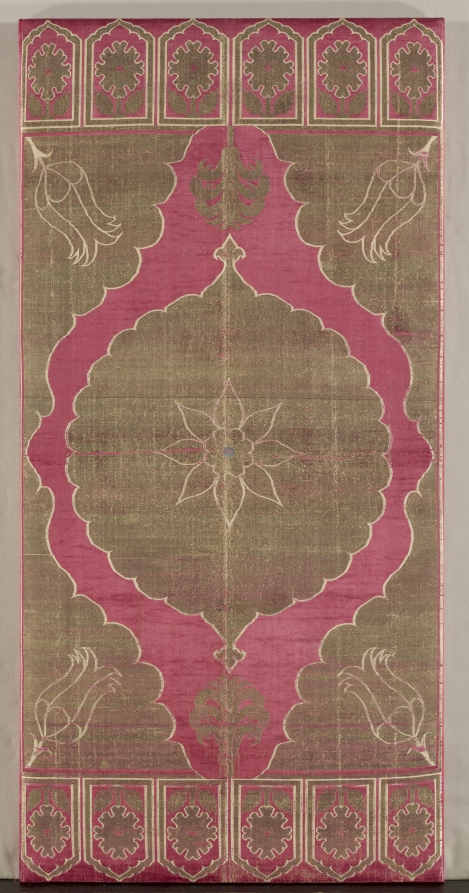
Heritage Synthesis: Lampas silk cushion cover
Curated on Aug 28, 2026 // Node: LDN-01
Material Provenance and the Imperial Thread
The lampas silk cushion cover, at first glance, is a domestic object—an item of comfort, a gesture toward interior elegance. Yet to treat it as mere furnishing is to ignore the profound material intelligence woven into its very warp and weft. This is not simply silk; it is the residue of an imperial system of production, a fragment of a global economy that predates the corporation and rivals it in scale and sophistication. The lampas weave, a compound structure requiring two distinct warp systems and a supplementary weft to create a figured pattern against a ground weave, is a technical feat that speaks to a level of artisanal mastery that was, for centuries, the exclusive province of royal manufactories. To hold this cushion cover is to hold a compressed history of statecraft, trade, and technological monopoly.
The Technical Grammar of Lampas
Let us be precise about the materiality. Lampas is not a printed textile, nor is it an embroidered one. It is a figured weave, typically in silk, where the pattern is created by a binding warp that interlaces with a ground weft, while a pattern weft floats on the surface, secured by a second, binding warp. The result is a fabric of remarkable density and a sculptural, almost bas-relief quality. The face of the textile is a play of light and shadow, with the pattern appearing to rise from the ground. This is not a technique for the faint-hearted or the under-capitalised. It requires a drawloom, a complex apparatus that allows the weaver to control individual warp threads, and a skilled operator who could read a point paper design—a grid-based schematic that translates an artist’s drawing into a weave plan. The margin for error is negligible; a single mis-threaded heddle can ruin an entire length of cloth.
The imperial legacy here is not incidental. The great silk-weaving centres of Lyon, Spitalfields, and, earlier, the Ottoman and Chinese imperial looms, were not merely craft hubs. They were state-sanctioned industries, protected by tariffs, patents, and royal patronage. The *Grande Fabrique* of Lyon, for instance, was not a free market; it was a tightly regulated guild system, with strict rules on apprenticeship, quality control, and even the number of looms a master could own. This was protectionism as industrial policy, and it produced a standard of excellence that the open market, with its race to the bottom, has never replicated. The lampas cushion cover, therefore, is not just a product of skill; it is a product of institutional discipline. The very precision of its weave is a testament to a system that valued longevity over disposability, and craft over speed.
From Court to Drawing Room: The Semiotics of Silk
The transition of lampas silk from the royal court to the bourgeois drawing room is a narrative of democratisation, but a highly controlled one. In the 17th and 18th centuries, such fabrics were reserved for the aristocracy and the church. They adorned the walls of Versailles, the vestments of cardinals, and the state beds of monarchs. The patterns—often inspired by botanical drawings, classical mythology, or chinoiserie—were not arbitrary. They were coded messages of power, wealth, and cultural literacy. A lampas cushion cover featuring a pomegranate motif, for instance, was not merely decorative; the pomegranate was a symbol of fertility, resurrection, and, crucially, imperial authority, tracing its lineage back to Persian and Byzantine court iconography.
By the 19th century, with the mechanisation of the Jacquard loom, lampas became more accessible. The Jacquard mechanism, which used punched cards to control the warp, was a revolutionary step—it automated the drawloom and allowed for even more complex patterns to be produced at scale. Yet, even as production increased, the aesthetic language remained rooted in the imperial past. The cushion cover we examine today, with its rich, saturated dyes and intricate repeat, is a direct descendant of those courtly prototypes. It carries within its threads the memory of the *Ancien Régime*, repackaged for a new class of industrialists and professionals who wished to signal their refinement through the acquisition of objects that once belonged to the elite. This is the essence of Savile Row thinking: the preservation of a standard, not for nostalgia’s sake, but because the standard itself is the product.
The Economics of Rarity and the Modern Conundrum
What, then, is the contemporary value of such an artifact? In an era of fast fashion and synthetic blends, the lampas silk cushion cover stands as a rebuke to the disposable. Its materiality—the sheer weight of the silk, the crispness of the pattern, the durability of the weave—demands a different relationship with the owner. This is not a textile to be used for a season and discarded. It is an heirloom, designed to outlive its purchaser. The imperial legacy is not merely a historical footnote; it is an economic principle. The value of this object is predicated on its scarcity, its technical complexity, and its historical resonance. It cannot be replicated by a machine in a matter of minutes; it requires hours of loom time, meticulous finishing, and a deep understanding of materials.
For the modern collector or the discerning interior designer, the lampas cushion cover offers a tangible connection to a lost world of manufacturing excellence. It is a piece of heritage that functions as a daily object, a reminder that quality is not an accident but a decision. The challenge, of course, is that this standard is increasingly difficult to sustain. The skills required to produce true lampas are rare; the looms are few; the supply of high-grade silk is subject to the vagaries of global agriculture and trade. To commission a new lampas cushion cover today is to engage in a bespoke process akin to commissioning a suit from a master tailor on Savile Row. It is not a purchase; it is an investment in a tradition.
Conclusion: The Weight of the Thread
In conclusion, this lampas silk cushion cover is far more than a decorative accessory. It is a material document of imperial silk weaving, a testament to the technical and institutional structures that once defined luxury production. Its compound weave speaks to a level of engineering that predates the computer; its patterns carry the iconography of power; its very existence challenges the modern assumption that more is better. To own such a piece is to accept a responsibility—to maintain it, to understand it, and to pass it on. It is a quiet, elegant protest against the ephemeral. In the world of heritage textiles, the lampas weave is not a relic; it is a benchmark. And this cushion cover, in its silent, sumptuous complexity, remains a perfect measure of that enduring standard.
Heritage Lab Insight
Lab Insight: CMA Silk Archive Node integration.