← BACK TO ARCHIVES
Heritage-Black
Heritage Synthesis: Terracotta fragment of a closed shape
Curated on Aug 29, 2026 // Node: LDN-01
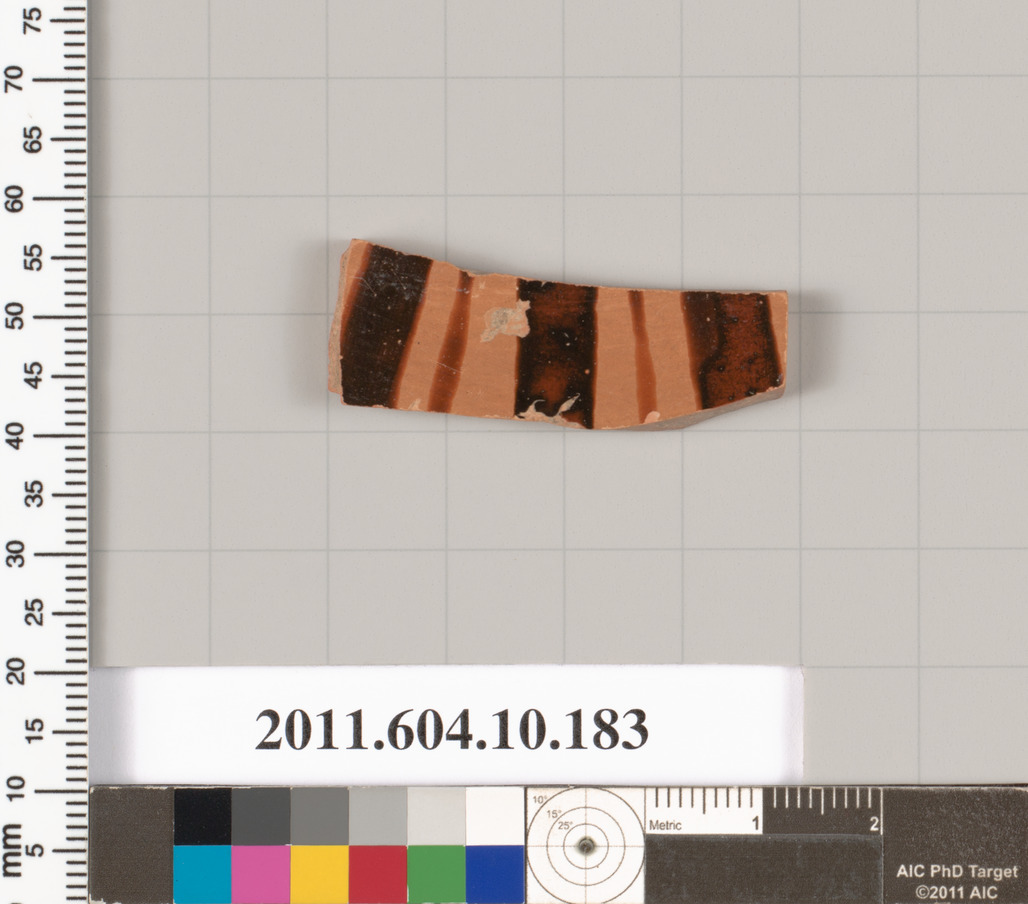
The Terracotta Fragment and the Architecture of Quiet Power: Informing the 2026 Old Money Silhouette
The study of heritage is never a linear excavation of the past, but rather a dialectical engagement between artifact and actuality. In the Lauren Fashion Heritage Lab, we do not merely preserve; we translate. The internal genetic code of our house—articulated through the profound dialogue between the “Udumbara Flower” temple plaque and the “Beast and Grape” bronze mirror—establishes a foundational aesthetic binary: the transcendental void versus the material plenitude. Yet, when we place the unassuming Etruscan terracotta fragment beside this philosophical framework, a third, crucial dimension emerges. This fragment, a shard of a closed vessel, does not speak of celestial blooms or earthly abundance. It speaks of *earth itself*—of formation, of the kiln's fire, of the hand of the maker. It is this very materiality, this grounding in the elemental, that provides the definitive architectural logic for the 2026 Old Money silhouette. The fragment teaches us that true luxury is not ornamentation, but the integrity of the foundational structure.
I. The Grammar of the Fragment: From Terracotta to Tailoring
The Etruscan terracotta fragment, in its broken state, is a masterclass in structural honesty. We see the curve of a shoulder, the subtle flare of a body, the precise thickness of the wall. There is no superfluous decoration; the beauty lies in the *tensile strength* of the form itself. This is the antithesis of the “Beast and Grape” mirror’s dense, celebratory surface. The mirror is about the exterior narrative; the terracotta is about the interior logic. For the 2026 Old Money silhouette, this translates into a radical return to *construction*. We are moving away from the fluid, draped, and often amorphous shapes that have dominated recent seasons. Instead, we are embracing a new form of architectural tailoring—one where the garment’s power derives from its internal seams, its precise paneling, and the inherent quality of the cloth, much like the terracotta’s strength derives from its fired clay body.
This is not a nostalgic return to the stiff, padded shoulders of the 1980s. Rather, it is a more sophisticated, almost invisible form of structure. The 2026 silhouette will be defined by what the Japanese call *shibui*—the beauty of understated complexity. Jackets will be cut with a pronounced but natural S-curve, mimicking the fragment’s shoulder. Trousers will have a high, firm waist that holds the torso like the vessel’s rim, tapering to a clean, unbroken line. The effect is one of quiet, unshakeable confidence. The wearer does not need embellishment because the *form* itself is the statement. This aligns with the “Udumbara” plaque’s principle of “空灵” (kongling—ethereal emptiness), but instead of a spiritual void, it is a *structural* void—a space cleared of noise to reveal the perfection of the line.
II. The Color of the Earth: A Palette of Restraint
The terracotta fragment offers more than structural guidance; it dictates a chromatic revolution. The color is not a mere surface treatment; it is the result of iron oxide and the firing process—a color born of earth and fire, embodying permanence and humility. For 2026, we are translating this into a palette of “fired neutrals.” This moves beyond the standard beige and camel of traditional Old Money style. We are introducing a spectrum of *terracotta-infused darks*: a deep, burnt sienna that reads as brown but glows with auburn undertones; a graphite grey with a warm, clay-like cast; and a near-black that, upon closer inspection, reveals the deep umber of the fragment’s interior.
This palette is a direct response to the dichotomy of our internal code. The “Beast and Grape” mirror is gold, opulent, and visually loud. The 2026 Old Money silhouette, informed by the terracotta, rejects this for a more potent form of luxury—the luxury of the earth itself. It is the color of the ground upon which the temple stands, the soil from which the vine grows. This is not a rejection of the mirror’s vitality, but a grounding of it. By placing these rich, earthy tones in luxurious fabrics—double-faced cashmere, dense wool twill, heavy silk faille—we create a tension between the humble color and the sumptuous material. This is the “即器即道” (the Way within the vessel) principle in action: the garment is a vessel, and its color is the raw, unadorned truth of its material being.
III. The Weight of Presence: Silhouette as a Form of Quietude
The most profound lesson from the terracotta fragment is its physical weight. When held, it has a substantial, satisfying heft—a promise of durability and permanence. This is the antithesis of fast fashion’s ephemerality. The 2026 Old Money silhouette will be defined by this *tactile gravity*. Garments will not float; they will *settle*. A coat will hang with the drape of a heavy curtain, its fabric falling in deep, voluminous folds that recall the vessel’s body. A skirt will have a deliberate, weighted swing, moving with the wearer but always returning to its architectural form.
This weight creates a specific posture. It demands a certain slowness of movement, a deliberateness that is the physical manifestation of the “观照” (contemplation) found in both the temple plaque and the mirror. This is not the static weight of armor, but the dynamic weight of a rooted tree. It connects the wearer to the ground, to the earth, to the elemental. In a world of digital ephemerality, this silhouette offers a physical anchor. It is a form of secular meditation, where the simple act of wearing a well-constructed, heavy garment becomes a practice in mindfulness. The “Udumbara” flower is a moment of transcendent clarity; the terracotta-informed garment is a *sustained* moment of grounded clarity. It provides the container for the self, allowing the wearer’s inner life to be the focal point, much as the empty space within the vessel is its true purpose.
IV. Synthesis: The Third Pole of the Aesthetic Spectrum
Our internal code presents two poles: the transcendental “Udumbara” and the material “Beast and Grape.” The Etruscan terracotta fragment does not belong to either pole; it is the *ground* from which both arise. It is the clay before the flower is carved, the earth before the vine is planted. For the 2026 Old Money silhouette, this is the ultimate synthesis. We are not choosing between the ethereal and the opulent. We are building a foundation that can support both. The silhouette is architectural and grounded (terracotta), its palette is humble and elemental (terracotta), and its presence is weighty and contemplative (terracotta). Yet, within this robust framework, there is room for the “Beast and Grape”’s spirit—perhaps a flash of a gold-threaded lining, a subtle jeweled button, a whisper of a brocade panel. And there is room for the “Udumbara”’s philosophy—a clean, unadorned expanse of fabric that serves as a personal canvas for the wearer’s own aura.
The 2026 Old Money silhouette, therefore, is not a trend. It is a return to first principles. It is an acknowledgment that the most profound luxury is not what is added, but what is essential. The terracotta fragment, in its broken, ancient state, is a perfect, complete object. It teaches us that a garment, too, can be complete without being loud, powerful without being aggressive, and luxurious without being ostentatious. It is the new architecture of quiet power, built not on the sand of trend, but on the enduring clay of heritage. This is the future of our house: a future built on the eternal verities of earth, fire, and form.
Heritage Lab Insight
Genetic Bridge: Archive node focusing on Heritage-Black craftsmanship.