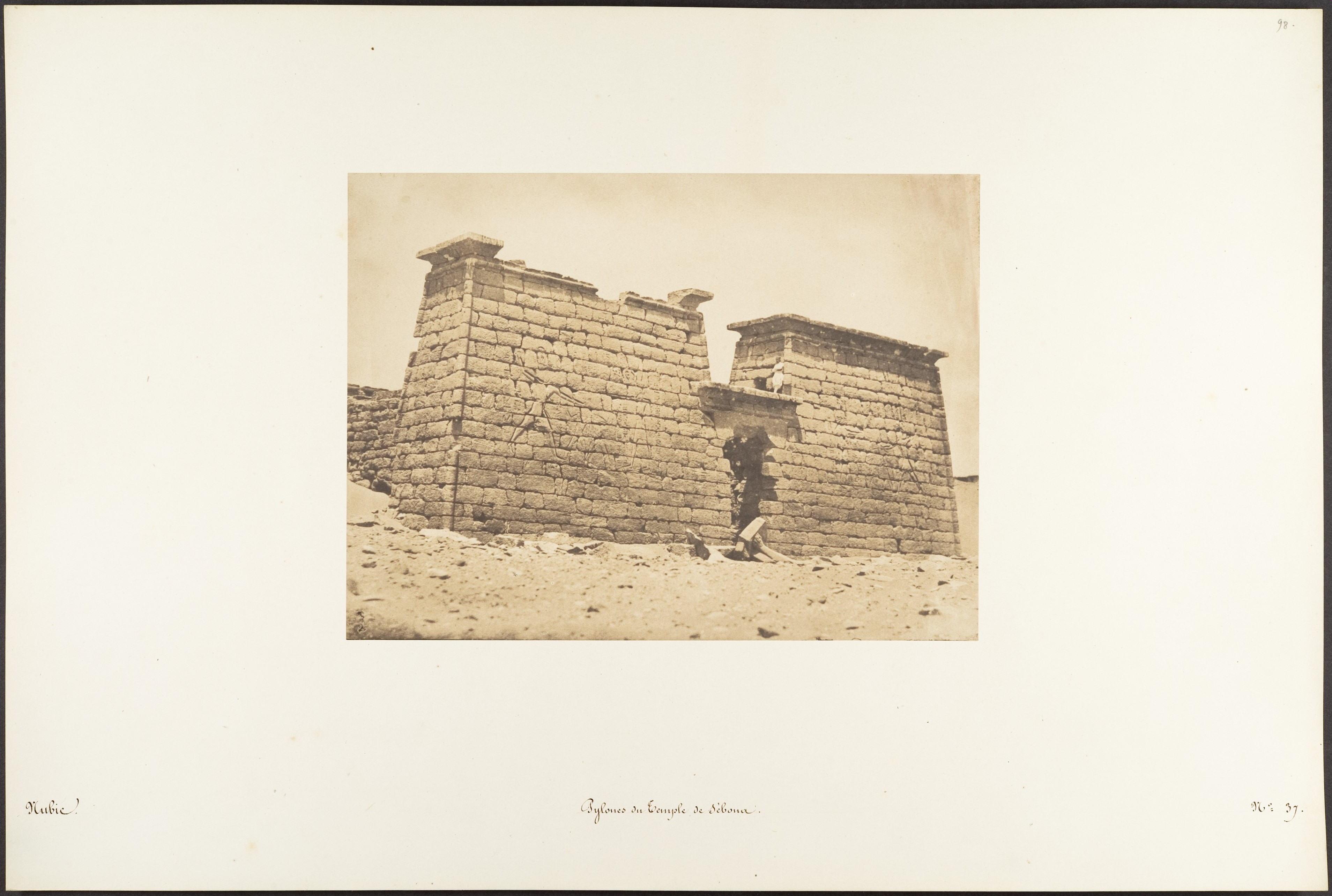
The Architecture of Absence: Pylônes du Temple de Sébona and the Semiotics of Old Money Silhouettes
The Lauren Fashion Heritage Lab operates on the principle that aesthetic codes are not invented but rediscovered, their DNA woven across disparate epochs and mediums. Our internal genetic code, analyzing the quiet dramas within Johannes Vermeer’s A Maid Asleep and George Caleb Bingham’s A Vignette of Life on the Frontier, established a foundational thesis: profound meaning resides in transitional, often overlooked moments, rendered eternal through rigorous formal order. This analysis turns to a pivotal visual artifact—the 1852 salted paper print Pylônes du Temple de Sébona—to decode its silent yet potent instructions for the 2026 Old Money silhouette. This photograph, far from a mere documentary record, serves as a masterclass in the poetics of absence, structural integrity, and the dignified patina of time, principles that will fundamentally inform the coming sartorial language.
The Artifact: A Grammar of Stone and Shadow
Pylônes du Temple de Sébona, captured during Maxime Du Camp’s pioneering photographic expedition to Egypt, presents the towering entrance pylons of a ruined temple. The medium itself—a salted paper print from a paper negative—is crucial to its hermeneutic value. The process yields an image of soft, granular texture and a tonal range steeped in sepia and charcoal, where light appears not to illuminate but to caress and erode simultaneously. The subject is architectural, yet the photograph’s power is profoundly non-literal. It does not showcase a complete, functioning edifice but focuses on the fragment—the enduring gateway standing sentinel before an emptiness. The composition is starkly geometric: the monolithic verticals of the pylons frame a deep, dark passage into void, while the horizontal lines of their capitals and the distant ground create a stabilizing axis. This is an image of endurance through reduction. The elaborate carvings and hieroglyphs that once told stories are now smoothed by time into abstract textures, their narratives implied rather than stated. The artifact communicates through presence and absence, structure and silence, mirroring the Vermeer-Bingham dialectic of order and latent narrative.
Informing the 2026 Silhouette: The Three Pillars of Quiet Authority
For the 2026 Old Money ethos—a concept moving beyond mere wealth to signify inherited grace, understatement, and a timeless authority—Pylônes du Temple de Sébona provides a transformative blueprint. The silhouette will be guided by three core principles extracted from the artifact.
1. The Structural Pylon: Silhouette as Architecture. The photograph’s primary lesson is in foundational form. The 2026 silhouette will embrace a clean, vertical integrity reminiscent of the pylon’s lines. This translates not into rigidity, but into a precise, unwavering cut that defines the body’s architecture. Think of columnar coats, tailored dresses with strong shoulder lines that echo the pylon’s capitals, and trousers with a flawless, unwavering leg. The goal is a silhouette that appears hewn rather than merely sewn, possessing an inherent monumentality. Like the temple gateway, the clothing will frame the wearer, creating a powerful, personal space. This structural approach rejects fleeting whimsy in favor of a form that endures, mirroring the Bingham-esque “dynamic balance” within a stable composition, now applied to the body in motion.
2. The Patina of Time: Finish as Narrative Texture. The salted paper print’s granular, tonal quality is its soul. It speaks of exposure, endurance, and a beauty earned through interaction with time. For 2026, this dictates a radical approach to fabric and finish. “Old Money” will be expressed through materials that possess a lived-in elegance: heavy, matte silks that hold shadow like the photograph’s deep recesses; woolens with a subtle, felted texture; linen that embraces crease as part of its character. The color palette will be drawn from the artifact’s spectrum—heritage-black (as profound as the gateway’s shadow), stone, parchment, and sepia. Surface decoration will be minimal and integrated—akin to the temple’s worn carvings—such as discreet jacquard patterns, strategic smocking, or quilting that suggests rather than declares. The finish will have a tactile, almost archaeological quality, inviting closeness to appreciate its depth.
3. The Framed Void: Space and Suggestion. The most profound conceptual leap from artifact to attire lies in the photograph’s central void—the dark passage between the pylons. This is the space of potential, mystery, and unspoken narrative. In the 2026 silhouette, this translates to the strategic use of negative space and controlled revelation. It informs deep V-necks that frame the collarbone like a gateway, open backs that reveal only in movement, and the precise gap between a cuff and wrist or a hem and ankle. These are not overtly sensual gestures but calculated apertures, much like Vermeer’s half-open door, that hint at a private self beneath the public facade. The clothing becomes a frame for the individual’s essence, creating a dialogue between the seen and the unseen, the structured exterior and the elusive interior life.
Conclusion: The Eternal Contemporary
The Pylônes du Temple de Sébona artifact, when read through the Lauren genetic code, ceases to be a relic of a past civilization. It becomes a living manifesto. It teaches that true authority is silent, built on impeccable structure, enriched by the patina of experience, and dignified by what it chooses to withhold. For the 2026 Old Money silhouette, this means moving beyond nostalgic replication to achieve a state of eternal contemporaneity. The resulting garments will be less about fashion and more about personal archaeology—wearable monuments that, like Vermeer’s maid or Bingham’s frontiersmen, find profound resonance in the poised, transitional moment. They will stand as sartorial pylons, gateways to an understanding of elegance defined not by novelty, but by the enduring power of form, texture, and eloquent absence.