← BACK TO ARCHIVES
Silk
Heritage Synthesis: Textile with Diamonds
Curated on Aug 30, 2026 // Node: LDN-01
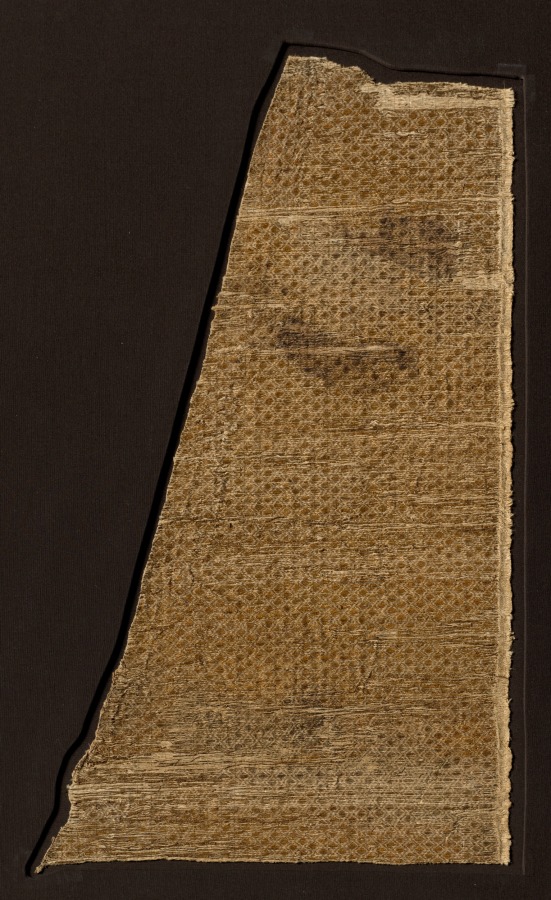
The Luminous Paradox: Silk, Diamonds, and the Imperial Weave
In the hushed ateliers of Mayfair, where the air carries the scent of cedar and aged wool, one learns to read cloth as a ledger of power. The subject before us—a textile embedded with diamonds—is not merely a luxury object. It is a diplomatic communiqué, a financial instrument, and a monument to the absolute mastery of imperial silk weaving. To examine this material is to dissect the very marrow of dynastic ambition, where the softest filament met the hardest stone, creating a paradox of tensile strength and ethereal fragility.
The Materiality of Dominion: Silk as Political Currency
Let us first establish the ground upon which this narrative rests: the silk itself. Imperial silk, particularly that produced in the great manufactories of the Ming and Qing dynasties, was never a passive substrate. It was an active agent of statecraft. The mulberry worm, *Bombyx mori*, was guarded with the ferocity of a royal seal, its cultivation a state secret that funded empires and toppled trade balances. The resulting filament—a continuous, lustrous protein monofilament—possessed a tensile strength comparable to steel wire of equivalent diameter. Yet, its drape and reflectivity were unmatched by any mineral or vegetable fiber.
In the imperial context, silk was the canvas upon which cosmological order was painted. The warp and weft were not merely threads; they were the axes of heaven and earth. A bolt of imperial silk, woven with dragon motifs in couched gold thread, was a physical manifestation of the Son of Heaven’s mandate. To possess it was to hold a fragment of celestial authority. The addition of diamonds, however, shifts this paradigm from the celestial to the terrestrial, from the cosmological to the geological.
The Diamond Interloper: Hardness Meets Fluidity
Diamonds, in their raw, unpolished state, are octahedral crystals of pure carbon, forged in the mantle of the earth under pressures exceeding 45 kilobars. They are the antithesis of silk. Where silk is fluid, supple, and responsive to the slightest breath, the diamond is rigid, immutable, and indifferent to touch. To combine them is to stage a dialogue between the organic and the inorganic, the ephemeral and the eternal.
In the imperial weaving tradition, diamonds were rarely woven into the ground fabric. The act of weaving requires a yarn that can withstand the tension of the loom, the friction of the heddles, and the beat of the reed. A diamond, even a small one, is an abrasive agent that would sever the delicate silk filaments. Instead, the master weavers employed a technique of *post-production embellishment*—a form of haute couture intervention. The diamonds, often rose-cut or table-cut to maximize their reflective surface while minimizing weight, were set in precious metal—gold or platinum—and then attached to the silk ground using a fine, almost invisible, silk or metallic thread.
This was not a crude application. The placement was deliberate, following the cartography of the woven design. If the silk bore a phoenix, the diamonds would be set within the eye of the bird, or along the trailing edge of its plumage. If the motif was a peony, the diamonds would form the dew on the petals. This was a form of *jewelled embroidery*, a discipline that required the artisan to understand both the tensile limits of the silk and the optical properties of the stone. The result was a textile that appeared to be woven from light itself—a surface that shifted from matte to brilliant with the turn of a wrist.
The Imperial Legacy: A Fabric of Absolute Control
The legacy of this material practice is rooted in the concept of *absolute control*—control over nature, over labor, and over perception. The imperial silk workshops, such as the famed *Jiangning Weaving Bureau* in Nanjing, employed thousands of artisans, each with a narrowly defined role. There were throwsters, warpers, weavers, dyers, and, crucially, the *jewel setters* who worked in a separate, dust-free chamber to avoid contaminating the silk with abrasive particles.
This division of labor was a microcosm of the imperial bureaucracy. The Emperor, as the apex of this hierarchy, was the only individual permitted to commission a textile of this magnitude. The diamonds, sourced from Golconda or later from the Brazilian mines, were not purchased; they were tributes. They arrived as part of a vassal state’s annual offering, or as a gift from a foreign envoy seeking favor. Thus, the textile with diamonds became a ledger of geopolitical relationships. Each stone was a signature of a treaty, a mark of submission, or a bribe.
The materiality of the piece also served a performative function. In the candlelit halls of the Forbidden City, the diamonds would catch the flickering light, creating a constellation of pinprick glows against the deep, saturated hues of the silk—imperial yellow, dragon red, or midnight blue. This was not mere decoration; it was a display of *technological supremacy*. No other civilization on earth could produce a fabric that combined the biological precision of sericulture with the geological rarity of diamond cutting and the metallurgical skill of goldsmithing.
Conservation and the Modern Gaze
From the vantage point of Savile Row, where we understand the importance of a garment’s *hand*—its feel and drape—the conservation of such a textile presents a profound challenge. The silk, over centuries, undergoes hydrolysis, becoming brittle and prone to fracturing. The diamonds, however, remain pristine, their refractive index unchanged. This creates a conservation paradox: the hard stone now threatens the soft ground. The weight of the diamonds, even in small settings, can cause the silk to tear under its own gravity.
Modern conservators must therefore employ a philosophy of *minimal intervention*. They cannot remove the diamonds without destroying the historical integrity of the piece. Instead, they use custom-built supports—often of silk crepeline dyed to match the original ground—to distribute the weight. The textile is displayed in low-light environments, not to protect the diamonds, but to slow the photochemical degradation of the silk.
For the contemporary designer, this artifact serves as a masterclass in *material restraint*. The imperial weavers understood that true opulence is not the accumulation of embellishment, but the strategic placement of it. The diamonds were not scattered randomly; they were used as punctuation marks in a sentence written in silk. They highlighted the negative space, the void of the unadorned fabric, making the absence as significant as the presence.
In conclusion, the textile with diamonds is a testament to the imperial silk weaving legacy’s ultimate ambition: to transcend the limitations of the natural world. It is a fabric that denies its own fragility, asserting permanence through the inclusion of the indestructible. Yet, in its current state, it also reminds us of the tragic irony of that ambition. The silk, the very soul of the piece, is decaying. The diamonds, the immortal guests, remain. The artifact is a memento mori, woven in gold and set with stone, a silent elegy for the hands that made it and the empire that commanded it.
Heritage Lab Insight
Lab Insight: CMA Silk Archive Node integration.