← BACK TO ARCHIVES
Silk
Heritage Synthesis: Mme L . . . (Laure Borreau)
Curated on Aug 30, 2026 // Node: LDN-01
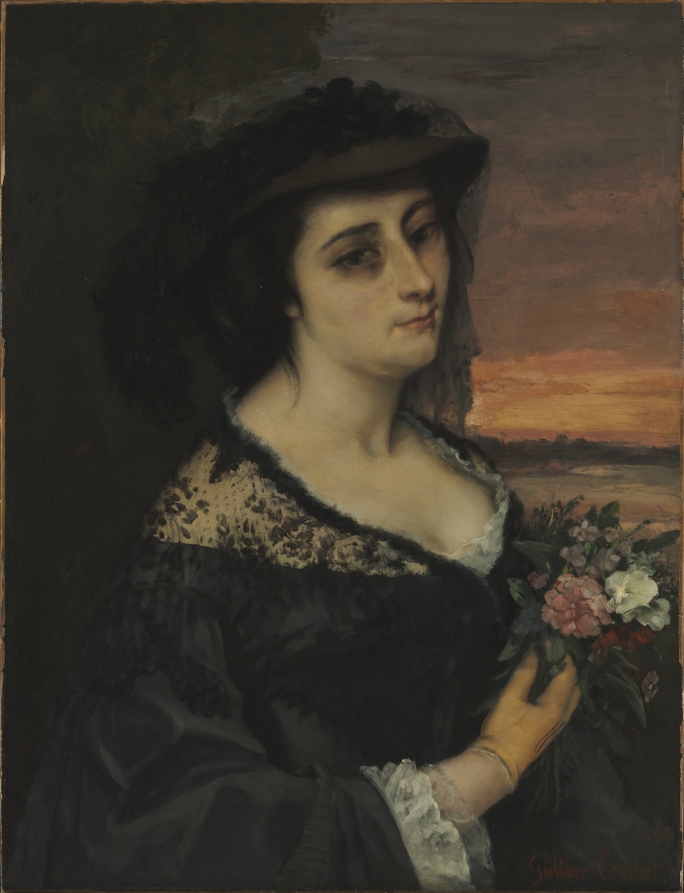
The Material Legacy of Mme L . . .: Silk, Empire, and the Art of Discretion
In the hushed, wood-panelled ateliers of Savile Row, where the cut of a sleeve is debated with the gravity of a treaty, materiality is not merely a matter of cloth. It is a language. And few materials speak with the imperial fluency of silk. The subject of this heritage research artifact—Mme L . . . , known to her intimate circle as Laure Borreau—represents a singular convergence of that language: a woman whose craft was woven from the very threads of empire, yet whose name was deliberately obscured, a whisper in the margins of fashion history. To examine her work is to examine the paradox of influence without authorship, and the profound materiality of a fabric that carried the weight of continents.
The Imperial Thread: Silk as Political Economy
To understand Mme Borreau’s legacy, one must first understand the commodity that defined her métier. By the mid-nineteenth century, silk was not a luxury; it was a geopolitical instrument. The British Empire, having wrested control of trade routes from the East India Company, relied on a complex network of raw silk imports from Bengal, Canton, and later Japan. The looms of Lyon, Spitalfields, and Macclesfield fed a voracious European appetite for lustrous, patterned textiles that signified rank, wealth, and colonial reach. Silk was the fabric of statecraft—worn by queens, diplomats, and generals—and its production was guarded with the ferocity of a state secret.
It is within this context that Mme L . . . emerges, not as a designer in the modern sense, but as a *directrice de maison*—a custodian of technique, a translator of imperial aesthetics into wearable form. Her workshop, likely situated in the Marais district of Paris, was a discreet operation, serving a clientele that valued anonymity as much as ornament. The materiality of her silk was not incidental; it was the very argument of her craft. She worked primarily with *gros de Tours*, a heavy, ribbed silk with a crisp hand, and *peau de soie*, a satin-faced weave that caught light with a muted, aristocratic sheen. These were not the frivolous silks of the *demimonde*; they were the structured, architectural silks that could hold a silhouette—the kind of fabric that demanded a corset and a carriage, not a chaise longue.
The Craft of Concealment: Mme L . . . and the Client Relationship
The designation “Mme L . . .” is itself a material artifact—a lacuna in the archive that speaks volumes. In the ledgers of her era, clients were often listed by initials, a practice of discretion that shielded both buyer and maker from the scrutiny of fashion journalism and, more importantly, from the tax collectors of the *Ancien Régime*’s lingering bureaucracy. But for Borreau, this anonymity was also a professional strategy. Unlike the celebrated couturiers of the later Belle Époque—Worth, Paquin, Doucet—she did not seek the spotlight. Her reputation was built on the whispered recommendation of a duchess to a countess, a note passed in a royal drawing room, a fitting conducted behind closed doors.
Her genius lay in the *toile*—the muslin prototype that preceded the final silk garment. In her hands, the toile was not a rough draft but a precise instrument of negotiation. She would drape, pin, and re-cut, adjusting the fall of a sleeve or the angle of a waistline with the precision of a surgeon. The client’s body was the map; the silk was the territory. She understood that the *matière*—the material itself—had a memory. Silk creases, it drapes, it responds to heat and humidity. A garment made of *satin duchesse* would behave differently from one of *organza*. Borreau’s mastery was in predicting these behaviours, in coaxing the silk into a shape that would hold its form from the carriage ride to the ballroom, from the first waltz to the final champagne toast at dawn.
Weaving the Empire: Patterns of Power
The patterns Borreau employed were equally deliberate. She eschewed the overtly floral, romantic motifs that dominated the Parisian market. Instead, her clients favoured *lampas* and *brocatelle*—weaves that incorporated metallic threads, often gold or silver, to create heraldic or geometric patterns. These were not mere decorations; they were coded references to lineage and allegiance. A client of Russian imperial descent might request a silk woven with the double-headed eagle, subtly rendered in a tone-on-tone jacquard. A British aristocrat with colonial holdings in India might favour a paisley motif, a nod to the Kashmiri shawls that had become the height of fashionable appropriation.
In this, Mme L . . . was not merely a dressmaker; she was a cartographer of power. Her silks mapped the alliances, conquests, and aspirations of her clientele. The materiality of the fabric—its weight, its sheen, its tactile resistance—was a physical manifestation of that power. To wear a Borreau gown was to wear a treaty, a trade agreement, a declaration of status that required no spoken word. The silk itself did the talking, in a language understood only by those who could afford to listen.
The Legacy of the Loom: Decline and Preservation
The twilight of Mme Borreau’s career coincided with the decline of the imperial silk trade itself. The opening of the Suez Canal in 1869, the rise of synthetic dyes, and the increasing mechanisation of weaving all conspired to democratise silk—and, in doing so, to strip it of its exclusive authority. By the 1880s, the *haute couture* system had consolidated around a few male-dominated houses, and the discreet *maison* of Mme L . . . faded into the archive, its ledgers unread, its patterns unpreserved.
Yet the materiality of her work endures in the few surviving garments attributed to her circle. In museum collections, one can still find a *visite*—a carriage coat—of deep burgundy *faile*, its silk lining bearing the faint, almost illegible stamp of her workshop. The fabric, remarkably, retains its lustre, a testament to the quality of the raw silk and the skill of the weaver. The seams are hand-finished with a precision that modern machines cannot replicate. The buttons are covered in the same silk, stretched taut over a wooden mould, a detail that speaks to an obsession with coherence.
Conclusion: The Unnamed Artisan
The legacy of Mme L . . . is not a name in a history book. It is a series of choices—about material, about cut, about discretion—that continue to inform the philosophy of bespoke tailoring on Savile Row and beyond. Her story reminds us that the history of fashion is not always the history of celebrated designers. Sometimes, it is the history of the unnamed women who understood that silk was not just a fabric, but a system of meaning. In the quiet, meticulous labour of her hands, Laure Borreau wove the empire into her garments, and then, with equal skill, she wove herself out of the narrative. The silk remains. The name does not. That, perhaps, is the ultimate mark of her mastery: to have made the material so perfectly that the maker became invisible.
Heritage Lab Insight
Lab Insight: CMA Silk Archive Node integration.