← BACK TO ARCHIVES
Heritage-Black
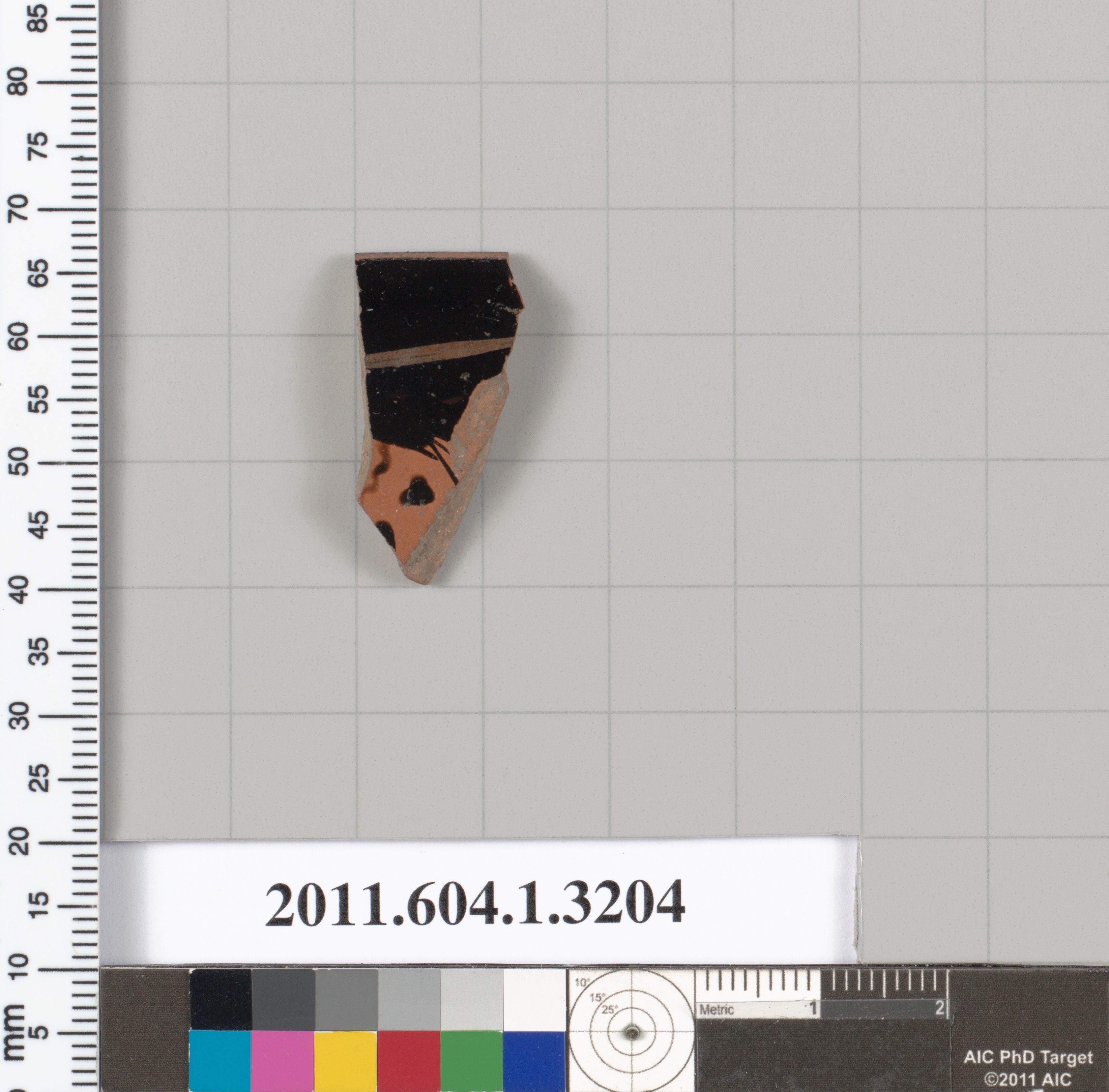
Heritage Synthesis: Terracotta rim fragment of a kylix (drinking cup)
Curated on Aug 30, 2026 // Node: LDN-01
The Terracotta Fragment and the Architecture of Restraint: A Genealogical Reading for 2026 Old Money Silhouettes
The museum artifact before us—a terracotta rim fragment of an Attic kylix—appears, at first glance, to belong to a world utterly remote from the ateliers of Lauren Fashion. A shard of fired clay, once the lip of a drinking vessel, its broken edge speaks of symposiums long silenced, of wine-dark libations offered to gods and mortals alike. Yet within this humble fragment lies a dense aesthetic code that, when read through the lens of our internal heritage archive, illuminates the very principles underpinning the 2026 Old Money silhouette. The kylix is not merely a relic; it is a masterclass in the articulation of volume, the discipline of line, and the profound eloquence of the void—principles that resonate with uncanny precision in the construction of contemporary luxury garments.
I. The Kylix as a Structural Archetype: From Bowl to Bodice
The Attic kylix, in its complete form, is a study in balanced tension. Its shallow, wide bowl was designed for reclining drinkers, its two horizontal handles inviting a gesture of ease. The terracotta rim fragment preserves the crucial transition from the flat, painted tondo to the swelling curve of the bowl’s wall. This is not a random curve; it is a mathematically reasoned sweep, a line that simultaneously contains and releases. In the 2026 Old Money silhouette, we find the direct translation of this principle in the construction of the tailored jacket and the draped coat. The shoulder—once padded to assert dominance—now follows the kylix’s logic: a softly extended line that creates a structural “bowl” around the torso, yet falls away with a clean, unbroken drop. The fabric, whether a dense wool or a fluid cashmere, must possess the memory of that terracotta curve—stiff enough to hold a shape, supple enough to suggest the body beneath without ever clinging to it.
The fragment’s broken edge is equally instructive. It does not apologize for its incompleteness; rather, it declares that the vessel’s essence lies in its capacity to hold, not in its decorative finish. Our 2026 outerwear embraces this “fragmentary” philosophy through the deliberate absence of superfluous ornament. No loud logos, no metallic grommets, no contrast stitching. Instead, the garment’s power derives from its internal architecture: the precise placement of a seam, the subtle taper of a sleeve, the hidden structure of a canvas interfacing that gives the lapel its quiet authority. This is the aesthetic of the *finished fragment*—a garment that feels as though it has been carved from a larger, more ancient whole, retaining only the essential lines of its provenance.
II. The Terracotta Palette and the Semiotics of Un-Dyed Luxury
The terracotta’s color—a warm, burnt sienna, ranging from ochre to deep umber—is not a pigment applied but a property of the earth itself. This is the color of the Mediterranean soil, of sun-baked hillsides, of the very ground upon which Athenian democracy was debated. In the context of 2026 Old Money dressing, this palette operates as a powerful signifier of *authenticity through materiality*. The luxury of the future is not in the brilliance of a synthetic dye but in the unmediated expression of the raw material. We see this in the return to undyed, natural-toned wools: the creamy ivory of undyed alpaca, the grey-brown of raw Shetland, the deep umber of unbleached linen. These are not “neutral” colors in the passive sense; they are active declarations of a garment’s provenance. To wear a coat in the exact hue of Attic terracotta is to wear a piece of the earth, a fragment of a landscape that has not been improved upon by human intervention.
This chromatic choice also aligns with the Old Money ethos of *conspicuous understatement*. The terracotta fragment does not shout; it whispers of its origin in the kiln’s fire. Similarly, the 2026 silhouette avoids the optical aggression of high-contrast color blocking. Instead, it employs a monochromatic layering of tonal variations—a terracotta blouse beneath a rust-hued cardigan, paired with trousers in a deeper, almost burnt umber. The effect is one of quiet depth, a visual experience that rewards the patient observer, much like the slow appreciation of the kylix’s painted figures that once adorned its interior.
III. The Void as Garment: The Kylix’s Tondo and the New Silhouette’s Negative Space
The most profound lesson of the kylix fragment lies not in its clay but in the space it once enclosed. The kylix’s function was to hold wine; its aesthetic purpose was to frame the painted tondo at its center—a circular image visible only when the cup was drained. This is a design of *revealed emptiness*. The vessel’s value is contingent upon its ability to create a void, and that void, in turn, becomes the stage for meaning.
The 2026 Old Money silhouette adopts this logic through a radical rethinking of the garment’s relationship to the body. The new silhouette is not form-fitting; it is *space-defining*. The oversized coat is not merely large; it is a carefully engineered volume that creates a negative space between the fabric and the wearer’s torso. This “architectural void” is the contemporary tondo. It is a zone of potential, a breathing room that suggests confidence without the need for physical assertion. The dropped shoulder, the extended armhole, the A-line skirt that falls away from the hip—all these elements conspire to produce a garment that *contains* rather than *encloses*. The wearer becomes the painted image at the center of the kylix, revealed only through the deliberate emptying of the vessel’s contents. In practical terms, this translates to garments that move with a fluid, unencumbered grace, allowing the body to exist as a distinct entity within a crafted shell of wool, silk, or cashmere.
IV. The Symposium and the Social Fabric: Garments as Ritual Vessels
Finally, the kylix fragment reminds us of the social context of the vessel. The symposium was a ritualized gathering of equals, where the drinking cup circulated, forging bonds of philia (friendship) and political solidarity. The kylix was not a private object; it was a public instrument of communal identity. The 2026 Old Money silhouette, in its turn, is designed for a similar social function. It is not loungewear; it is *gathering wear*. The garments are cut to facilitate movement within a room, to allow for the easy gesture of a raised arm holding a glass, the comfortable lean of a shoulder against a marble mantelpiece. The fabric’s drape is calibrated for the soft light of a drawing room, not the harsh glare of a digital screen.
The terracotta fragment, therefore, becomes a genetic marker for a new form of luxury—one that prioritizes the *ritual of presence* over the spectacle of appearance. The 2026 silhouette is a vessel for the self, crafted with the same precision and restraint that guided the Athenian potter’s hand. It is a heritage object in the making, designed not for the moment but for the enduring legacy of the wearer’s own symposium—the quiet, deliberate gathering of those who understand that true elegance is not in what is shown, but in the exquisite, deliberate architecture of what is held within. The kylix is broken; the garment is whole. Yet both speak the same language: the language of the void, the line, and the earth from which all enduring beauty is drawn.
Heritage Lab Insight
Genetic Bridge: Archive node focusing on Heritage-Black craftsmanship.