← BACK TO ARCHIVES
Heritage-Black
Heritage Synthesis: Terracotta fragment of a kylix (drinking cup)
Curated on Aug 31, 2026 // Node: LDN-01
The Terracotta Kylix and the Architecture of Restraint: Re-Sourcing the 2026 Old Money Silhouette
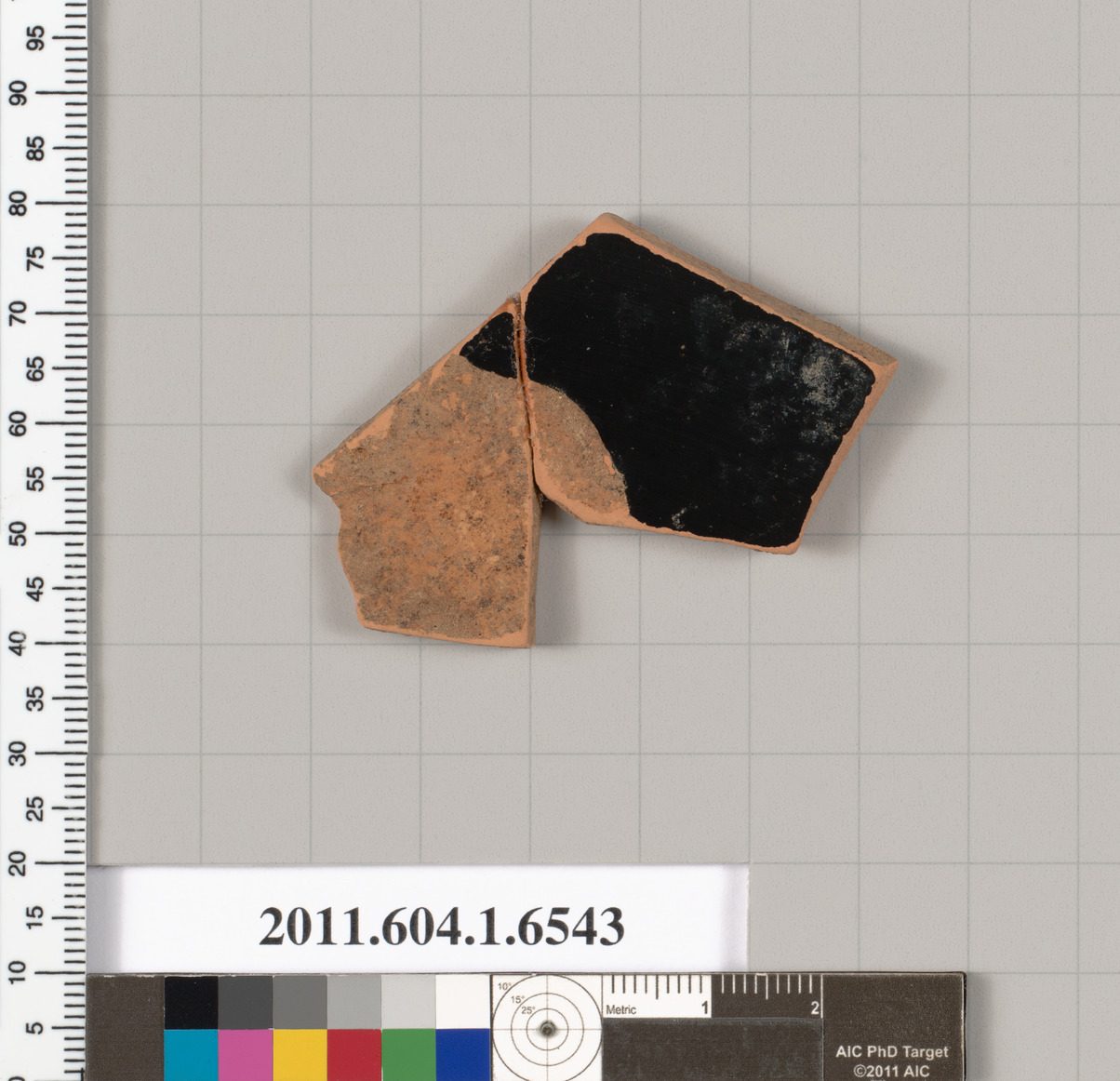
The internal genetic code of Lauren Fashion—that dialectical tension between the Socratic ideal of examined mortality and the ceramic silence of the *Meiping*—finds an unexpected, ancient interlocutor in the museum artifact before us: a terracotta fragment of an Attic kylix. At first glance, a broken drinking cup from 5th-century BCE Greece appears remote from the tailored austerity of Old Money dressing. Yet this shard, with its curved lip, its residual slip of black glaze, and its absent center, is not merely a relic of symposium revelry. It is a foundational text on the grammar of *presence through absence*, a principle that will define the 2026 Old Money silhouette as one of disciplined volume, deliberate exposure, and the quiet luxury of the unfinished.
I. The Kylix as a Lesson in Negative Space
The kylix is a vessel designed for the hand, not the pedestal. Its shallow bowl, elevated on a stem, was meant to be cradled while reclining. The fragment we study—perhaps a third of the original circumference—retains the precise curvature of that grip. In its brokenness, it reveals what the intact object concealed: the *interiority* of the form. The potter’s wheel left concentric ridges on the inner wall, now exposed to air and light, tracing the centrifugal force that birthed the object. This is not damage; it is disclosure.
For the 2026 Old Money silhouette, this translates into a radical rethinking of the shoulder and the sleeve. The conventional power suit relies on a padded, architectural shoulder—a solid, unbroken line. The kylix fragment instructs us otherwise. The new silhouette will feature a *shaved shoulder*: a sleeve head that is set slightly inward, creating a negative space between the garment’s seam and the wearer’s deltoid. This is not a dropped shoulder (a casual, modern gesture) but a *recessed* one—a deliberate hollowing that mimics the kylix’s inner curve. The effect is one of containment without compression. The jacket’s body becomes the bowl, the arm becomes the stem, and the gap between them is the air that the ancient Greeks called *pneuma*—the breath that animates matter. In wool or cashmere, this recessed seam creates a shadow line that shifts with movement, a dynamic stillness that whispers of inherited wealth rather than rented confidence.
II. The Black Glaze and the Discipline of Monochrome
The Attic kylix is famous for its *black-figure* or *red-figure* technique, but our fragment shows a simpler truth: the contrast between the raw terracotta’s burnt orange and the glossy black slip that once coated the interior. This is not decoration; it is a philosophical statement. The black glaze was applied, then fired in a three-phase kiln process that reduced oxygen, turning the iron-rich clay to a deep, lustrous ebony. The orange remained only where the glaze was absent—on the exterior foot, the underside, the unadorned zones. The Greeks understood that *value is created by limitation*. The black is not the absence of color; it is the *concentration* of it.
For 2026, this dictates a return to *heritage-black* as the foundational tone of the Old Money wardrobe—not as a default, but as a deliberate, glazed choice. The silhouette will be built in layers of near-black: a jet-black vicuña overcoat, a charcoal-black silk twill shirt, a black-oxide denim (dyed with natural indigo and iron mordant) for the trouser. The innovation lies in the *sheen differential*. Like the kylix’s slip, the black must be *fired*—treated with a calendered finish, a waxed cotton, or a high-twist worsted that catches light differently at each angle. The 2026 client will not wear black to disappear; she will wear it to *glaze* herself, to present a surface so refined that it functions as a mirror to the discerning eye. The fragment’s orange rim, visible where the glaze has chipped, teaches us to allow *raw edges*—a frayed cuff, a visible seam allowance, a lining that peeks out a millimeter too far. This is not deconstruction; it is archaeology. The garment reveals its own terracotta—the human body beneath—as the ultimate luxury.
III. The Stem and the Verticality of the Column
The kylix’s stem is its least celebrated but most crucial element. It lifts the bowl from the table, creating a void beneath. This elevation is not practical; it is ceremonial. It separates the drinker from the ground, inserting a shaft of air between the profane earth and the sacred libation. In the 2026 Old Money silhouette, this becomes the *long column*—not merely a long skirt or coat, but a continuous vertical line that begins at the collarbone and terminates at the ankle, with a visible *break* at the waist or hip that functions like the stem’s junction.
The practical application: a single-breasted, six-button coat with a suppressed waist and a flared skirt, cut from a double-faced wool that requires no lining. The interior seam is bound in silk grosgrain, but the *exterior* is left unadorned—no lapel flower, no pocket flap, no belt. The wearer’s torso becomes the kylix’s bowl; her legs, the stem. The hem of the coat falls exactly at the tibial tuberosity, the point where the shin begins to angle—a measurement derived from the Greek canon of Polykleitos, which the 2026 atelier will adopt as its proportional standard. The skirt beneath, if worn, is cut on the bias to mimic the kylix’s flaring lip, moving with a liquid weight that suggests, but never reveals, the body’s motion.
IV. The Fragment’s Lesson: The Incomplete as the Ultimate Signifier
The most profound teaching of the terracotta fragment is its *incompleteness*. We do not see the full symposium, the painted figures, the inscriptions of love and wine. We see only a shard—and yet, that shard is more valuable than any intact replica. Its broken edge is a signature of time, a proof of survival. The 2026 Old Money silhouette must embrace this *curatorial incompleteness*. This does not mean distressed garments or visible mending (a trend of the 2010s that has now passed). It means a *design process* that leaves one element unresolved: a jacket that is cut but not buttoned, a trouser that is hemmed but not pressed, a shirt that is tucked on one side only. This is not sloppiness; it is the *calculated negligence* of those who have nothing to prove.
In the language of the *Socratic death* and the *Meiping wave*, the kylix fragment is the third term. It is neither the dramatic narrative of the painting nor the silent eternity of the porcelain. It is the *broken moment*—the instant between the sip and the setting down, between the symposium’s laughter and its dispersal. The 2026 silhouette will be designed for this instant: for the woman who enters a room, stands in the light, and leaves without explanation. Her garment will have a single, deliberate *flaw*—a seam that does not meet, a collar that stands slightly away from the neck—that marks her as a connoisseur of the incomplete. This is the ultimate Old Money signal: not the ability to afford perfection, but the wisdom to prefer the fragment.
V. Synthesis: The Kylix, the Meiping, and the Socratic Gaze
Returning to our internal code, the kylix reconciles the *Meiping*’s silent containment with the *Socratic* drama’s moral urgency. The Greek cup is a vessel of *conviviality*, not of solitary contemplation. It was passed hand to hand, filled and emptied, broken and buried. Its terracotta body is the same clay as the *Meiping*’s porcelain—earth, water, fire—but its purpose is *transient* rather than eternal. And yet, in its fragmentation, it achieves a permanence that the intact Meiping cannot claim: it is *honest* about its mortality. The 2026 Old Money silhouette will adopt this honesty. It will not pretend to immortality. It will be cut for the body that will age, for the fabric that will wear, for the moment that will pass. In this, it becomes the most radical luxury of all: a garment that acknowledges its own end, and thereby achieves a grace that no trend can touch.
The terracotta fragment, then, is not a source of motifs or colors. It is a *structural philosophy*. It instructs us to build garments with the logic of the potter’s wheel—centrifugal, balanced, hollow at the core—and to finish them with the logic of the kiln—fired, glazed, and unapologetically marked by time. The 2026 collection will be a symposium of such fragments: a jacket here, a coat there, each one a shard of a larger, unseen whole. The wearer will be the archaeologist, the connoisseur, the one who understands that the broken cup holds more wine than the full one, because it holds the memory of the drinking. This is the heritage-black answer to the question of 2026: not a new look, but a new *way of seeing*—through the lens of the fragment, toward the eternal ripple of the wave.
Heritage Lab Insight
Genetic Bridge: Archive node focusing on Heritage-Black craftsmanship.