← BACK TO ARCHIVES
Heritage-Black
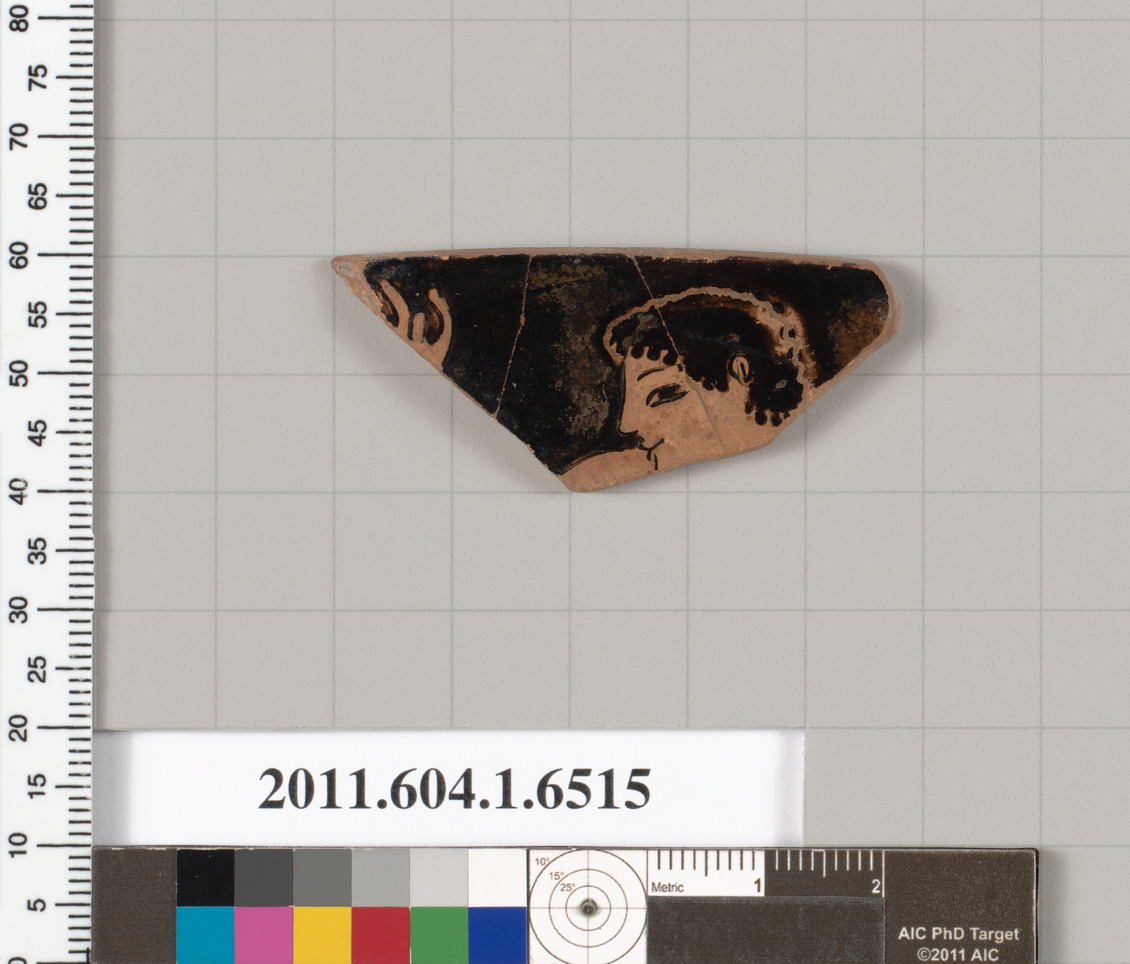
Heritage Synthesis: Terracotta rim fragment of a kylix (drinking cup)
Curated on Aug 31, 2026 // Node: LDN-01
The Geological Gaze: Terracotta Fragments and the Architecture of Old Money Silence
In the rarefied lexicon of Old Money aesthetics, the year 2026 does not seek novelty; it seeks *resonance*. The lineage of Lauren Fashion, rooted in the quiet authority of tailored restraint, finds an unexpected yet profound interlocutor in a fragment of an Attic kylix—a terracotta rim, broken, weathered, and yet speaking with the crystalline clarity of antiquity. This shard, a relic of the Greek symposium, is not a blueprint for drapery or a source for chiton-inspired folds. Rather, it functions as a philosophical crucible, distilling the principles of *impermanence, structural honesty, and the poetics of the void*—principles that must govern the 2026 Old Money silhouette if it is to transcend mere costume and achieve the status of *worn heritage*.
I. The Fragment as a Masterclass in "Shou" (瘦) and "Lou" (透): Subtraction as Power
The internal genetic code of Lauren Fashion has long been illuminated by the literati rock (*gongshi*), specifically the Lingbi stone described in our archives—a mineral cosmos defined by "瘦皱漏透" (leanness, wrinkle, perforation, transparency). The terracotta rim, in its broken state, embodies a parallel doctrine of *negative space*. It is not a complete vessel; it is a *record of removal*. The 2026 Old Money silhouette must adopt this geological discipline. We are not designing garments; we are carving them from the block of social expectation.
Consider the shoulder line. In 2026, we reject the aggressive, padded expanse of the 1980s power suit—a form of *visual shouting*. Instead, we look to the kylix's rim: a clean, unadorned arc that suggests containment without bulk. The new jacket silhouette will feature a *shaved* shoulder, achieved through a meticulous reduction of canvas and padding, allowing the natural slope of the wearer's body to dictate the line. This is not a weakness; it is the "leanness" of the stone—a strength derived from the elimination of the superfluous. The lapel, similarly, becomes a study in "透" (transparency). Not literal transparency of fabric, but a *structural transparency*—a deep, sharp gorge that reveals the precise engineering beneath, much as the kylix's broken edge exposes the clay's inner density. The suit is no longer a shell; it is a *section drawing* of the wearer's own composure.
II. The "Wrinkle" (皱) of Time: Texture as Narrative, Not Decoration
The museum artifact's surface is not smooth. It bears the patina of millennia—micro-fissures, mineral deposits, the subtle undulation of hand-thrown clay. This is the "皱" (wrinkle) of the literati aesthetic, a topographic map of time's passage. For 2026, this translates directly into a radical embrace of *textural honesty* in fabric. We move away from the sterile, high-gloss finishes of fast luxury. Instead, the Old Money wardrobe will be built upon materials that *record experience*.
Wool, our primary medium, will be treated not to resist creasing but to *celebrate* it. A herringbone twill, woven with a slightly irregular slub, will catch light in a way that mimics the mineral striations of the Lingbi stone. Cashmere, in its purest undyed state, will offer a surface akin to the kylix's unglazed interior—soft, tactile, and deeply human. The 2026 silhouette will feature garments that are *pre-distressed* by design, not through artificial abrasion, but through a sophisticated weave structure that creates a natural, organic drape. This is the antithesis of the influencer's pristine, unworn garment. It is the suit of a person who has *lived*, whose clothes are a palimpsest of boardroom negotiations, country walks, and quiet evenings—a wearable geology.
III. The Symposium and the "Seated Luohan": The Dialectic of Solitude and Society
Our archive's second artifact, the *Seated Luohan with a Servant*, offers a complementary lens. The Luohan's meditative stillness, captured in mineral pigments, is a study in *internal focus*. The kylix, conversely, is a vessel of *external conviviality*—the Greek symposium was a space of philosophical debate and shared wine. The 2026 Old Money silhouette must navigate this dialectic. It must be a garment for the boardroom (the symposium) and the private study (the Luohan's cave).
This is achieved through the principle of *adaptive severity*. The silhouette for 2026 will feature a high, enclosed neckline—a nod to the Luohan's robed collarbone—that creates a sense of monastic focus. Yet, the cut of the trouser will be generous, allowing for ease of movement, a nod to the kylix's function as a drinking vessel meant to be passed from hand to hand. The jacket, when buttoned, is a fortress of solitude; when unbuttoned, it reveals a lining of unexpected, but never loud, color—a secret gesture of warmth, like the interior of the terracotta cup. This is the "物心相照" (mutual illumination of object and mind) of our heritage code: the garment is both a shield for the self and a bridge to the other.
IV. The "Useless" Garment: Rejecting Instrumental Value
The literati rock's "无用之用" (usefulness of the useless) is the ultimate Old Money provocation for 2026. In an era of performance wear and data-driven fashion, the new silhouette must be *deliberately inefficient*. It will not have visible logos. It will not have technical fabrics that wick moisture or stretch for the gym. It will be made of materials that require care, that demand a certain pace of life. A double-faced cashmere overcoat, cut with the amplitude of a Greek himation, serves no utilitarian purpose beyond enveloping the wearer in a microclimate of calm. Its weight is its message. Its lack of features is its feature.
This is the "heritage-black" of our category tag—not merely a color, but an *absence of spectacle*. The 2026 silhouette, informed by the kylix's fragmentary honesty and the gongshi's abstract rhythm, is a meditation on permanence. It is cut to outlast trends, to be repaired, to be passed down. It is a vessel not for wine, but for time itself. The wearer does not don this garment; they *inhabit* it, as a scholar inhabits a garden, or a fragment of clay inhabits the eternal present tense of the museum. This is the final, silent triumph: a fashion that has become archaeology of the self.
Heritage Lab Insight
Genetic Bridge: Archive node focusing on Heritage-Black craftsmanship.