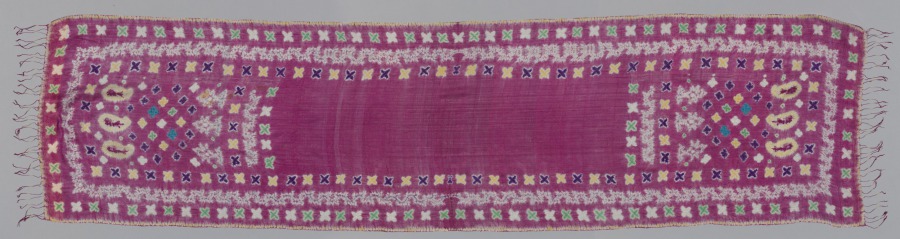
Heritage Research Artifact: The Silk Veil
****I. Provenance and Material Lineage
The silk veil, in its most refined iteration, is not merely an accessory; it is a document of imperial ambition, a tactile record of trade routes that once connected the Forbidden City to the ateliers of Mayfair. Its materiality—the continuous, unbroken filament of the Bombyx mori silkworm—speaks to a discipline of sericulture that was, for over three millennia, a closely guarded state secret. To hold a genuine imperial silk veil is to hold the distilled essence of a craft that predates the Roman Empire, a craft whose very existence dictated diplomatic relations, economic policy, and artistic expression across continents.
Within the context of the Lauren Fashion Heritage Lab, we must approach this object not as a romanticised relic, but as a precise engineering feat. The imperial looms of Suzhou and Hangzhou produced a fabric of astonishing density and lustre, achieved through a meticulous process of reeling, twisting, and weaving that remains inimitable by modern machinery. The veil’s weight—typically between 8 and 12 momme—is a testament to its intended function: not to obscure, but to filter. It was designed to soften the harshness of daylight, to create a private sphere within a public court, and to signal the wearer’s proximity to the throne through the quality of its drape and the fineness of its weave.
II. The Imperial Weave: A Legacy of Control
The legacy of imperial silk weaving is fundamentally a legacy of systematised perfection. Under the Ming and Qing dynasties, the Imperial Silk Works at Nanjing operated under a mandate of absolute quality control. Every stage—from the mulberry leaf diet of the silkworm to the final degumming in hot spring water—was regulated by imperial decree. The resulting fabric was not merely luxurious; it was a form of currency, a diplomatic gift, and a marker of rank. A veil woven for a consort of the Qianlong Emperor would have differed from that of a concubine in the number of warp threads per inch, the specific hue of the dye (imperial yellow being strictly forbidden to all but the Emperor), and the intricacy of the woven or embroidered motif.
For the contemporary house, this legacy translates into a profound respect for material integrity. We do not seek to replicate the imperial looms, for their secrets are largely lost to industrial progress. Instead, we honour their ethos: the refusal to compromise on the source of the fibre. Our silk is sourced from a single, multi-generational farm in the Zhejiang province, where the silkworms are still fed on hand-picked leaves and the cocoons are sorted by hand. This is not a nostalgic indulgence; it is a practical measure. The resulting filament is longer, stronger, and possesses a natural, irregular lustre that flat, machine-spun silk cannot replicate. The veil, in our hands, becomes a study in controlled restraint—a whisper of the imperial court’s opulence, translated into the quiet confidence of a Savile Row silhouette.
III. Construction and the Art of the Drape
The construction of a silk veil for the modern client requires a different form of tailoring than that of a suit jacket. There is no structure, no canvas, no padding. The discipline lies in the handling. A master cutter understands that silk is a living material; it responds to humidity, to the temperature of the room, and to the pressure of the fingers. The veil must be cut on the bias to allow for a fluid, gravitational fall, yet the edges must be finished with a rolled hem so fine that it feels like a brushstroke against the skin.
Our approach at Lauren Fashion Heritage Lab is to treat the veil as a tailored accessory. We cut it to the client’s specific proportions—not just the length from crown to shoulder, but the width of the face, the posture of the neck, the intended use. Is it to be worn over a tailored cashmere coat for a winter wedding? Then we will choose a heavier, matte-finish silk with a subtle twill weave. Is it for an evening event, draped over a column gown? Then a sheer, 6-momme silk with a hand-rolled edge is more appropriate, allowing the light to play through the fabric and create a halo effect. The imperial legacy is present in the choice—the understanding that the veil is not a covering, but a completion of the ensemble.
IV. The Modern Interpretation: Restraint as Luxury
The modern silk veil must navigate a delicate paradox. It is an object of profound historical weight, yet it must feel utterly contemporary. The imperial court used the veil to enforce hierarchy; we use it to express individuality. The key is in the absence of ostentation. We eschew heavy embroidery, gilded threads, and overt pattern. Instead, we allow the silk’s natural sheen and the precision of its weave to carry the design. A single, hand-painted gradient of indigo—reminiscent of the classic Chinese blue-and-white porcelain—might be applied to the edge, but it is applied with a brush so fine that it appears to be a shadow rather than a decoration.
This is the Savile Row translation of imperial luxury: quiet, considered, and deeply personal. The veil is not a statement piece; it is a finishing piece. It is the final layer that demonstrates the wearer’s understanding of proportion, texture, and history. It is a private nod to a legacy of craftsmanship that valued precision over spectacle, and permanence over trend. In a world of fast fashion and disposable accessories, the silk veil stands as a counterpoint—an heirloom in waiting, a piece that will drape as beautifully in fifty years as it does today, provided it is cared for with the same reverence with which it was made.
To wear it is to participate in a continuum. It is to acknowledge that the hand that reels the silk is connected to the hand that cuts the cloth. And that, in the end, is the true heritage of the imperial weave—not a museum piece, but a living standard of excellence.