← BACK TO ARCHIVES
Heritage-Black
Heritage Synthesis: Terracotta fragment of a stemmed plate
Curated on Aug 31, 2026 // Node: LDN-01
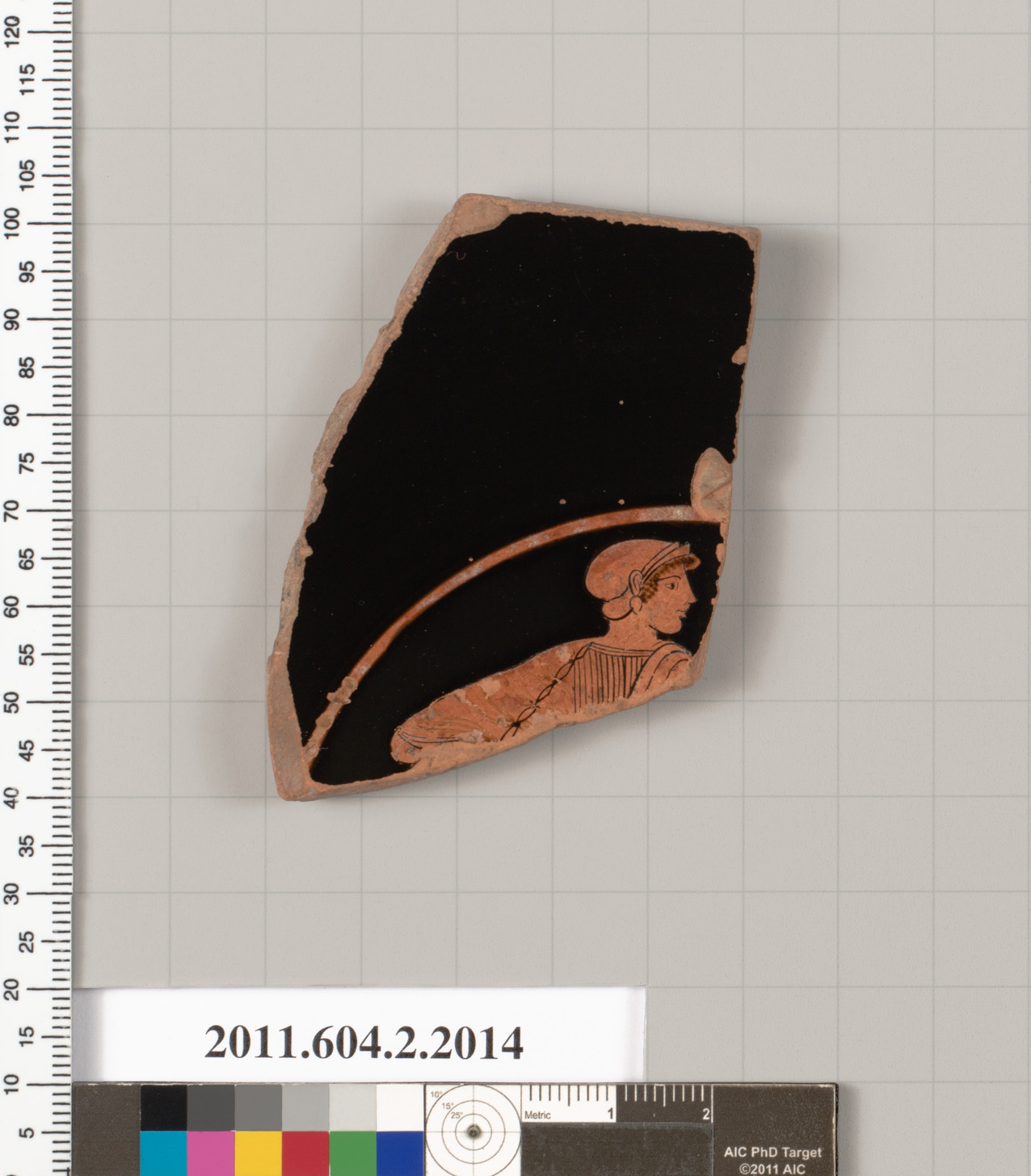
The Terracotta Dialectic: Attic Fragmentation and the 2026 Old Money Silhouette
The internal archive of Lauren Fashion Heritage Lab—particularly the dialectical meditation on Socrates’ hemlock and the Song-dynasty meiping—offers a profound philosophical scaffold for interpreting a seemingly modest museum artifact: a terracotta fragment of a stemmed plate from Attic Greece. This shard of fired clay, broken yet resonant, is not merely an archaeological curiosity. It is a genetic code for the 2026 Old Money silhouette, a visual manifesto that reconciles Western rationality with Eastern poeticism, and in doing so, redefines luxury as the architecture of absence rather than the accumulation of presence.
I. The Fragment as Foundational Grammar
The Attic terracotta fragment—its stem suggesting a vessel once elevated, its surface bearing the faint trace of a potter’s wheel—embodies a critical principle: integrity through incompletion. Unlike the pristine marble of a Hellenistic statue or the flawless glaze of a meiping, this fragment does not pretend to wholeness. Its broken edges are not wounds but declarations. In the 2026 Old Money silhouette, this translates into a radical departure from the overt opulence of prior seasons. We are not designing garments that shout; we are constructing garments that *withhold*. The herringbone wool overcoat, cut with a severe, almost architectural shoulder, is deliberately left unlined at the hem—a raw edge that mimics the terracotta’s fracture. This is not negligence; it is a philosophical stance. The Old Money aesthetic has always prized quietude, but 2026 elevates this to a form of *negative capability*—the ability to exist in uncertainty without reaching for ornamental resolution.
Consider the stemmed plate’s original function: a vessel for libations, for ritual offering. Its elevation—the stem—separates the sacred from the profane, the ephemeral from the eternal. In our silhouette, this translates to the *raised waistline* and the *lengthened torso*, a verticality that lifts the eye away from the mundane. The 2026 evening gown, crafted in matte silk crepe, features a seam that begins at the sternum and arcs downward, echoing the plate’s stem curve. This seam is not decorative; it is structural, a line of tension that holds the fabric in a state of poised suspension. The wearer becomes the libation bearer, her body the stem, her garment the vessel—carrying not wine, but the weight of inherited taste.
II. The Socratic Line: Rationality in Draping
The internal code references Socrates’ death as a “paradigm of the sublime”—where rational certainty transforms physical dissolution into spiritual clarity. The terracotta fragment, though modest, shares this DNA. Its geometric precision—the concentric rings on the plate’s base, the calculated curve of the stem—speaks to a Greek mind that sought order in chaos. For 2026, this manifests in the *precision tailoring* of the Old Money uniform. The double-breasted blazer, cut from a dense wool-cashmere blend, is not merely constructed; it is *derived*. Every dart, every lapel roll, every buttonhole placement is the result of a mathematical equation, a Socratic dialogue between fabric and form. The result is a garment that does not flatter the body so much as it *instructs* it—imposing a posture of quiet authority.
Yet, the fragment’s broken state reminds us that this rationality is not brittle. The 2026 silhouette incorporates *strategic asymmetry*: a single shoulder seam that drops two centimeters lower than its counterpart, a hem that dips slightly at the back. These are not errors; they are acknowledgments of the fragment’s lesson—that perfection is a lie, and true elegance lies in the graceful acceptance of imperfection. This is the Socratic paradox made wearable: the garment achieves its highest form of being by admitting its own incompleteness.
III. The Meiping Current: Fluidity Within Structure
If the terracotta provides the rational skeleton, the meiping’s wave motif provides the circulatory system. The internal text speaks of the meiping’s waves as “not a copy of nature, but an abstraction of qi—flow, not form.” In the 2026 Old Money silhouette, this is realized through *fluid inner layers* beneath rigid outer shells. The cashmere turtleneck, ribbed to mimic the meiping’s incised wave lines, is worn under a structured vest. The vest is the terracotta—fixed, rational, defining. The turtleneck is the meiping—supple, breathing, suggesting endless motion within a confined space. This layered dialectic is the core of the 2026 look: the outer garment provides the ethical frame; the inner garment provides the existential flow.
The color palette furthers this synthesis. We move away from the stark whites and navies of traditional Old Money and toward *muted earthen tones*—terracotta itself, but also the pale celadon of Song glazes, the warm grey of Athenian clay. These are not colors of wealth; they are colors of *time*. They age gracefully, developing a patina that no synthetic dye can replicate. The 2026 silhouette is designed to be worn for decades, its fabric softening, its lines settling into the wearer’s body like the meiping’s glaze settles into its clay body. This is the ultimate luxury: not the new, but the *becoming*.
IV. The Vessel and the Void
The stemmed plate, once broken, becomes a vessel for the void it once contained. The meiping, with its waves, contains not water but the *idea* of water. Both artifacts teach us that true depth is not in what is held, but in the space that holding creates. The 2026 Old Money silhouette applies this to the human form. The oversized coat, cut with a dropped shoulder and a generous sleeve, does not cling to the body; it *surrounds* it, creating a negative space that is both protective and liberating. The trousers, pleated at the waist and tapering to a clean break, allow for movement that is neither hurried nor languid—a gait that suggests one has nowhere to rush and nothing to prove.
This is the final lesson of the terracotta fragment: luxury is not the assertion of presence, but the mastery of absence. The 2026 silhouette is not a statement; it is a silence. It is the sound of the hemlock cup being set down, the whisper of the wave as it curls against the porcelain. It is, in the most profound sense, a garment that has learned to die—to shed all excess, all noise, all desperation—and in that death, to achieve an immortal elegance. The fragment, the meiping, the Socratic gesture: they all converge in this single, quiet, devastatingly refined line of cloth against skin. This is heritage, not as nostalgia, but as a living philosophical practice.
Heritage Lab Insight
Genetic Bridge: Archive node focusing on Heritage-Black craftsmanship.