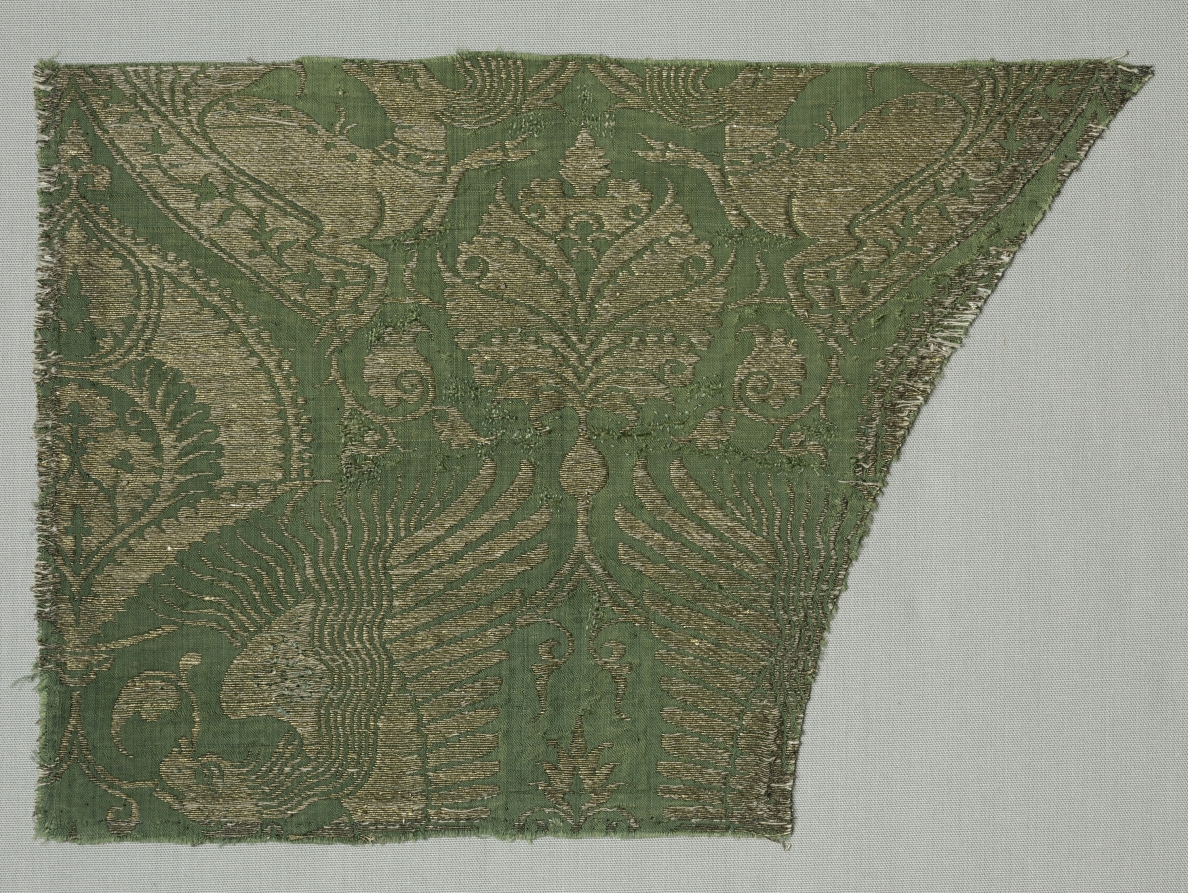
Heritage Research Artifact: Exotic Gold-Patterned Silk
In the hushed, wood-panelled ateliers of Savile Row, where time is measured not in minutes but in the patient rhythm of needle and thread, there exists a material that speaks of empires, of caravans crossing deserts, and of looms that once hummed within the walls of forbidden palaces. This is the exotic gold-patterned silk—a textile that is not merely woven but composed, a symphony of lustrous threads and gilded wefts that carries within its folds the entire legacy of imperial silk weaving. To handle such a fabric is to hold a fragment of history, a tangible echo of a world where silk was not simply a commodity but a currency of power, a language of divine right, and an art form of unparalleled sophistication.
The Materiality of Imperial Silk
At its core, this silk is a study in contrasts. The base is a pure, mulberry-derived filament, reeled from the cocoons of Bombyx mori with a precision that has remained unchanged for millennia. Its natural sheen is not the brash glint of modern synthetics but a soft, internal luminosity—a depth of light that seems to emanate from within the yarn itself. The gold, however, is the true protagonist. It is not a mere metallic thread applied to the surface; it is a gilded weft, often created by wrapping a core of silk or fine cotton with a ribbon of beaten gold leaf, or by gilding the silk filament itself. This technique, perfected in the imperial workshops of the Ming and Qing dynasties, results in a pattern that is not flat but sculptural, catching the light in a thousand different directions as it moves. The gold does not sit upon the silk; it is married to it, each thread supporting the other in a delicate, enduring alliance.
The weight of the fabric is a critical indicator of its provenance. Imperial silks were woven with a density that modern looms rarely replicate. This is not a flimsy, decorative textile; it is a substantial, architectural material, designed to drape with authority and hold its form. When you run your fingers across its surface, you feel the deliberate, almost stubborn resistance of the weave—a testament to the countless hours of skilled labour required to produce even a single yard. This is a fabric that demands respect, and it rewards the wearer with a presence that is both commanding and refined.
The Legacy of Imperial Weaving
The legacy of imperial silk weaving is not merely a story of technique; it is a chronicle of power. In the Forbidden City, the Imperial Silk Works, or Zhiranju, was a self-contained city within a city, housing thousands of artisans whose lives were dedicated to the creation of these masterpieces. The patterns themselves were not arbitrary; they were dictated by strict sumptuary laws. The five-clawed dragon was reserved exclusively for the Emperor and his immediate family; the phoenix symbolised the Empress; and specific floral motifs, such as the peony or the lotus, carried their own hierarchical meanings. To wear an unauthorised pattern was an act of treason, a challenge to the cosmic order. This silk, therefore, is not just a beautiful object; it is a document of political and social hierarchy, a woven constitution of the celestial mandate.
The gold-patterned silk we examine today likely originated from the kesi (cut silk) or jin (brocade) traditions. The jin technique, in particular, is a marvel of engineering. It utilises a warp-faced weave, where the gold weft threads are woven in to create the pattern, often with a subtle, raised effect. The result is a fabric that is both durable and exquisitely detailed, capable of rendering the most intricate of designs—a dragon’s scale, a wave crest, a cloud motif—with a clarity that borders on the painterly. The gold thread itself was often made from the purest bullion, beaten into sheets so thin they could be cut with a knife and then twisted around a silk core. This process, known as gilt thread making, was a closely guarded secret, and the quality of the gold was a direct reflection of the empire’s wealth and technological prowess.
From Imperial Court to Savile Row
The journey of this silk from the imperial looms to the cutting tables of Savile Row is a narrative of cross-cultural exchange and adaptation. In the 18th and 19th centuries, as trade routes expanded, these exotic textiles began to appear in the wardrobes of European aristocracy. They were initially worn as exotic curiosities—a Chinese dressing gown, a pair of embroidered slippers. But the discerning tailors of London, ever attuned to the nuances of cloth, recognised something more profound. They saw a material that could be tailored, that could be cut and shaped to the human form, that could bring a sense of imperial grandeur to the disciplined lines of a British suit.
Today, at Lauren Fashion Heritage Lab, we approach this silk with a dual perspective: that of the historian and that of the tailor. For the historian, it is a primary source, a physical artefact that offers insights into ancient dyeing techniques, weaving technologies, and the socio-economic structures of imperial China. For the tailor, it is a supreme challenge and a privilege. The fabric’s weight and drape require a particular skill in cutting; its gold threads demand a needle that will not snag or break the filament; and its pattern must be aligned with a precision that borders on the obsessive. A Savile Row suit crafted from this silk is not merely a garment; it is a bespoke monument, a wearable piece of history that has been re-contextualised for the modern gentleman.
The modern application, however, is not a simple replication. We must consider the ethics of material sourcing and the sustainability of such a labour-intensive craft. The original imperial silks were produced at a tremendous human and environmental cost. Our contemporary approach, therefore, involves a careful balance: we honour the traditional techniques and the historical significance of the material, but we do so with a modern sensibility. We work with mills that use ethically sourced silk and recycled or responsibly mined gold, and we commission weavers who are dedicated to preserving these ancient crafts. The result is a fabric that retains the soul of the original—its weight, its sheen, its historical resonance—but is produced with a conscience befitting the 21st century.
Conclusion: A Living Legacy
The exotic gold-patterned silk is more than a textile; it is a testament to human ingenuity, a bridge between cultures, and a reminder that true luxury is never fleeting. It is a material that demands patience, understanding, and a profound respect for the hands that created it. On Savile Row, we do not simply sell cloth; we curate legacies. And this silk, with its imperial pedigree and its enduring allure, remains one of the most compelling chapters in that grand narrative. To wear it is to participate in a tradition that spans continents and centuries—a tradition of excellence, of artistry, and of the quiet, unassailable power of a perfectly woven thread.