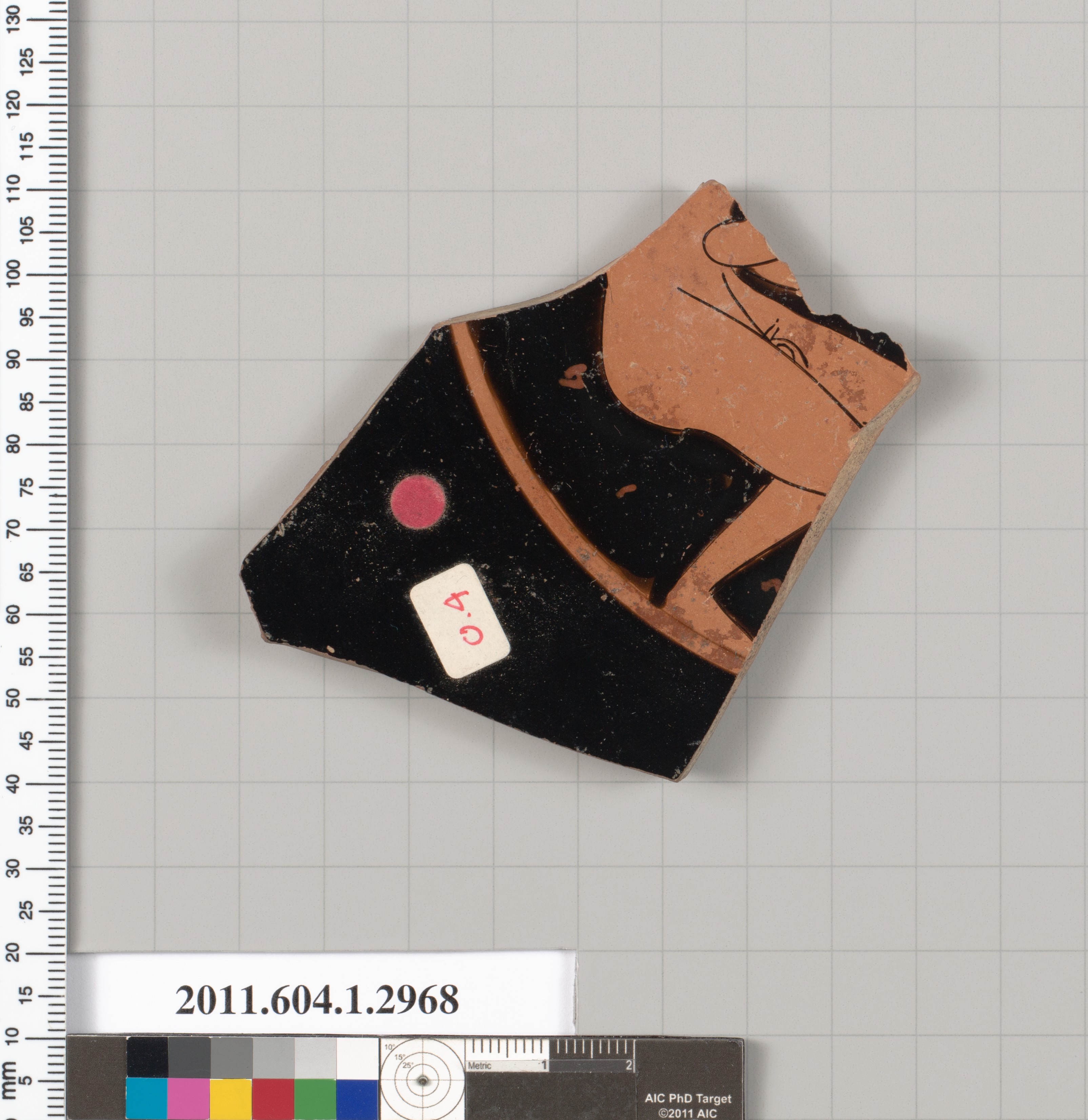
Fragmented Perfection: The Attic Kylix and the 2026 Old Money Silhouette
The 2026 Lauren Fashion Heritage Lab collection, under the working title “Old Money Silhouettes,” seeks not to replicate the overt signifiers of wealth, but to articulate a deeper, more resonant language of inherited elegance—one that speaks of time, discernment, and a cultivated existence. Our internal genetic code, drawn from the dialogue between the transcendent “Udumbara Flower” Temple Tablet and the worldly Animal-and-Grape Mirror, establishes a philosophical framework of tension between the ephemeral and the eternal, the empty and the full. The introduction of an external artifact—a Terracotta fragment of an Attic kylix (drinking cup)—provides a crucial, transformative lens: the aesthetic of the fragment itself. This shattered relic of Athenian symposium culture does not merely inform the collection; it becomes the central metaphor for constructing a contemporary, non-literal “Old Money” narrative.
The Kylix Fragment: A Grammar of Ruin and Refinement
The Attic kylix was an instrument of communal ritual, its wide, shallow bowl designed for the drinking of wine and the display of painted narratives, often of mythological or social scenes. The fragment in question, however, is no longer a vessel but a testament. Its broken edges, worn surfaces, and partial imagery demand a different mode of engagement. It shifts the value from the complete, functional object to the aesthetic and historical potency of the partial. What remains is not a lack, but a concentration. The curve of the ceramic, the ghost of a painted figure or meander pattern, the very texture of its fracture—each element becomes more significant, more loaded with meaning. This embodies a paradox central to enduring style: the most powerful statements are often those that are implied, alluded to, and left incomplete, inviting the discerning eye to complete the narrative. It is the antithesis of fast fashion’s literal completeness, proposing instead a wardrobe of eloquent fragments that the wearer composes into a personal whole.
From Symposium to Silhouette: Deconstructing “Old Money”
The 2026 silhouette, informed by this fragmentary ideal, moves away from ostentatious period revival. Instead, it embraces a deconstructed classicism.
1. The Architecture of the Fragment: Just as the kylix fragment hints at its original, perfect geometry, garments will suggest classic tailoring while subverting it. Imagine a Heritage-Black wool blazer, its structure impeccable from the front, yet revealing a seam left intentionally unfinished along the inner arm or back panel, lined with a whisper of silk bearing a faded, Udumbara flower-inspired print. This is not distress, but revelation—showing the “making of,” much like the fragment shows the ceramic’s body. A cashmere coat’s silhouette may reference a strict Chesterfield, but one lapel might be subtly asymmetrical, or a pocket placed where it “shouldn’t” be, creating a dialogue between memory and innovation.
2. The Patina of Presence: The terracotta’s surface holds the patina of millennia—not applied, but earned. Our material development focuses on achieving this lived-in refinement. Wool and cashmere are subjected to proprietary finishing techniques that impart a soft, almost foggy handle, a slight felted texture that suggests generations of careful wear. Silks are not brightly printed but over-dyed or shadow-washed, allowing patterns (inspired by the grapevines of the bronze mirror or the emptiness of the Udumbara) to emerge like memories from the fabric. The signature Heritage-Black will not be a flat void, but a deep, complex shade with undertones of charcoal, ink-blue, or burnt umber, varying across textures to mimic the way light falls on ancient pottery.
3. Narrative Incompleteness: The kylix once told a full story. The fragment tells a better one—one open to interpretation. Applied to design, this means symbolism becomes subtle and personal. The prolific “fullness” of the Animal-and-Grape Mirror is translated not into loud logos, but into intricate, almost secretive embroidery inside a cuff or along a hem: a tiny, scattered grape cluster in gold-thread, a single, minimalist line suggesting a vine. The “emptiness” of the Udumbara flower manifests in strategic cut-outs, laser-perforated patterns visible only upon movement, or the use of sheer lace overlays that create a sense of fleeting, floral apparition against the skin. These are details for the wearer, or the intimately close observer, to discover.
Synthesizing the Dialogue: The Lauren Heritage Silhouette
The final 2026 Old Money silhouette is thus a tripartite synthesis. From the Temple Tablet, it draws its spiritual austerity and reduction—a commitment to clean lines, minimal clutter, and a palette grounded in profound neutrals. From the Bronze Mirror, it inherits a coded, celebratory vitality—expressed in subtle textures, hidden embellishments, and a focus on fabrics that feel indulgent and life-affirming. From the Attic Kylix Fragment, it learns its most important lesson: the power of the imperfect, the elapsed, and the suggestive.
The resulting individual is not dressed in costume, but in curated fragments of a timeless narrative. A tailored wool trouser (the fragment’s sturdy ceramic body) paired with an impossibly delicate, asymmetrical lace top (the Udumbara’s fleeting bloom). A structured velvet blazer (the mirror’s luxurious density) with a torn-edge, raw silk scarf (the kylix’s broken rim). This is a silhouette that speaks of heritage not as a museum diorama, but as a living, breathing, and occasionally broken conversation with beauty across time. It understands that true “Old Money” is not about the flash of new gold, but the quiet, profound glow of something that has been loved, used, fragmented, and yet remains—more resonant than ever—in its exquisite, incomplete state.