← BACK TO ARCHIVES
Silk
Heritage Synthesis: Parrots and Animals
Curated on Sep 01, 2026 // Node: LDN-01
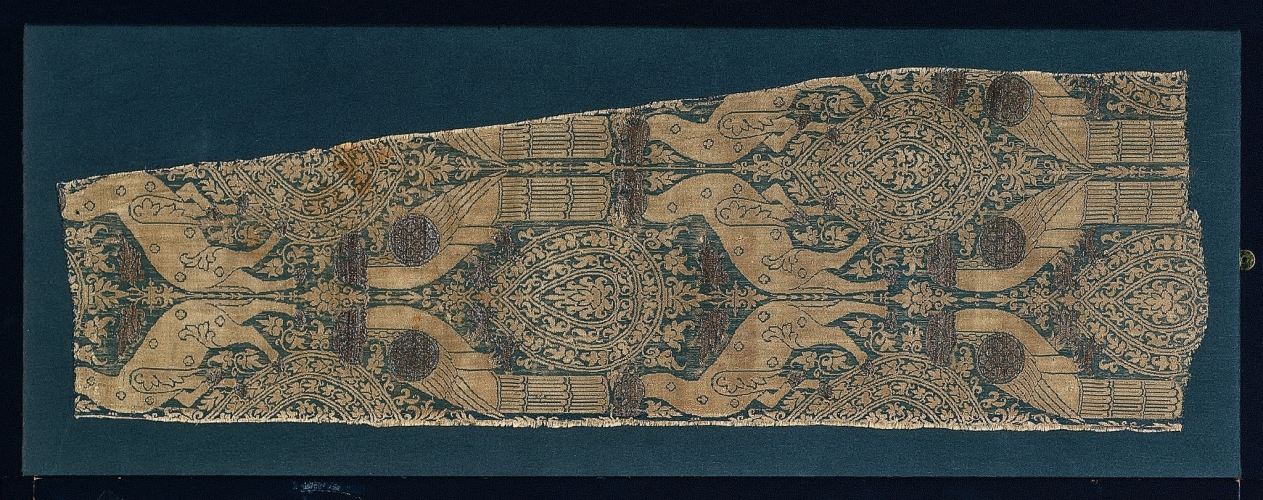
The Gilded Menagerie: Parrots, Silk, and the Imperial Legacy of Savile Row
In the hushed, wood-panelled ateliers of London’s Savile Row, where the air is redolent of beeswax and aged worsted, a peculiar form of opulence persists. It is not the loud proclamation of a new logo, but the quiet, authoritative whisper of a heritage cloth. Among the most evocative of these is the imperial silk weave, a material whose very structure encodes centuries of power, trade, and artistic obsession. Within this legacy, the motif of the parrot—and the broader animal kingdom—emerges not as mere decoration, but as a deliberate, sophisticated language of status. This artifact, a study in silk, examines how the imperial weaving tradition transformed the exotic parrot into a symbol of cosmopolitan mastery, a legacy that the discerning gentlemen of Savile Row continue to wear as a badge of quiet, global authority.
The Imperial Loom: A Foundation of Absolute Control
To understand the parrot in silk, one must first appreciate the loom. Imperial silk weaving, particularly under the Qing Dynasty (1644–1912) and earlier under the Ming, was not a cottage industry; it was a state apparatus of staggering precision. The imperial workshops in Nanjing, Suzhou, and Hangzhou operated under the direct purview of the court, with master weavers—often hereditary artisans—bound by oath to produce cloth of impossible fineness. The materiality of this silk was distinct: a warp-faced satin or a tightly woven twill, often with a density exceeding 120 threads per centimetre. This was not the soft, drapey silk of modern commerce; it was a stiff, almost metallic fabric, designed to hold its shape and catch light with a lustrous, liquid sheen. The ground was frequently a deep, resonant colour—imperial yellow, peacock blue, or a profound aubergine—achieved through multiple dye baths of madder, indigo, and the precious galls of the sumac tree.
The technical achievement was the *kesi* (cut silk) or the *zhuanghua* (figured silk) technique, where weft threads of different colours were woven in small, discontinuous sections to create intricate pictorial designs. This was not printing; it was painting with thread. Each parrot feather, each leaf of the *lingzhi* fungus, required the weaver to manipulate individual shuttles, often taking months to complete a single yard. The result was a textile of immense structural integrity, one that would not fray, fade, or lose its pile for centuries. This materiality was the physical embodiment of imperial control—a control over nature, over labour, and over the very perception of reality.
The Parrot as Imperial Emissary
Within this controlled universe, the parrot occupied a singular, paradoxical position. Unlike the dragon (imperial power) or the phoenix (empress), the parrot was an *import*. It was a living tribute, brought from the tropical frontiers of Southeast Asia, India, and even Africa, to the Forbidden City. In the imperial bestiary, the parrot was a symbol of eloquence, longevity, and, crucially, of the emperor’s reach. To possess a parrot was to demonstrate that one’s dominion extended beyond the Middle Kingdom to the very edges of the known world. When rendered in silk, this living tribute was transformed into a permanent, static emblem of that reach.
The iconography was precise. The *yingwu* (parrot) was often depicted in pairs, perched on a branch of pomegranate (fertility) or peony (wealth), with its beak often touching a ripe fruit. The colours were not naturalistic; they were symbolic. A green parrot signified spring and renewal; a red or crimson parrot, often associated with the mythical *jimao* (auspicious bird), denoted fire, passion, and the imperial sun. The weaver’s skill lay in rendering the bird’s plumage with a three-dimensional quality—using gradations of weft colour to suggest the sheen of feathers, the curve of the beak, the alertness of the eye. This was not a casual depiction; it was a heraldic portrait. The parrot, in silk, was a statement of the court’s ability to absorb and domesticate the exotic, to turn the wild, squawking creature of the jungle into a silent, gilded ornament of state.
From Imperial Court to Savile Row: The Translation of Power
The journey from the imperial loom to the London tailor is a story of colonial appropriation and commercial reinvention. In the 18th and 19th centuries, as the East India Company expanded its trade, these imperial silks arrived in London as luxury goods, often as diplomatic gifts or private commissions. The British aristocracy, already fluent in the language of classical antiquity, recognised a kindred spirit in the imperial Chinese aesthetic—a shared belief in the divine right of the elite to command nature.
However, the Savile Row translation was not a simple copy. The English tailor, with his rigorous, architectural approach to garment construction, understood that the heavy, stiff imperial silk was unsuitable for the draped, structured cut of a British suit. The solution was a hybrid: the *brocade* or *damask* weave, using the same pictorial motifs but executed in a lighter, more pliable silk, often blended with a fine worsted wool or a silk-and-cashmere twill. The parrot motif was retained, but its context shifted. No longer a symbol of absolute imperial dominion, it became a signifier of the British gentleman’s own global travels, his connoisseurship, and his ability to command the finest materials from any corner of the earth.
On Savile Row, the parrot is not worn as a costume. It is a subtle, almost secret signal. A gentleman might commission a dinner jacket in a midnight-blue silk with a discreet, tonal parrot motif woven into the lapel or the lining. The pattern is only visible in certain light, a quiet flourish for the discerning eye. This is the essence of the Savile Row ethos: *sprezzatura*—the art of effortless, studied nonchalance. The parrot, once a loud, exotic tribute, is now a muted, intellectual reference. It speaks of a man who knows the history of his cloth, who understands that true luxury is not about display but about provenance and restraint.
Materiality and the Modern Heir
The materiality of this heritage silk remains paramount. The modern Savile Row weaver, often working with mills in Como or Lyon, still employs the discontinuous weft technique, albeit with computer-assisted looms. Yet, the hand-finishing remains. The cloth is *sanforized* to prevent shrinkage, but the natural gum of the silk is retained to give it body. The result is a fabric that drapes with a particular weight—neither too stiff nor too fluid—that holds a crease impeccably, and that develops a subtle, rich patina over decades of wear.
For the contemporary client, the parrot in silk is a direct link to a lineage of power. It is not a nostalgic throwback but a living material argument. When a man wears a Savile Row suit with an imperial parrot motif, he is not merely wearing a pattern; he is wearing a thesis. He is asserting that he, too, commands resources, that he has the discernment to select a cloth that has survived centuries of changing taste, and that he possesses the cultural capital to understand its significance. The parrot, once a tribute to an emperor, is now a tribute to the wearer’s own mastery of the world.
In conclusion, the legacy of imperial silk weaving, as manifested in the parrot motif, is a testament to the enduring power of materiality. The silk itself—strong, lustrous, and precise—is the medium through which political power was once woven and through which personal authority is now expressed. On Savile Row, the parrot is not a relic; it is a living, breathing element of the gentleman’s wardrobe, a silent but eloquent statement that true heritage is not worn on the sleeve, but woven into the very fabric of one’s being.
Heritage Lab Insight
Lab Insight: CMA Silk Archive Node integration.