← BACK TO ARCHIVES
Silk
Heritage Synthesis: Time (from Chateau de Chaumont set)
Curated on Sep 02, 2026 // Node: LDN-01
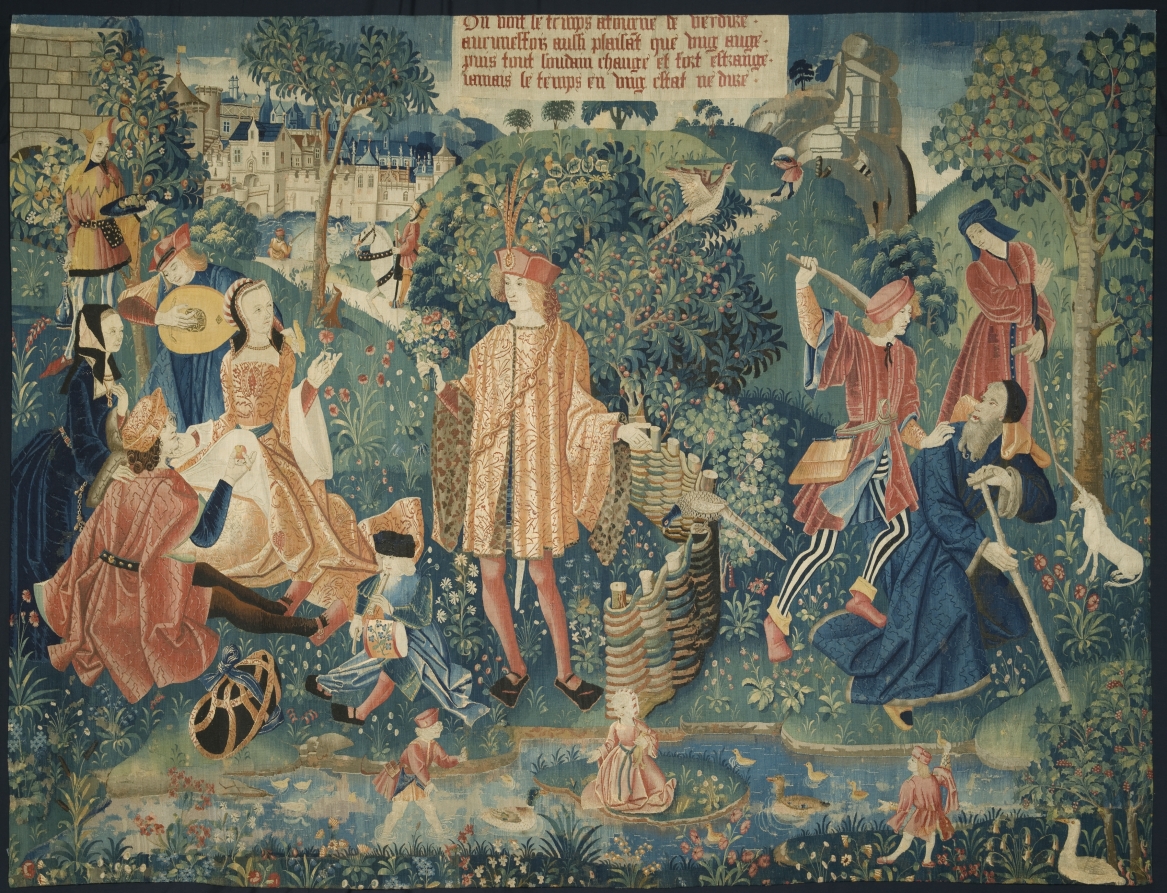
The Materiality of Time: Silk, Empire, and the Chateau de Chaumont Set
In the hushed, wood-panelled ateliers of Savile Row, we speak of cloth not merely as fabric, but as a repository of intent. A bolt of worsted wool carries the memory of the Scottish moor; a length of cashmere whispers of Himalayan high pastures. Yet, there is one material that transcends geography to embody the very concept of *duration* — silk. Within the Lauren Fashion Heritage Lab, we have the privilege of studying a singular artifact: the “Time” panel from the Chateau de Chaumont set. This is not simply a textile; it is a palimpsest of imperial ambition, artisanal genius, and the relentless, elegant march of the clock. Its materiality—the silk itself—is the primary text, and its narrative is one of power woven strand by strand.
The Imperial Thread: A Legacy of Lyon and the Grand Siècle
To understand this artifact, one must first understand the geopolitical weight of silk in the 18th century. The Chateau de Chaumont set, commissioned during the Ancien Régime, is a product of the royal silk manufactories of Lyon, a city that had become the undisputed epicentre of European weaving. This was not a happy accident. Under Louis XIV, and later Louis XV, the French crown deliberately engineered a state-sponsored ecosystem of silk production. The goal was to sever dependence on Italian imports and to create a domestic luxury industry that would outshine all rivals. The result was a technical and aesthetic hegemony that defined the era’s visual language.
The “Time” panel, with its allegorical depiction of Chronos, is a testament to this system. The very choice of subject matter—time personified—is telling. In the courtly culture of Versailles, time was not a neutral constant; it was a resource to be commanded, a theatrical element in the elaborate choreography of power. A panel depicting time, woven in silk, was a declaration: the monarchy controlled not only land and wealth, but the very hours of the day. The silk, therefore, is not a passive support for the imagery; it *is* the message. Its lustrous, light-refracting surface speaks of a mastery over nature that was the ultimate signifier of imperial legitimacy.
Anatomy of a Masterpiece: The Technical Sublime
From a technical standpoint, the “Time” panel is a masterclass in *grande étoffe*, a term used to describe the most complex, high-warp tapestry weaves. The materiality of the silk here is not uniform; it is a carefully orchestrated symphony of texture and light. The warp is a fine, tightly twisted filament, providing the structural integrity that has allowed this piece to survive centuries. The weft, however, is where the artistry lies. We see a sophisticated use of *points rentrés*—a shading technique where weft threads of different colours interpenetrate, creating a soft, painterly transition between tones. This is not a printed image; it is a sculpture in thread, where the depth of Chronos’s robe is achieved through the subtle juxtaposition of ivory, gold, and a deep, bruised aubergine.
The gold thread itself is a crucial element of the materiality. This is not a metallic substitute; it is a gilded silver or gold leaf wrapped around a silk core. The weight of this thread is considerable, and its presence in the weave changes the drape and hand of the fabric. It adds a rigid, luxurious texture that contrasts sharply with the pliant silk ground. When light hits the panel, the gold threads flash and recede, giving the illusion of movement—a fitting metaphor for the passage of time itself. The weave structure is a compound satin, allowing the floats of silk to create a smooth, unbroken surface for the design, while the gold thread is used as a brocading weft, raised to the surface only where needed. This is a feat of engineering that required the weaver to manipulate hundreds of bobbins, a process so slow that a single square inch could take a full day to complete. The materiality, therefore, encodes labour—the sheer, patient human time required to depict “Time.”
From Ancien Régime to Modern Heritage: The Silk’s Second Life
The journey of this artifact from the chateau’s walls to our heritage lab is a narrative of survival. Silk is a protein fibre, and it is inherently fragile. It is susceptible to light damage, humidity, and the ravages of time. That this panel exists at all is a testament to the quality of its original construction and the care of its subsequent custodians. The condition of the silk tells us about its history. The subtle fading of the ground colour, the slight crushing of the pile in certain areas—these are not flaws; they are the physical evidence of its biography. They are the patina of history, the very “time” the panel depicts, made manifest.
In our conservation work at the Lauren Fashion Heritage Lab, we approach this materiality with a specific reverence. We do not seek to restore it to a pristine, new state; that would be a falsification. Instead, we aim to stabilise it, to halt the decay, and to preserve the integrity of the original hand. This involves controlling light levels, maintaining a stable relative humidity, and using custom-built mounts that distribute the weight of the silk and gold thread evenly, preventing stress fractures. The act of preservation is a dialogue with the past. We are not merely storing an object; we are extending its life, allowing it to continue to communicate its message of imperial power and artisanal skill to future generations.
Conclusion: A Fabric of Eternity
For the modern designer, the “Time” panel offers more than a historical reference. It is a lesson in material integrity. In an era of fast fashion and synthetic immediacy, this silk object stands as a counterpoint. It reminds us that true luxury is not about novelty, but about depth—the depth of a weave, the depth of a history, the depth of the human skill required to create something that will outlast its maker. The materiality of this silk is the ultimate expression of the concept it depicts. It is time, captured not in a moment, but in a continuum. As we handle this piece, we are not just touching a fabric; we are touching the hands of the Lyonnais weavers, the ambitions of a king, and the very essence of an empire that believed it could weave eternity. And in that, it remains, quite simply, the finest tailoring of history itself.
Heritage Lab Insight
Lab Insight: CMA Silk Archive Node integration.