← BACK TO ARCHIVES
Silk
Heritage Synthesis: Silk Fragment
Curated on Sep 03, 2026 // Node: LDN-01
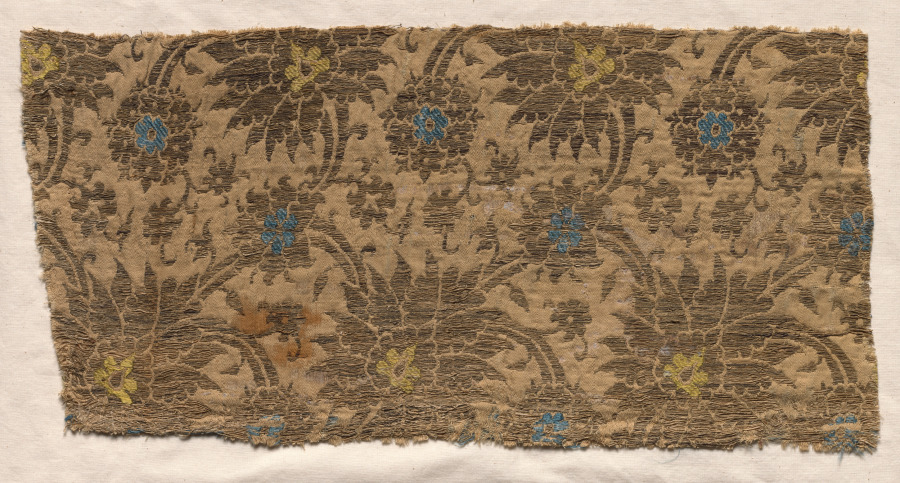
The Persistent Thread: A Silk Fragment and the Legacy of Imperial Weaving
In the hushed, wood-panelled quietude of a Savile Row atelier, one learns to read cloth the way a sailor reads a sky. A bolt of worsted speaks of Yorkshire grit; a length of cashmere whispers of Himalayan altitude. But a fragment of imperial silk—even a swatch no larger than a pocket square—demands a different lexicon. It is not merely a textile; it is a deposition, a legal document of dynastic ambition, and a testament to a manufacturing discipline that makes our own bespoke standards appear, at times, almost casual. This artifact, a remnant of a larger weave, is not a relic to be admired behind glass. It is a masterclass in provenance, a benchmark against which we must measure the very notion of quality.
Materiality as a Form of Statecraft
The fragment’s materiality is its primary testimony. The silk itself—*Bombyx mori*, the cultivated mulberry silkworm—was, for millennia, a currency more stable than gold. Its production was a state secret of the highest order, guarded with a ferocity that would make our own pattern-room security seem like a public library. To hold this silk is to hold the product of a monopoly that financed empires and ignited wars. The feel is not the slick, synthetic slipperiness of modern imitations; it is a dry, substantive grip, a tensile strength that speaks of a filament drawn continuously for nearly a kilometer. The weave, likely a complex satin or twill structure, is so even that it appears machined, yet the microscopic irregularities—the subtle, human heartbeat in the thread tension—are the very fingerprints of the imperial loom.
This is where the legacy begins. The imperial silk workshops of the Ming and Qing dynasties were not factories in our industrial sense. They were ateliers of absolute power, operating under a mandate of perfection that is now extinct. The dyer’s vats, the weaver’s pit, the embroiderer’s frame—each was a station in a ritual of subjugation to the imperial aesthetic. The colour, a deep, oxblood crimson or a celestial azure, was not chosen for fashion. It was prescribed by sumptuary law, a chromatic heraldry that told the courtier, the general, and the foreign envoy exactly where they stood in the celestial hierarchy. To wear the wrong hue was not a faux pas; it was an act of lèse-majesté.
The Grammar of the Loom: Precision as Power
Consider the construction. In our trade, we speak of a 120s count worsted with reverence. But the imperial silk weaver operated on a different plane of precision. A single bolt of ceremonial silk could require the manipulation of thousands of individual warp threads, each one controlled by a separate pattern cord in a drawloom that towered over the artisan. The weaver and his "draw boy" worked in a synchronised ballet, a physical algorithm that translated a cartoonist’s design into a three-dimensional landscape of light and shadow. The result is not a print; it is a structure. The dragon’s claw, the cloud scroll, the wave motif—these are not painted on the surface. They are woven into the very skeleton of the cloth, as integral to its being as the warp and weft themselves.
This structural integrity is the hallmark of the legacy. A modern, printed silk can mimic the *image* of an imperial dragon, but it cannot replicate its *truth*. The printed version is a facade, a photograph of power. The woven fragment is power itself, embedded in the fibre. When light plays across this artifact, it does not merely reflect; it dances with the topography of the weave, revealing depths that a flat surface can never possess. This is the difference between a suit that is worn and a suit that is inhabited. The imperial silk weaver understood that cloth was not a covering, but an embodiment of the wearer’s status, a second skin of authority.
Provenance and the Modern Connoisseur
For the contemporary client, the value of this fragment lies in its lesson of provenance. In the modern luxury market, we are drowning in a sea of anonymous cashmere and unverifiable leather. The provenance of a material—its journey from source to shoulder—has been obfuscated by global supply chains that prize volume over veracity. This silk fragment stands as a rebuke to that opacity. We know its origin: the imperial looms. We know its purpose: ceremonial or courtly dress. We know its standard: absolute.
This is the standard we must reclaim. When a gentleman commissions a garment on Savile Row, he is not merely purchasing a piece of clothing. He is commissioning a piece of his own legacy. He is asking for a garment that will not merely clothe him for a season, but will define him for a decade. The imperial silk weaver understood this implicit contract. He was not serving a customer; he was serving a dynasty. His duty was not to satisfy a whim, but to uphold an ideal of perfection that had been codified over centuries.
The fragment, therefore, is a mirror. It reflects not only the glory of a distant empire but also the deficiencies of our own age of disposable fashion. It challenges us to ask: Is our cloth worthy of the time it takes to cut and sew it? Is our thread as strong as our promise? Is our finish as precise as the imperial drawloom’s pattern?
The Tailor’s Translation
To translate this legacy into a modern garment is the ultimate act of respect. It does not mean reproducing a dragon robe for a boardroom. It means absorbing the *principles* of that craftsmanship. It means understanding that a lapel’s roll is not a random fold but a structural event, engineered by the interlining and the canvas. It means recognising that a buttonhole is not a hole, but a piece of sculpture, worked by hand for an hour to achieve a perfect, corded edge. It means treating the client’s body not as a mannequin, but as the final, most important component of the design.
The silk fragment is a reminder that the true luxury of cloth is not its price, but its integrity. It is the integrity of the filament, spun without break. The integrity of the dye, fixed with patience. The integrity of the weave, executed with mathematical grace. And finally, the integrity of the tailor, who must have the humility to serve the cloth as much as the client.
In the end, this fragment is not a piece of the past. It is a blueprint for the future. It is a quiet, insistent voice in the atelier, reminding us that a garment is never truly finished until it carries the weight of its own history, and the promise of its own endurance. And that, gentlemen, is a standard we can all aspire to, one stitch at a time.
Heritage Lab Insight
Lab Insight: CMA Silk Archive Node integration.