← BACK TO ARCHIVES
Heritage-Black
Heritage Synthesis: Terracotta fragment of a kylix (drinking cup)
Curated on Sep 03, 2026 // Node: LDN-01
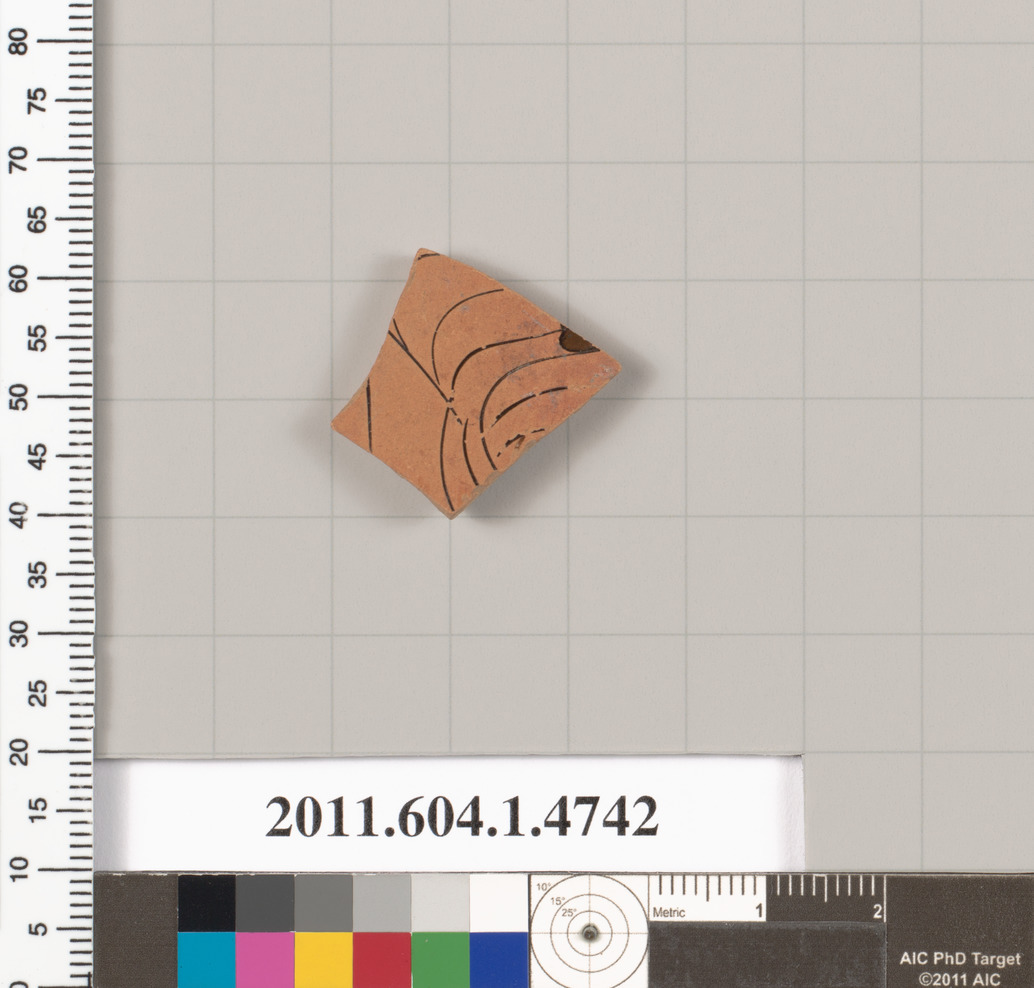
The Kylix and the Codex: Terracotta Fragments, Socratic Dignity, and the 2026 Old Money Silhouette
The internal genetic code of Lauren Fashion—a dialogue between Jacques-Louis David’s *The Death of Socrates* and a Song-Yuan dynasty Longquan celadon *meiping*—posits a profound question: how does civilization transmute the ephemeral into the eternal? The answer, as articulated through these disparate artifacts, lies not in the subject matter but in the *manner of bearing*. David’s Neoclassical canvas freezes a philosophical martyrdom into a geometry of heroic clarity; the celadon vase abstracts the chaos of ocean waves into a tactile, breathing rhythm of glaze. Both are acts of *stylization*—the deliberate imposition of order upon the unruly. It is precisely this dialectic—the dramatic, declarative event versus the quiet, cumulative patina—that finds its most potent contemporary expression in the heritage of the Greek *kylix* and its translation into the 2026 Old Money silhouette.
The museum artifact—a terracotta fragment of an Attic kylix, a drinking cup—is not a pristine object. It is a shard, a survivor of symposia, of libations, of the careless knock of an elbow and the deliberate smash of ritual. Its value lies not in its completeness but in its fragmentary testimony. The kylix was the vessel of the *symposium*, the philosophical drinking party where Socrates himself would have debated virtue and mortality. To hold a fragment of such a cup is to touch the very materiality of that discourse. The terracotta’s surface, once painted with black-figure or red-figure scenes, now bears only the ghost of an image, perhaps a draped figure, a palmette, or the curve of a krater. Yet this very erosion speaks to a central tenet of heritage aesthetics: *authenticity is accrued through use, not preserved through avoidance.*
This principle directly informs the 2026 Old Money silhouette, which must be understood not as a trend but as a sartorial philosophy of *enduring form*. The Old Money aesthetic has long rejected the fast-fashion imperative of novelty. It is an aesthetic of the *kylix*, not the *meiping*—though it borrows from both. It is less about the dramatic, singular "event" of a statement garment (the Davidian climax) and more about the quiet, cumulative authority of a wardrobe built on immutable lines (the Longquan glaze). The 2026 iteration, however, deepens this language. It moves beyond mere "quiet luxury" (a term that has become a marketing slogan) toward a more rigorous, almost archaeological approach to dressing.
The terracotta fragment teaches us three specific lessons for the 2026 silhouette. First, the lesson of the **broken line**. The kylix’s painted friezes often depicted the *kalos* inscription—"so-and-so is beautiful"—a fleeting compliment now rendered illegible by time. The 2026 Old Money silhouette embraces this illegibility. It is not about loud logos or identifiable "codes" of wealth. Instead, it is about the *cut*—the architectural precision of a shoulder seam, the subtle flare of a trouser from the hip, the exact drop of a jacket’s lapel. These are the "inscriptions" of the house, legible only to the initiated. Like the fragment’s painted line, they are drawn with confidence but are meant to be read in context, not shouted from a rooftop. The silhouette is therefore *broken* in the sense of being deconstructed from trend-chasing and rebuilt upon the immutable grammar of tailoring. A double-breasted jacket in a dense, matte wool—reminiscent of the kylix’s unglazed terracotta body—does not rely on a novel weave for interest. Its interest lies in the *fracture* of its construction: the precise pitch of the shoulder, the way the fabric folds under the arm, the internal canvas that gives it a memory of its own form.
Second, the lesson of **material memory**. The terracotta’s surface is not smooth; it is pitted, worn, and burnished by millennia of handling. The 2026 Old Money fabric palette must evoke this tactility. This is not the slick, high-sheen of luxury synthetics, but the dry, granular hand-feel of heritage materials: undyed cashmere, worsted wool with a visible twist, heavy silk twill that whispers rather than rustles. The colors are drawn from the earth of the artifact: the deep umber of the clay body, the matte black of the fired slip, the faded ochre of the paint. This is the "Heritage-Black" of the category tag—not a funereal black, but a black that has absorbed light and time, a black that is the result of a process, like the black-figure technique itself, where the clay is turned dark in the kiln, a chemical transformation that is permanent and profound. In 2026, the Old Money suit will be cut from this "terracotta black"—a wool that feels like stone, a coat that drapes like a toga’s fold, heavy with the memory of its own making.
Third, the lesson of **functional eternity**. The kylix was made to be held. Its two horizontal handles and shallow bowl were designed for the reclining drinker. Its beauty was inseparable from its function. The 2026 Old Money silhouette must reclaim this symbiotic relationship between form and purpose. This is not about "athleisure" or "performance wear." It is about garments that are designed for a specific, enduring *ritual* of life. The overcoat is for the commute, the boardroom, the opera—a garment that will outlast a decade of seasons. The trouser is cut with a slight break, allowing for movement, for the stride of someone who walks with purpose, not haste. The knitwear is not a disposable layer but a primary piece, dense enough to stand alone, shaped to follow the body’s architecture without clinging. This is the *symposium* garment—designed for the long conversation, for the exchange of ideas, for the presence of the wearer, not the performance of the garment.
Returning to our internal dialectic: David’s Socrates points to the heavens, a gesture of transcendence. The Longquan vase accepts the flow of time with a silent, glazed equanimity. The terracotta kylix fragment offers a third path—the path of the *symposiast*. It does not seek to escape the mortal realm (David) nor merely to endure it (Longquan). Instead, it *celebrates* the mortal moment—the drinking, the discourse, the fleeting beauty of youth—within a vessel that is itself built to break. The 2026 Old Money silhouette, informed by this artifact, is thus not an armor against time, but a *vessel for presence*. It is a suit of clothes that allows the wearer to be fully alive in the moment, to engage in the "philosophical drinking" of modern life, knowing that the vessel itself—the garment—is a fragment of a larger, ongoing tradition. It is a form of dressing that understands that true luxury is not the ability to buy a new thing, but the cultivated capacity to *wear an old idea* with new conviction. The kylix fragment does not mourn its lost entirety; it stands as a synecdoche for the whole of Attic civilization. So too, the 2026 Old Money garment—a single, perfectly cut coat, a pair of trousers with a flawless drape—does not need to be a complete "look." It is a fragment of a personal canon, a piece of a larger, inherited language of dignity, worn until it, too, bears the beautiful patina of a life well lived.
Heritage Lab Insight
Genetic Bridge: Archive node focusing on Heritage-Black craftsmanship.