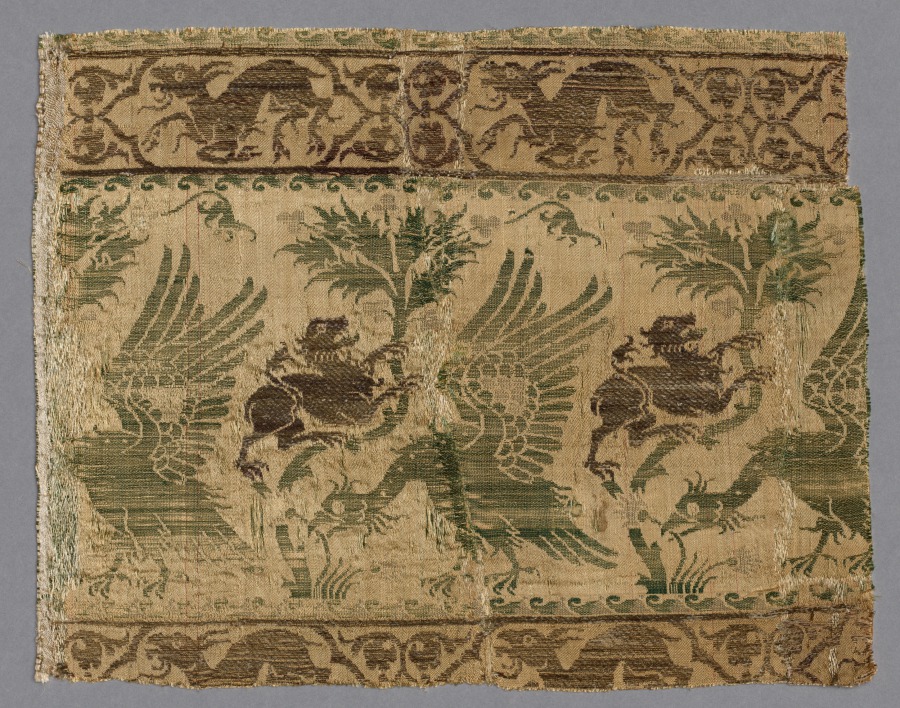
On the Substantive Nature of Imperial Silk
To address the subject of silk, particularly within the context of imperial weaving, is to engage with a material that transcends mere fabric. It is, rather, a foundational element of statecraft, a tangible manifestation of power, and a testament to a civilisation's technical and aesthetic zenith. One does not simply 'wear' imperial silk; one articulates authority through it. The legacy we examine here is not one of quaint tradition, but of a rigorously maintained standard of excellence, where the materiality of silk was leveraged to its utmost potential to communicate hierarchy, divinity, and unassailable cultural superiority.
The Fibre of Sovereignty
Consider the raw material: the filament of the Bombyx mori. Its acquisition was never a casual affair. Imperial monopolies on sericulture, from mulberry grove to reel, were as strategically vital as any armory. The continuous filament, a single thread of remarkable length and tensile strength, provided the essential substrate for grandeur. Unlike the staple fibres of the common realm, this uninterrupted strand allowed for fabrics of unparalleled smoothness, density, and luminous depth. It was the only suitable canvas for the imperial project in cloth. The very physics of silk—its capacity to refract light, its receptive nature to dye, its formidable strength against its exquisite hand-feel—made it the non-negotiable choice for regalia. Lesser materials simply could not bear the symbolic weight.
The Architecture of the Loom: A Regimented Pursuit
The transformation of this filament into the iconic gold-supplemented textiles of Byzantine samite, Chinese kesi, or Ottoman seraser was an exercise in controlled complexity. This was not weaving as cottage industry; it was a state-sanctioned architectural endeavour. The drawloom, a formidable apparatus of cords, heddles, and intricate patterning mechanisms, operated by a master weaver and a drawboy, was the period's most advanced data-processing machine. Each configuration of threads represented a line of immutable code, executing a pre-ordained design with flawless repetition.
The introduction of gold—wound around a silk core as 'thread' or applied as lamella—elevated the process from the pictorial to the numinous. The metal, often silver-gilt, was not a mere decorative accent; it was a deliberate infusion of perceived eternal value and celestial radiance. The weave structure was engineered to capture and reflect light dynamically, ensuring the wearer became a locus of shimmering, almost supernatural, presence. The weight of the resulting textile was both physical and metaphorical; it moved with a deliberate, stately drape, audibly signalling the approach of power.
A Grammar of Motifs: The Unspoken Language of Dominion
The iconography rendered in silk and gold constituted a rigidly enforced visual lexicon. This was a language understood across empires, whether one observed the paired semurv of Sassanian Persia, the dragon-and-phoenix symbiosis of Ming China, or the repeating eagle of the Holy Roman Empire. These were not arbitrary decorations. They were heraldic statements of lineage, divine mandate, and territorial claim, woven into the very fabric of authority. To don a robe embroidered with the five-clawed dragon was to physically embody the Celestial Empire; to be draped in Byzantine purple silk with golden tablia was to become a living extension of the Constantinople court.
The dissemination of these textiles as diplomatic gifts—the so-called 'silken diplomacy'—was a calculated soft-power manoeuvre of the highest order. A bolt of imperial silk presented to a foreign potentate was a multi-layered communiqué: a demonstration of technological and artistic supremacy, a tacit demand for recognition, and an implicit incorporation of the recipient into a hierarchical world order centred on the gifting court. The artifact was its own ambassador.
The Contemporary Bearing: A Lesson in Material Integrity
For the modern purveyor of heritage, the imperial silk legacy offers not patterns to copy, but principles to uphold. The paramount lesson is the indivisibility of material, technique, and intent. The splendour of the artifact was an inevitable result of this trinity. There was no concession to expediency; the material (finest silk, purest gold) dictated the technique (complex loom patterning, masterful brocading), which in turn faithfully executed the intent (the projection of absolute sovereignty).
In an age of compromise, this unwavering commitment to appropriate materials and flawless execution is the true inheritance. It instructs us that luxury is not defined by label, but by the integrity of the construction and the clarity of the statement made. The Savile Row ethos—of a garment's form being inextricably linked to its function and stature—finds a direct antecedent in the imperial ateliers. A bespoke suit, in its own way, is a personal uniform of authority, its authority derived from a similar covenant: the finest wool, cut by a master's hand, to articulate the wearer's position with silent, undeniable confidence.
Thus, the silk and gold textile stands as the ultimate heritage artifact of power-dressing. It reminds us that true distinction in cloth is achieved not through ostentation alone, but through a profound understanding of material properties, a mastery of complex craft, and a deliberate, intelligent application of both towards a clear sartorial objective. The gold may tarnish over centuries, but the standard of excellence it represented—the relentless pursuit of an impeccable, material-borne statement—remains, as ever, the benchmark.