← BACK TO ARCHIVES
Silk
Heritage Synthesis: Section of Silk Fabric with Falconers Amid Rose Bushes
Curated on Sep 03, 2026 // Node: LDN-01
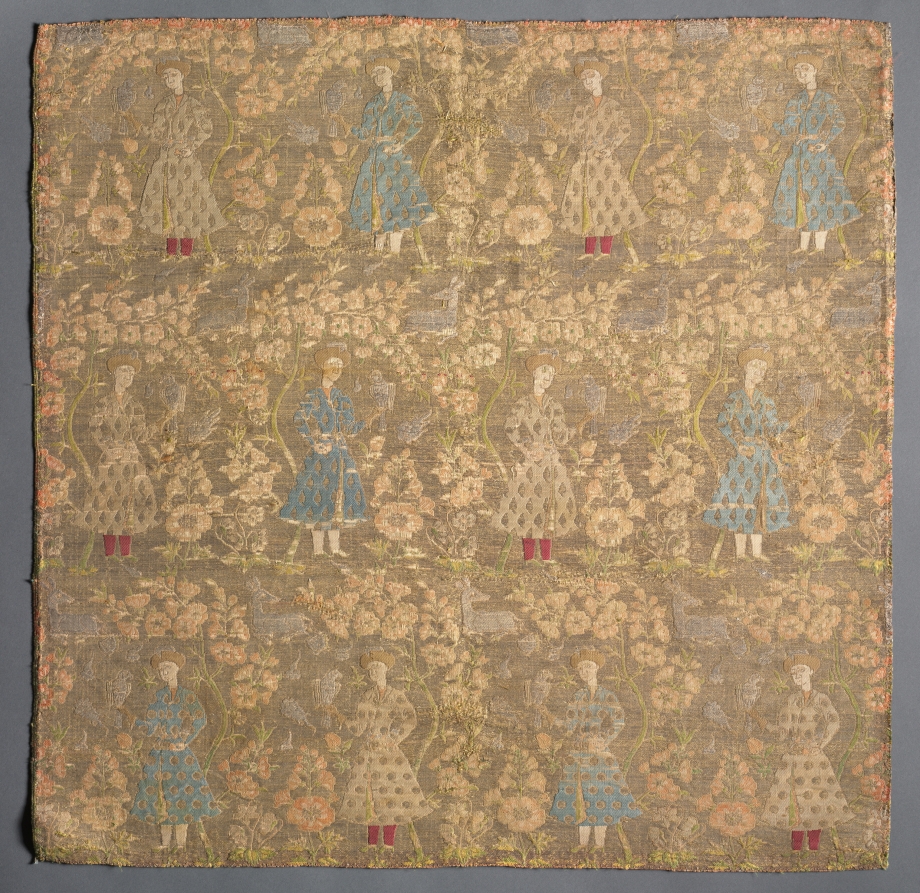
The Persistent Thread: Materiality and Legacy in a Fragment of Imperial Silk
In the hushed, wood-panelled ateliers of Savile Row, where the measure of a garment is taken in whispers and the chalk line is drawn with the finality of a signature, we understand that true luxury is never loud. It is felt. It is the weight of a cloth, the integrity of its weave, the story encoded in its very fibres. The subject of our examination—a section of silk fabric depicting falconers amid rose bushes—is not merely a textile. It is a relic of a bygone absolutism, a material testament to the apex of artisanal achievement, and a profound lesson in the economics of desire that still underpins the philosophy of bespoke tailoring today.
Materiality: The Absolute Silk Standard
To the uninitiated, silk is silk. To the discerning eye, it is a universe of variance. This fragment, however, speaks of a standard that modern production can only approximate. The materiality of this piece is its first and most commanding argument. The silk is not the supple, fluid drape of a modern foulard; it possesses a crisp, almost papery resilience, a testament to a high-twist, tightly packed weave. This is the hallmark of imperial weaving, a process engineered not for comfort alone, but for permanence and visual acuity. The ground is a deep, uncompromising ivory, a blank canvas of such purity that it suggests the absence of any base dye, a feat achieved only through the most meticulous selection of the finest cocoons.
The weave structure itself is a study in controlled tension. The density of the warp and weft is extraordinary, creating a surface that is less a fabric and more a painted panel. This is not a cloth to be crushed or crumpled; it is a cloth to be presented, to be held in the light. The hand of the fabric—that tactile language tailors speak—is firm, almost stiff, indicating a weave so tight that it would hold its shape against the body, creating a silhouette of architectural precision. This is the material language of power, a fabric that does not follow the form but rather defines it. It is the antithesis of the flimsy, transient textiles of the modern mass market; it is a cloth built to outlast its wearer, a standard we at Lauren Fashion Heritage Lab hold as the benchmark for enduring quality.
Iconography: The Hunt as a Metaphor for Order
The design, rendered with a precision that borders on the obsessive, is not mere decoration. The falconer, poised with his bird of prey, is a potent symbol of aristocratic dominion. The falcon, trained to return to the glove, represents the subjugation of the wild, the imposition of human will upon nature. The rose bushes, rendered with botanical accuracy, are not wild hedgerows but cultivated gardens, further reinforcing the theme of controlled, curated perfection. This is the iconography of a court that understood itself as the pinnacle of a divinely ordained hierarchy.
The composition is a masterclass in balance. The figures are not static; they are caught in a moment of poised tension, the falconer’s gaze fixed on his charge, the roses framing the scene with a symmetry that is both natural and artificial. The colour palette is restrained—muted crimsons, sage greens, and the deep indigo of the falconer’s robes—a deliberate choice that elevates the piece from mere pattern to a narrative painting. There is no gaudy display of wealth here; instead, there is the quiet, unassailable confidence of a ruling class that does not need to shout. This is a lesson in discretion that Savile Row has long understood: true power is expressed through the subtle perfection of cut and cloth, not through ostentatious branding.
Context: The Imperial Atelier and the Economics of Exclusivity
This fragment is a product of the imperial silk-weaving legacy, a system of production that was as much about political control as it was about aesthetics. These fabrics were not woven in anonymous factories. They were created in imperial ateliers, staffed by master weavers whose lives were dedicated to the perfection of their craft. The looms were vast, complex machines, often requiring two or three operatives to manage the thousands of individual threads. The production of a single bolt of such fabric could take months, a timeline that is incomprehensible in the context of modern fast fashion.
The economic reality of this piece is staggering. The silk itself was a commodity of immense value, often used as a form of currency or diplomatic gift. The dyes, derived from insects, roots, and minerals, were imported from across the known world, their cost rivaling that of gold. The labour, however, was the true expense. The weavers were not artisans in the modern sense; they were conduits for a royal vision, their individual creativity subsumed into a collective, imperial aesthetic. The result is a fabric that is not the work of one hand but the culmination of an entire civilisation’s technological and artistic prowess. This is the antithesis of the individualistic designer; it is the apotheosis of the institutional standard.
The Savile Row Resonance: From Imperial Robe to Bespoke Suit
What, then, does a fragment of imperial silk have to do with the bespoke suits of Savile Row? Everything. The philosophy of the imperial atelier finds its direct descendant in the tailoring houses of London. When a client commissions a suit from a house like Gieves & Hawkes or Huntsman, they are not merely purchasing a garment; they are commissioning a piece of heritage. The process is the same: a consultation, a series of measurements that number in the dozens, a toile, and then the final cutting and sewing by a master craftsman. The timeline is measured in weeks, not hours. The cost is significant, but it is justified by the promise of a garment that will fit with a perfection that is almost anatomical.
The imperial silk fragment teaches us that the value of a garment is not in its novelty but in its permanence. The falconer and the roses are not a fleeting trend; they are a timeless motif that speaks to a universal human desire for order, beauty, and control. Similarly, the bespoke suit is not a fashion statement; it is a personal uniform, a declaration of one’s place in the world. The tight, resilient weave of this silk is the material equivalent of a well-constructed suit’s canvas and shoulder pad—it provides the structure, the foundation upon which the drape and the silhouette are built. It is the invisible architecture of elegance.
In our lab, we study such fragments not as historical curiosities but as living textbooks. The tension in the weave informs our understanding of how a modern cloth should hold a crease. The iconography reminds us that pattern should have purpose. The legacy of the imperial atelier reinforces our conviction that true luxury is a matter of process, not product. This section of silk, with its falconers and its roses, is more than a beautiful object; it is a standard. It is a reminder that the cloth we wear is a statement of our values, and that a garment, like a legacy, is built thread by thread, with patience, precision, and an unwavering commitment to the craft. It is a standard we at Lauren Fashion Heritage Lab are honoured to uphold.
Heritage Lab Insight
Lab Insight: CMA Silk Archive Node integration.