← BACK TO ARCHIVES
Silk
Heritage Synthesis: Flower Embroidery Design for Silk Manufactory of Lyon
Curated on Sep 03, 2026 // Node: LDN-01
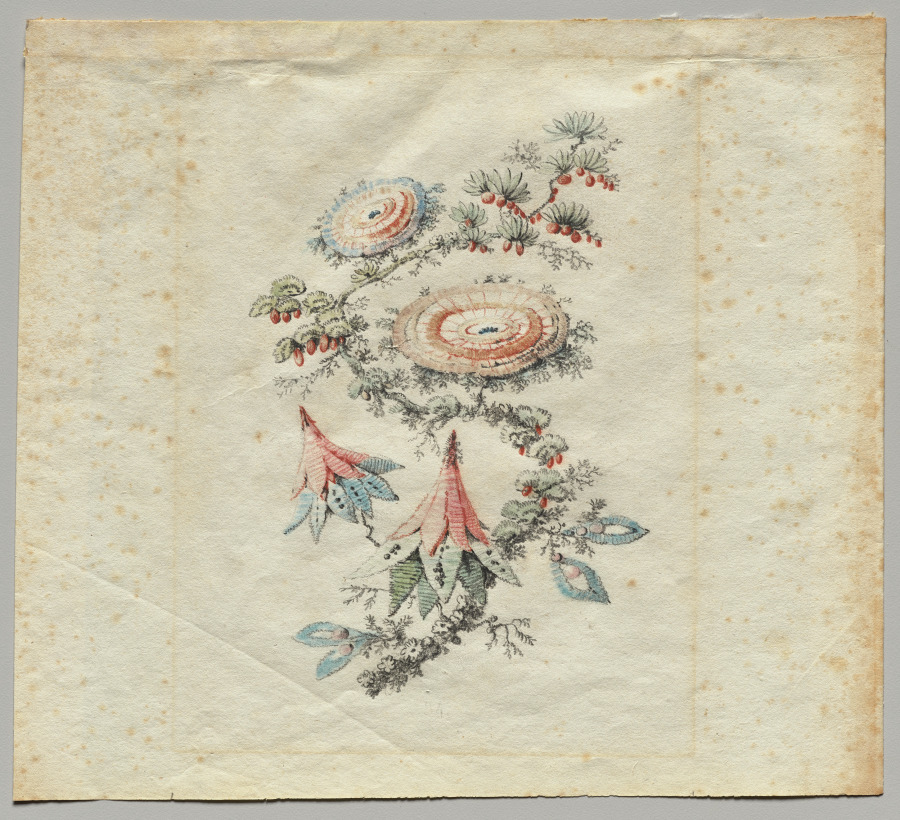
The Enduring Thread: Flower Embroidery as Imperial Lexicon in Lyon’s Silk Manufactory
In the hushed ateliers of Mayfair, where a tape measure is a sceptre and a chalk mark a decree, we speak of cloth not as mere commodity but as biography. The bolt of silk that arrives from Lyon, cool and heavy as still water, carries within its warp and weft the accumulated authority of centuries. To commission a garment from such material is to enter into a dialogue with a past that was never quiet. For the House of Lauren, the study of a specific artifact—a late-18th-century flower embroidery design destined for the looms of the Lyon manufactory—is not an exercise in antiquarian nostalgia. It is a masterclass in provenance, power, and the silent language of ornament. This research artifact, rendered in polychrome silk threads upon a ground of lustrous faille, is a testament to a system of production so precise, so hierarchical, that its echoes still dictate the cut of a lapel and the weight of a shoulder.
The Imperial Grammar of the Bloom
Let us first address the subject: the flower. To the untrained eye, this is a pastoral idyll—a sprig of rose, a cluster of jasmine, a trailing stem of convolvulus. But within the context of Lyon’s imperial silk weaving, the flower was never innocent. It was a coded emblem, a botanical heraldry that signified allegiance and status. Under the Ancien Régime, and later under the First Empire, the manufactory at Lyon operated less as a creative commune and more as a state instrument. The designs that emerged from its drawing rooms were not whimsical fancies; they were commissioned responses to court edicts, diplomatic gifts, and the personal tastes of an empress.
The materiality of silk itself dictated the grammar of this floral language. Unlike cotton or wool, silk filament possesses a natural prismatic quality—a capacity to absorb and reflect light with a chameleon-like intensity. The embroiderer, working with twisted floss silk, understood that a single petal could shift from the deep crimson of a cardinal’s cassock to a blush of dawn pink depending on the fall of light. This was not a flaw; it was the intended effect. The design before us, with its meticulous shading and use of *point de tige* and *point de chaînette*, demonstrates a mastery of optical illusion. The flower is not simply depicted; it is engineered to perform. In the candlelit ballrooms of the Tuileries, such a bloom would catch the flame and appear to breathe, a living jewel stitched into the fabric of power.
The Manufactory as a Discipline of Precision
The legacy of imperial silk weaving is, above all, a legacy of discipline. The Lyon manufactory was a vertical hierarchy of specialists: the *dessinateur* who conceived the pattern, the *mise en carte* who translated that watercolour into a grid of perforations for the Jacquard loom, and finally the *brodeuse* who executed the hand-stitched embellishment. This artifact, a design sheet rather than a finished textile, represents the critical juncture between art and industry. It is the blueprint, the architectural drawing, before the brick is laid.
For the modern tailor on Savile Row, this artifact offers a profound lesson in restraint and intention. The flower embroidery is not applied as a random decoration; it is placed with the precision of a surgeon’s incision. The stems follow the structural lines of the eventual garment—a bodice seam, a cuff edge, the fall of a train. The embroidery does not fight the drape; it accentuates it. This is the imperial legacy: the understanding that luxury is not excess, but the meticulous control of excess. The Lyon designers knew that a single misplaced petal could destabilise the entire silhouette. Their work demanded an almost obsessive attention to the relationship between the flat design and the three-dimensional form it would eventually inhabit.
Materiality and the Weight of History
Consider the ground fabric. The silk faille, with its subtle horizontal ribbing, provides a textured canvas that catches the thread of the embroidery, preventing slippage and lending a quiet, tactile depth. The choice of silk thread over metallic or cotton thread was deliberate. Metal threads, while opulent, tarnish and are brittle; cotton lacks the lustre. Silk-on-silk creates a monochromatic harmony that speaks of absolute confidence. It is the difference between a shout and a murmur. The imperial court understood that true power does not need to raise its voice.
The colour palette of this design—indigo, madder root red, and a pale sulphur yellow—is derived from natural dyes that have since become obsolete. These hues possess a certain gravity, a depth that synthetic aniline dyes of the Victorian era could never replicate. The indigo, sourced from woad or imported indigofera, has a blue-black intensity that seems to absorb the surrounding air. The red, from the madder root, is a blood-warm tone, suggestive of both passion and sacrifice. In wearing a garment constructed from such material, one is not merely wearing a colour; one is wearing a history of trade routes, of botanical knowledge, of chemical experimentation that spanned continents.
From Imperial Court to Contemporary Cut
What, then, is the relevance of this artifact to the modern gentleman? The answer lies in the philosophy of permanence. In an era of fast fashion and disposable trends, the Lyon manufactory’s output was designed to outlast its owner. The embroidery was not a seasonal gimmick; it was an heirloom, a statement of dynastic continuity. The silk, woven with a high twist and a dense sett, was built to withstand decades of wear, to be passed down, to be re-cut and re-tailored for subsequent generations.
For Lauren Fashion Heritage Lab, this artifact is a touchstone. It reminds us that the true luxury of silk is not its softness or its sheen, but its memory. The fabric remembers the hand of the embroiderer, the pressure of the loom, the ambition of the emperor. When we commission a piece today, we are not replicating the past; we are engaging in a conversation with it. We are asking the silk to carry forward a standard of excellence that was set in the workshops of Lyon, a standard that demands we slow down, that we consider the weight of every thread, and that we understand the difference between a garment and a legacy.
The flower embroidery design for the Silk Manufactory of Lyon is thus more than a pretty pattern. It is a legal document of taste, a contract between the artisan and the aristocrat, and a testament to the enduring power of materiality. It is the quiet, confident whisper of an empire that knew exactly what it was, and what it wished to become. And that, gentlemen, is a cut we should all aspire to follow.
Heritage Lab Insight
Lab Insight: CMA Silk Archive Node integration.